Key Points:
- Liver dialysis device trials by the NHS aim to treat acute-on-chronic liver failure, a condition with extremely high short-term death rates.
- The Dialive machine cleans toxins from the blood and replaces damaged proteins, helping organs recover without immediate transplant.
- Early results show improved survival and faster recovery, offering new hope for critically ill liver patients.
Britain’s National Health Service will begin a multicenter trial early next year testing a blood-cleansing Liver dialysis device for acute-on-chronic liver failure, a deadly condition that kills most patients within weeks and has few treatment options.
Hospitals Begin Trial of Blood-Cleansing Device
Thirteen major NHS hospitals will test a new Liver dialysis device designed to clean toxins from the blood of patients with acute-on-chronic liver failure, or ACLF, a severe form of liver disease that causes sudden organ failure.
The randomized controlled trial will enroll seventy-two critically ill patients starting early next year. Participants will receive treatment with the Dialive machine alongside standard intensive care.
Doctors say the trial could mark the first effective form of liver dialysis if results match earlier studies. Currently, the only way to reverse ACLF is a liver transplant, which is available to only a small number of patients.
ACLF is linked to obesity, heavy alcohol use and hepatitis infection. Many patients are diagnosed late, often when the condition has already become life-threatening.
Deadly Disease With Few Options
Seven out of ten people with ACLF die within twenty-eight days, according to clinicians involved in the study. Three out of four patients are diagnosed only after rapid deterioration that requires admission to intensive care.
Those joining the trial will already be suffering from two or more organ failures. They will receive Liver dialysis device treatment on their first three days in intensive care and up to four additional sessions within the first ten days.
“Our goal is to show that we can resolve life-threatening ACLF more often and faster than standard care,” said Rajiv Jalan, a senior liver specialist at University College London and a co-principal investigator of the trial. “These are gravely ill patients with multi-organ failure and a very high risk of death.”
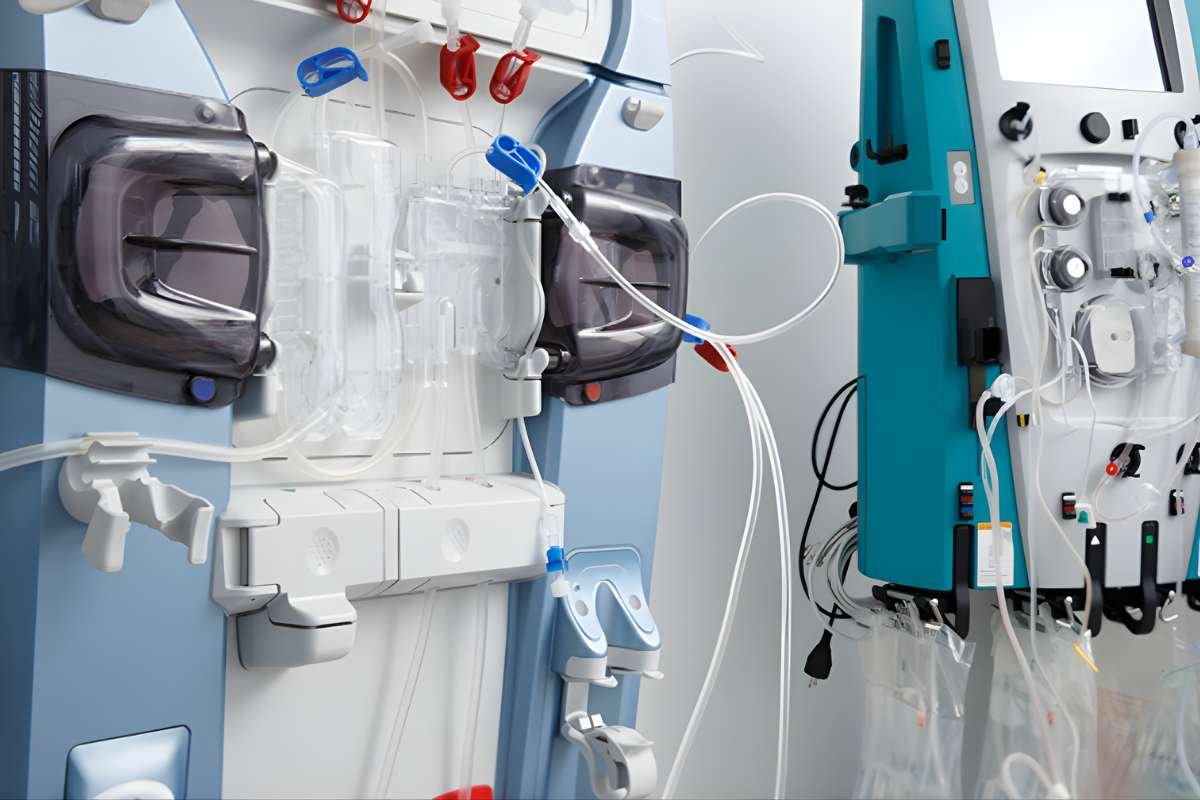
Dialive works in a similar way to kidney dialysis. Patients are connected to the Liver dialysis device, which removes harmful substances from the blood and replaces dysfunctional albumin, a protein produced by the liver, with healthy albumin. Doctors say this process may allow the liver and other organs to recover.
“Dialive cleans the blood of toxins that accumulate because the liver is not working and helps prevent further damage,” Jalan said.
Funding, Early Results Raise Hope
The £2.2 million trial is funded by the National Institute for Health and Care Research, or NIHR, following a smaller study in 2023 that suggested the Liver dialysis device could reverse ACLF in some patients.
In that earlier study, ten of fifteen patients treated with Dialive saw their condition reversed, compared with five of fifteen who received standard care alone. Patients treated with the device also recovered more quickly.
“Many patients die because their bodies become trapped in a destructive cycle of inflammation that current treatments can’t reverse,” said Dr. Rohit Saha, a consultant at the Royal Free Hospital in London and a co-principal investigator. “Dialive offers new hope and a possible new path forward for our sickest liver patients.”
King’s College Hospital and University College London Hospitals in London, along with the Queen Elizabeth Hospital in Birmingham, will be the first sites to recruit patients.
Dr. Mansoor Bangash, a consultant at the Queen Elizabeth Hospital, said the Liver dialysis device could help patients stabilize without a transplant. “If we can support more patients to recover while treating underlying infections, we can improve survival and give people a better chance of a transplant-free future,” he said.
More than two million people in the United Kingdom are estimated to have some form of liver disease. Liver disease kills over twelve thousand people a year, and rates have quadrupled over the past fifty years.
“If this trial is successful, it could save lives and reduce hospital stays,” said Prof. Mike Lewis, scientific director for innovation at NIHR. “This is taxpayer-funded research delivering real benefits for patients.”