Key Points:
- Keystone habits trigger positive ripple effects across health.
- Automatic routines are more sustainable than relying on willpower.
- Habit stacking and cues make habits easier to maintain.
Health expert Dana Santas says adopting a few keystone habits in 2026 can improve physical and mental well-being, arguing that small, automatic behaviors succeed where willpower-based New Year’s resolutions often fail.
Every January, millions of people set ambitious health goals, only to abandon them within months. Santas, a certified strength and conditioning specialist known as the “Mobility Maker,” says the problem is not discipline but dependence on motivation alone.
“Willpower is manual,” Santas said. “Habits are automatic, and that’s why they last.”
She points to keystone habits, a concept popularized by author Charles Duhigg, as a practical way to create lasting change without overhauling daily life.
Keystone Habits Shift Behavior, Not Just Goals
Keystone habits are foundational behaviors that influence multiple aspects of health at once. Duhigg described them as actions that set off a chain reaction, making other positive behaviors easier to adopt.
Santas said these habits work because they reduce cognitive load, or the mental effort required to make repeated decisions. Once a behavior becomes routine, it no longer drains attention or energy.
“A daily strength or movement practice does more than improve fitness,” she said. “It can reduce pain, improve mood and help people sleep better, which then supports healthier choices across the day.”
Behavioral science supports that idea, showing that automatic routines are more sustainable than changes driven solely by motivation. Santas said focusing on systems, not goals, helps people avoid the familiar cycle of enthusiasm followed by burnout.
Three Habits With Broad Health Benefits
Santas recommends focusing on three areas where keystone habits tend to produce the strongest ripple effects: breathing, movement and mind-body awareness.
The first is conscious breathing. Spending a few minutes each day on slow, controlled breathing can calm the nervous system and improve stress tolerance. Longer exhales activate the body’s relaxation response, she said, supporting emotional regulation and physical recovery.
The second is mindful movement. Unlike structured workouts, mindful movement emphasizes awareness and mechanics. Short walks, gentle mobility exercises or brief yoga routines can reduce pain and improve posture, making more demanding exercise easier to maintain.
“Consistency improves when movement feels supportive rather than punishing,” Santas said.
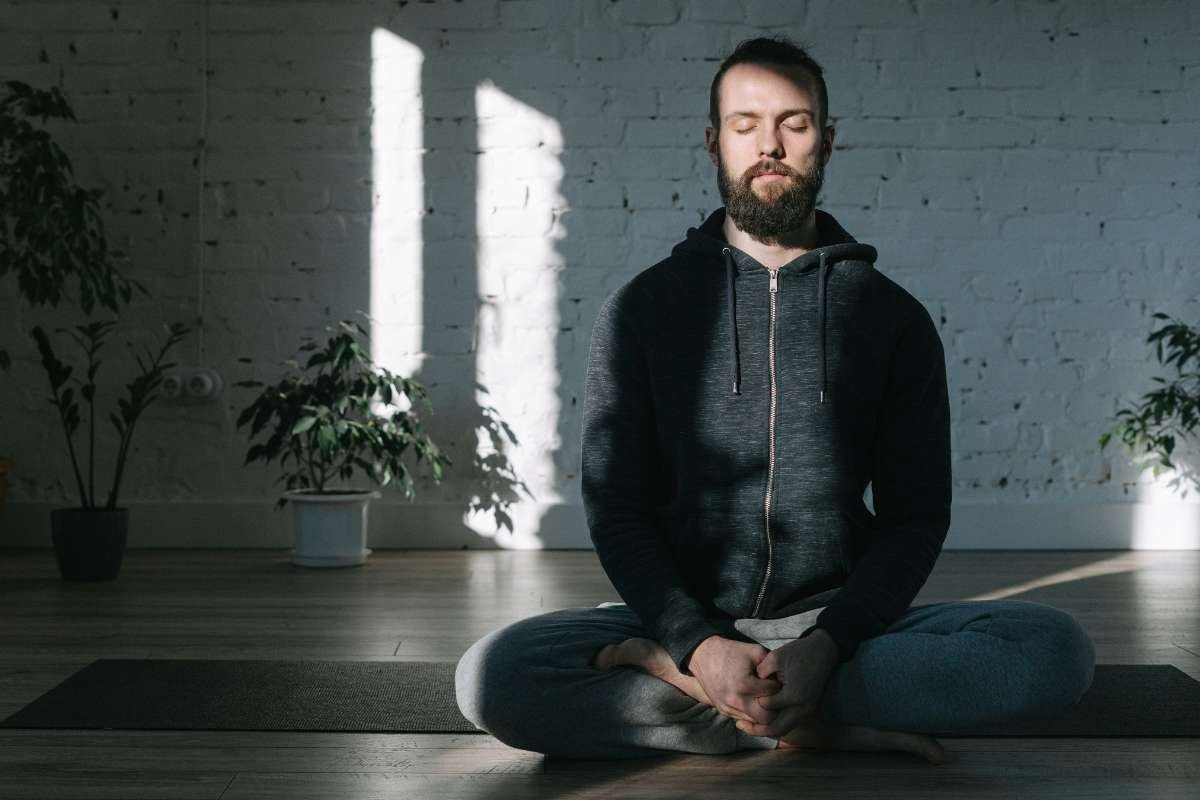
The third area is the mind-body connection. Practices such as meditation, journaling or progressive muscle relaxation help people recognize how physical sensations and emotions interact. Santas said this awareness often leads to better sleep and decision-making.
“You start noticing signals earlier,” she said. “That alone can change how you respond to stress.”
Making Habits Stick Through Simple Systems
Santas said identifying a keystone habits is only the first step. Making it repeatable is what determines success.
One proven approach is habit stacking, a strategy described by author James Clear. The idea is to pair a new habit with an existing routine, such as practicing deep breathing while drinking morning coffee or adding light movement while brushing teeth.
“Linking habits to things you already do removes friction,” Clear has written in his work on habit formation.
The environment also matters. Santas advises keeping visual cues, such as sneakers or a journal, in plain sight and using reminders to reinforce routines. These supports reduce reliance on motivation.
Santas said people do not need to adopt all three habits at once. Even one can create momentum that spreads into other areas of life.
“A single Keystone habits can change how you move, think and feel,” she said. “That kind of change compounds over time.”