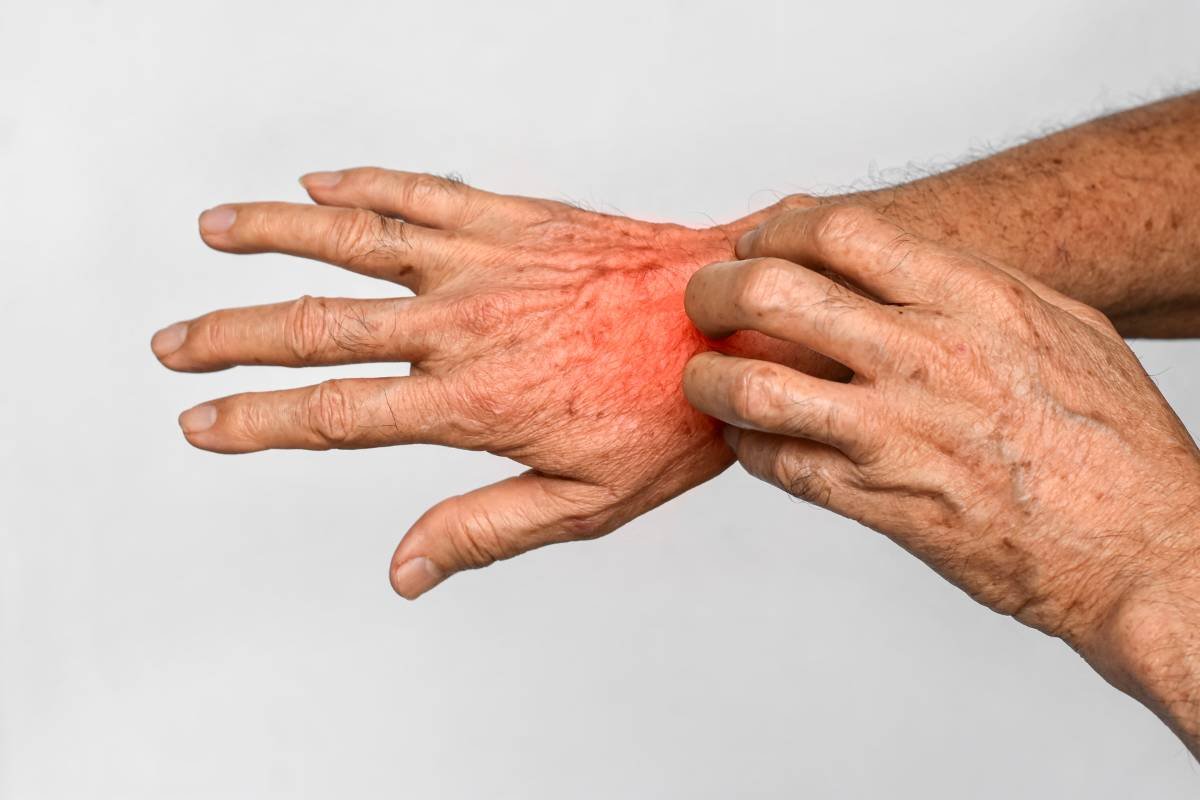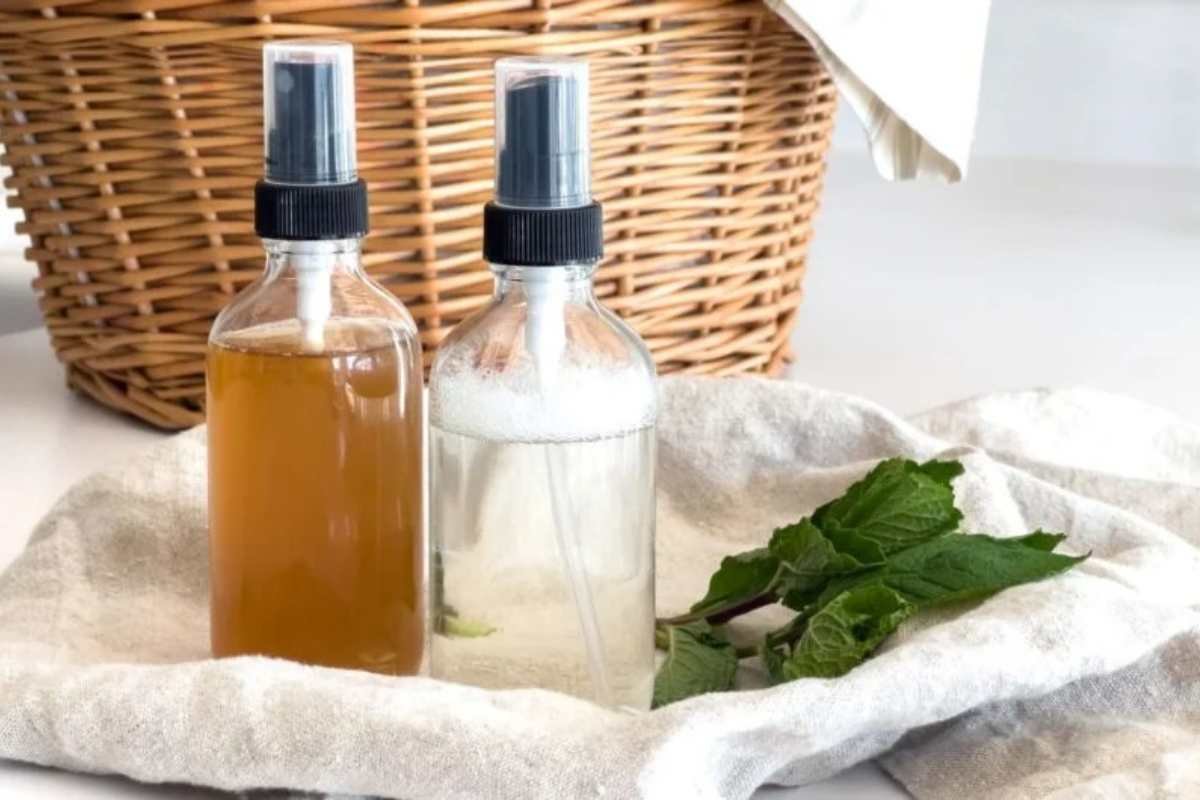
When summer begins, it’s as if the world gently reminds us to slow down with long golden evenings, fresh blooms at every corner, and dinners where no one checks the time. But let’s be real, that perfect picture often gets swatted away by pesky bugs. Before you reach for a heavy-duty spray that smells like a chemical factory, there’s a simpler, gentler path. You can actually mix up a surprisingly effective homemade bug spray right in your own kitchen.
Think of this as swapping out the harsh stuff for an invisible, aromatic shield. We’re going to dive into using natural solutions like essential oils and common household items to keep the biters away without all the worry. It’s a quick, easy, and super satisfying way to protect everyone, from the dog to the kids. Ready to ditch the chemicals and find your perfect recipe for DIY bug spray?
But Why Should One Choose Homemade Bug Spray Over the Ready-made Ones?
Well, the first reason for using DIY insect repellent is that it typically uses natural ingredients like essential oils (e.g., citronella, peppermint, lemon eucalyptus) that are safer for humans, especially children, pregnant women, and those with sensitive skin.
They avoid synthetic chemicals such as DEET or other pesticides found in many commercial sprays, which can cause allergic reactions or skin irritations. This natural formulation also poses less risk to pets.
Secondly, natural homemade bug spray are generally more eco-friendly. They use biodegradable plant-based ingredients that have less harmful impact on the environment compared to chemical-laden commercial products. Chemical products may contaminate soil, water, and non-target organisms.
And lastly, making your own bug spray allows customization of scent and ingredients tailored to personal preference or specific bug-repelling needs. Many natural essential oils used in homemade sprays have refreshing and pleasant botanical aromas, unlike the often harsh chemical smell of commercial options.
So now that you know why bug sprays are used, let’s try to learn the recipe for an effective bug spray.
What’s Really Inside Your Homemade Bug Spray—and Why It Works So Well:
Here are four recipes for making your own bug spray from scratch:
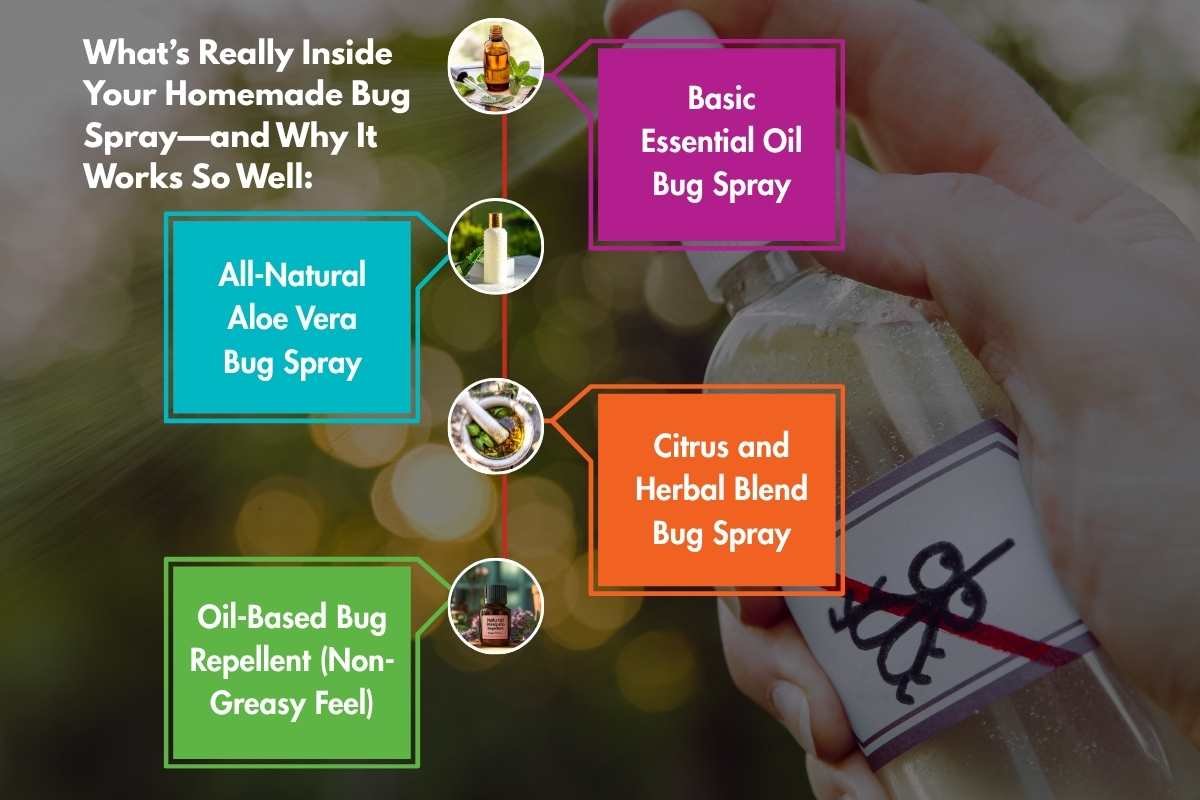
1. Basic Essential Oil Bug Spray
Let’s start with the most basic bug spray you can make at home. This bug spray offers a simple, chemical-free shield using just three ingredients. The powerful combination of water, witch hazel, and essential oils works by naturally confusing and deterring insects. And most importantly, gives you gentle, effective protection for your outdoor skin and clothes.
- Ingredients:
- 1/4 cup distilled water
- 1/4 cup witch hazel
- 15-25 drops of essential oils such as peppermint, lavender, clove, citronella, lemongrass, or tea tree oil
- How to use: Mix in a spray bottle and shake well before use. Apply to skin or clothing (for sensitive skin, spray on clothes).
2. All-Natural Aloe Vera Bug Spray
We all know how effective Aloe Vera is for most types of health-related problems. And similarly, Aloe Vera bug spray is a soothing, powerhouse defense. It blends insect-repelling oils like citronella and lemon eucalyptus with skin-calming aloe and witch hazel. This rich mix creates a reliable, pleasant-smelling barrier that keeps bugs away while treating your skin kindly.
- Ingredients:
- 1/4 cup boiling water
- 1/4 cup witch hazel
- 1 Tbsp Epsom salts
- 1 Tbsp aloe vera gel
- 10 drops citronella essential oil
- 10 drops lemon eucalyptus essential oil
- 20 drops of mixed essential oils from citronella, clove, lemongrass, rosemary, tea tree, lavender, mint, cinnamon, etc.
- Optional: 1/4 tsp vitamin E oil and 1 tsp polysorbate 20 to emulsify
- How to use: Mix cooled water with salts, then add other ingredients to a bottle and shake well before use.
3. Citrus and Herbal Blend Bug Spray
This homemade bug spray delivers strong, natural defense with a refreshing aroma. Combining powerful oils like citronella, eucalyptus, and mint with witch hazel creates a light, quick-drying mist. This aromatic combination works by masking your scent and confusing insects, keeping you bite-free. More than a bug spray, it is also an aromatic room freshener.
- Ingredients:
- 4 drops each of citronella, lemongrass, rosemary, eucalyptus, mint, and lavender essential oils
- 1/4 cup pure witch hazel
- How to use: Combine in a spray bottle and shake before application.
4. Oil-Based Bug Repellent (Non-Greasy Feel)
This Oil-Based Bug Repellent uses a blend of powerful, long-lasting essential oils like geranium and cedarwood in a non-greasy base. The oils naturally repel insects by their strong scent profile. And the best part? The base oil helps them stick to your skin longer without getting sticky. Simply apply this nourishing mix for hours of protection.
- Ingredients:
- 15 drops of geranium essential oil
- 8 drops of cedarwood essential oil
- 8 drops of catnip essential oil
- 6 drops of eucalyptus essential oil
- 6 drops of rosemary essential oil
- 5 drops of peppermint essential oil
- 1/2 cup of lightweight organic base oil (soybean, jojoba, grapeseed, or almond)
- How to use: Mix and allow synergy for 1 hour; apply as needed on skin.
Tips for using homemade bug spray
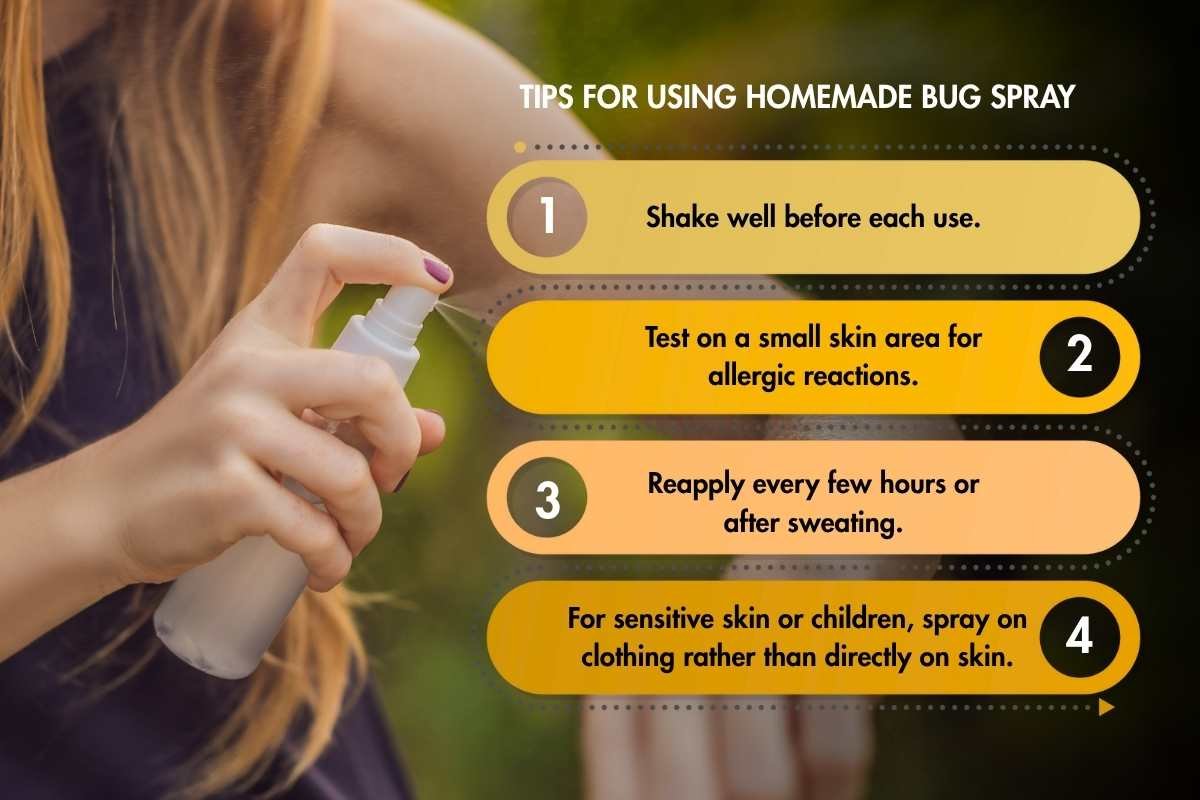
- Shake well before each use.
- Test on a small skin area for allergic reactions.
- Reapply every few hours or after sweating.
- For sensitive skin or children, spray on clothing rather than directly on skin.
Now, reading all these ingredients may make you wonder: How do they help with your bug problem? Let’s answer that!
Read Next:
- How to Identify Common Bug Bites So You Don’t Panic Next Time?
- Essential Oils for Bug Bites: Natural Relief, Prevention, and Healing Tips
- 15 Natural Remedies for Bug Bites That Work When Nothing Else Does
Scientific Reasoning behind the ingredients

Let’s start with Citronella oil. According to the International Journal of Mosquito Research, it contains compounds like citronellal, geraniol, and citronellol, which act as repellents by interfering with mosquito olfactory receptors.
Studies show citronella oil provides significant repellency against Aedes aegypti and other mosquitoes, though its protection time is relatively short (a few hours). It is also effective against other pests and has antibacterial and antifungal properties.
When we talk about lemongrass oil (Cymbopogon citratus), it is effective in repelling mosquitoes and house/stable flies by activating olfactory receptors that deter insects. Research demonstrates that it significantly reduces insect feeding and activity, making it a natural repellent with marked effects on mosquito behavior.
Tea tree oil has insecticidal and repellent effects against flies and mosquitoes. It provides moderate protection but with shorter-lasting efficacy than DEET. Studies show it can kill flies and repel mosquitoes, making it a useful natural insect repellent component.
Aloe vera extract exhibits larvicidal activity against mosquito larvae. This shows it can reduce mosquito populations by targeting immature stages. It is also soothing to the skin, making it a common additive for calming formulations.
Peppermint oil in homemade bug spray is a proven larvicide and repellent against Aedes aegypti (dengue mosquito). It shows good efficacy in protecting skin for over two hours and acts as a natural insecticide on larvae.
Eucalyptus oil, particularly 1,8-cineole-rich varieties, is a natural insecticide and repellent with deodorizing and antimicrobial benefits. It effectively repels mosquitoes and other insects by irritating insect sensory systems, with good protection times.
Clove oil is used as a mosquito repellent with insecticidal and antifungal effects. Research shows it can protect against mosquito bites for over an hour at suitable concentrations, and its active compounds contribute to long-lasting repellent effects.
So as you can see, when you use these ingredients to make your own homemade bug spray, you have a 100% effectiveness guaranteed.
Conclusion
Using a homemade bug spray is more than just a quick fix; it’s a mindful upgrade to your summer routine. We’ve explored why natural ingredients offer potent protection without the drawbacks of harsh chemicals. A DIY bug repellent ensures peace of mind for you, your family, and your pets.
By using simple recipes and proven ingredients, you gain control over what you put on your skin. Swap the chemical cloud for an aromatic shield and reclaim your outdoor enjoyment. Take the leap and find out how empowering and effective your own custom-made homemade bug spray can be.
FAQs
1. Is DIY bug spray safe for pregnant women or infants?
Essential oil safety varies. It is advised to always consult a doctor before using any DIY bug spray on infants or during pregnancy, as some oils can be too potent or contraindicated.
2. Do I need to use a preservative in my homemade bug spray?
Yes, if you use water, a small amount of preservative (like grapefruit seed extract or a commercial preservative) is recommended to prevent mold and bacteria growth for long-term storage.
3. Why is witch hazel used in these recipes?
Witch hazel acts as a gentle, natural solvent that helps essential oils disperse in water and dries quickly on the skin without leaving a greasy residue.