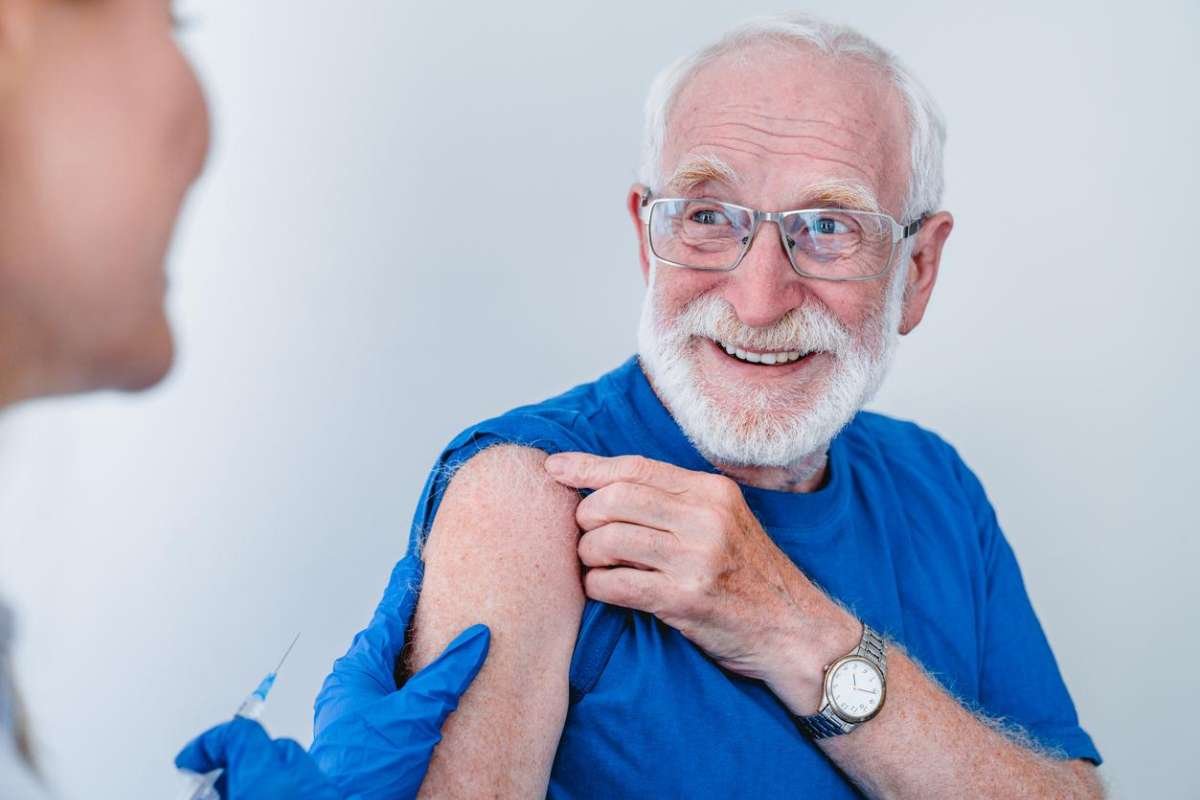
Older adults who receive a high-dose influenza vaccine, also known as a High-Dose Flu Vaccine, have nearly a 55% lower risk of developing Alzheimer’s disease compared with standard-dose recipients, according to a large observational study published Wednesday in Neurology.
Study Finds Strong Reduction in Alzheimer’s Risk
Researchers at McGovern Medical School at UTHealth Houston analyzed health records of about 165,000 adults age 65 and older who received either a high-dose or standard-dose flu vaccine.
The retrospective cohort study found participants who received the high-dose influenza vaccine showed nearly a 55% lower risk of Alzheimer’s disease over roughly two years compared with those given the standard-dose vaccine.
The findings build on earlier research from the same team showing standard-dose influenza vaccination was associated with about a 40% reduced Alzheimer’s risk over four years.
The high-dose vaccine contains four times the antigen used in standard vaccines, designed to trigger a stronger immune response in older adults. The Centers for Disease Control and Prevention recommends high-dose flu shots for people age 65 and older.
“This adds to growing evidence that vaccination may play a role beyond infection prevention,” the study authors wrote, noting the potential connection between immune system activity and brain health.
Researchers Explore Immune Response and Inflammation
Scientists believe vaccination may reduce neurodegeneration by strengthening immune defenses and lowering inflammation, a known contributor to Alzheimer’s disease.
According to the study, both men and women experienced lower Alzheimer’s risk after receiving the high-dose vaccine, though the protective effect appeared more consistent and longer-lasting among women.
“Enhanced High-Dose Flu Vaccine confers greater protection against influenza infection, thereby decreasing risk of severe illness and the associated systemic inflammation that can promote neuroinflammation,” the researchers wrote.
Independent experts caution that the findings remain observational. Dr. Eric Topol, professor and executive vice president at Scripps Research, said the evidence is promising but not definitive.
“The evidence is not nearly as strong as the four natural experiments with shingles vaccines,” Topol told CIDRAP News. “But if true, it is likely working via stimulating the immune system and improving its functionality in older adults.”
Recent studies have also linked shingles vaccination to reduced dementia risk, strengthening interest in how immune activation may influence cognitive decline.
Experts Call for Further Research on Long-Term Effects
Researchers emphasized that the study does not prove causation and acknowledged several limitations. Participants who received the High-Dose Flu Vaccine may differ from others in health behaviors, a factor known as healthy-user bias.
The analysis also relied on medical claims data, which may have misclassified Alzheimer’s disease or mild cognitive impairment diagnoses. Missing information on mortality and socioeconomic status could also influence results.
Still, the large sample size and comparison between vaccinated groups strengthen the findings, researchers said.
The authors called for additional studies examining vaccine dosage, immune response, and long-term cognitive outcomes. Future research may also explore whether vaccination affects disease progression after Alzheimer’s symptoms begin.
Public health experts say the results reinforce existing vaccination recommendations for older adults while opening new questions about prevention strategies for neurodegenerative disease.
As Alzheimer’s cases continue to rise globally, scientists increasingly investigate whether routine vaccines could offer unexpected protection against cognitive decline.