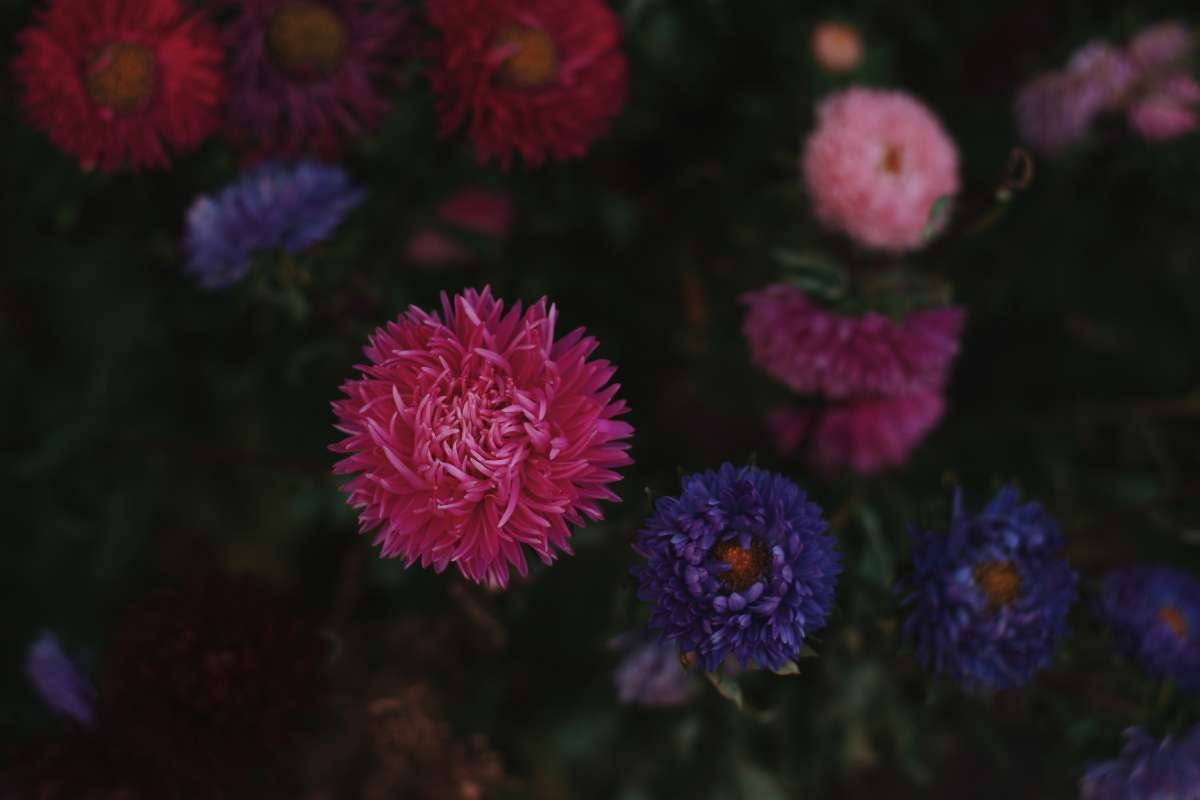
A hidden world awakens while most gardens are asleep. Flowers that bloom in the dark, in opposition to sun-seekers. They wait for the moon to rise before unfolding their petals and releasing seductive scents that peak at midnight.
These plants have evolved to attract night-owl pollinators like moths and bats, and this nocturnal display is a clever evolutionary tactic. Beyond the science, these “moon gardens” have a strong cultural appeal and provide a calm, silver-toned haven for people who appreciate beauty in the shadows.
The Science Behind Night-Blooming Flowers
The transition of flowers that bloom in the dark is driven by a biological clock known as circadian rhythms. Triggered by the absence of UV light. This nocturnal behavior is a specialized evolutionary niche designed to attract specific pollinators like moths, bats, and beetles. Because colors are invisible in the shadows, these plants have ditched vibrant pigments in favor of pale or white petals, which act as organic reflectors for even the faintest moonlight.
Pollination ecology in the dark relies heavily on “scent trails.” Plants like the Night-blooming Cereus or Moonflower release heavy, musky, or sweet volatiles after sunset to guide long-tongued hawkmoths over vast distances. The flower shapes are often tubular or wide-mouthed, perfectly engineered to accommodate the unique anatomy of their nocturnal visitors, ensuring survival through a sophisticated sensory partnership.
Here are the Top 15 Flora Queens of Night: Flowers That Bloom in the Dark:
Here is an in-depth guide to the most appealing flowers that bloom in the dark, complete with their distinct growth habits, sensory profiles, and hidden meanings, to assist you in selecting the ideal nocturnal additions for your landscape.
| Rank | Name | Scientific Name | Native Region |
| 1 | Moonflower | Ipomoea alba | Tropical Americas |
| 2 | Night-Blooming Jasmine | Cestrum nocturnum | West Indies & Central America |
| 3 | Evening Primrose | Oenothera biennis | North America |
| 4 | Queen of the Night | Epiphyllum oxypetalum | Mexico & Central America |
| 5 | Tuberose | Agave amica | Mexico |
| 6 | Angel’s Trumpet | Brugmansia | South America (Andes) |
| 7 | Four O’Clocks | Mirabilis jalapa | Tropical Americas |
| 8 | Night Phlox | Zaluzianskya capensis | South Africa |
| 9 | Casa Blanca Lily | Lilium ‘Casa Blanca’ | Hybrid (Japan/China ancestry) |
| 10 | Night-Scented Stock | Matthiola longipetala | Eurasia |
| 11 | Nicotiana | Nicotiana alata | South America |
| 12 | Evening Rain Lily | Zephyranthes drummondii | Southern USA & Mexico |
| 13 | Chocolate Daisy | Berlandiera lyrata | Southwestern USA & Mexico |
| 14 | Night Gladiolus | Gladiolus tristis | South Africa |
| 15 | Mock Orange | Philadelphus | Northern Hemisphere |
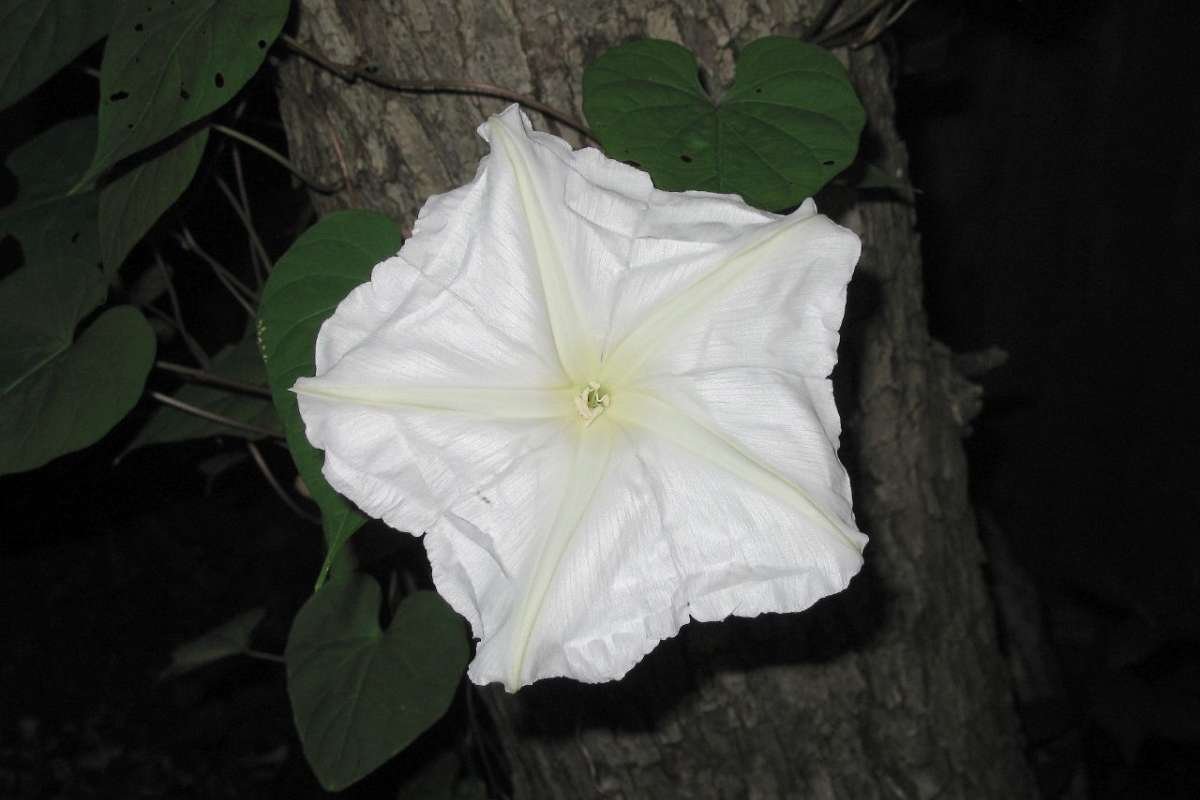
1. Moonflower (Ipomoea alba)
- Bloom Time: Sunset to sunrise.
- Fragrance: Delicate, lemony, and sweet.
- Symbolism: Rebirth, new beginnings, and dreaming.
- Uses: Ornamental climbing vines for trellises and night-viewing gardens.
This is a fast-growing vine that acts like a nature-made clock. During the day, the buds look like tightly rolled umbrellas, but as soon as twilight hits, they unfurl into large, white circles. Because they are flowers that bloom in the dark, they use their bright white color to catch the light of the moon, making them easy for nighttime visitors to find. The process of opening is so energetic that you can actually watch the petals twitch and expand over the course of just a few minutes, making it a favorite for “viewing parties” among garden enthusiasts.
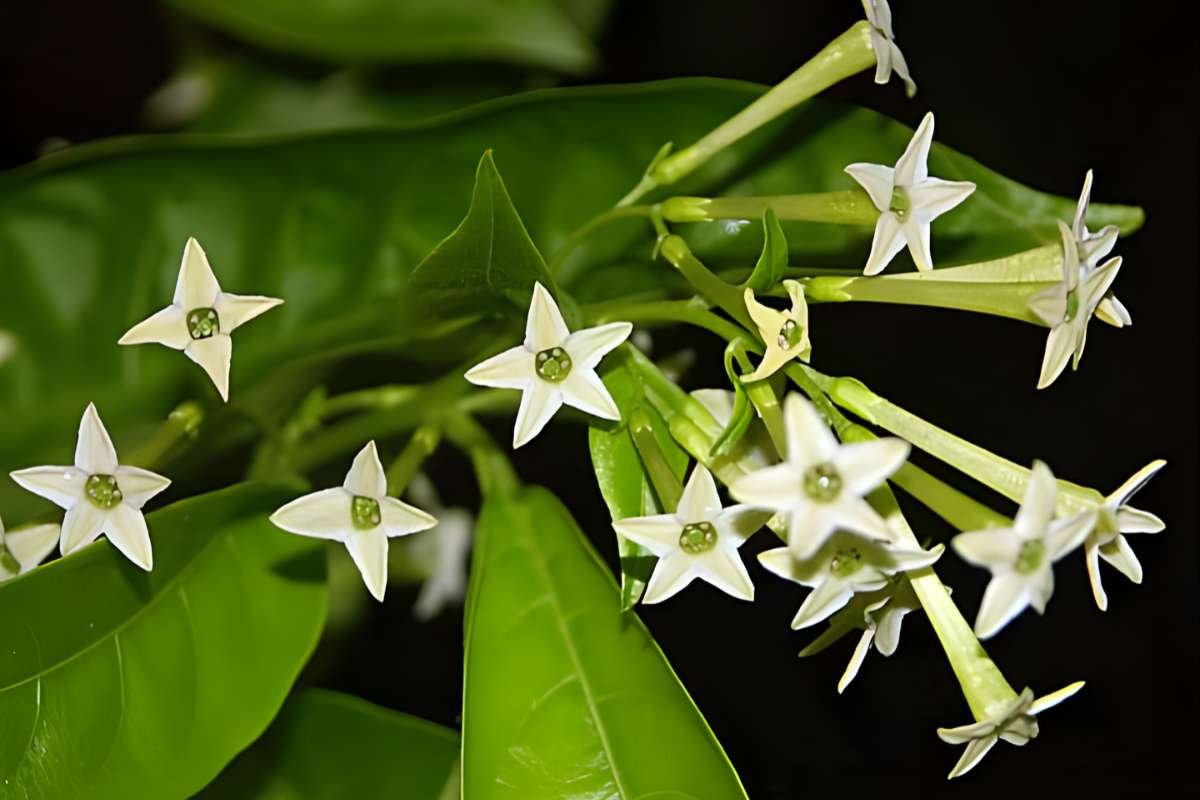
2. Night-Blooming Jasmine (Cestrum nocturnum)
- Bloom Time: Late evening through the night.
- Fragrance: Intensely sweet and powerful; can be smelled from 20 feet away.
- Symbolism: Mystery, romance, and intoxicating beauty.
- Uses: Privacy screening, aromatic hedges, and traditional medicine in some cultures.
While this plant doesn’t have the showiest petals, it is the king of fragrance. The tiny, greenish-white tubes stay closed during the heat of the day to save energy and protect their nectar from evaporation. Once night falls, they open up and release a perfume so strong it can fill an entire backyard. It is one of the most popular flowers that bloom in the dark for people who want a “scented” evening garden. Many homeowners plant them near windows so the evening breeze can carry the sweet, musky aroma directly into their bedrooms for a natural aromatherapy experience.
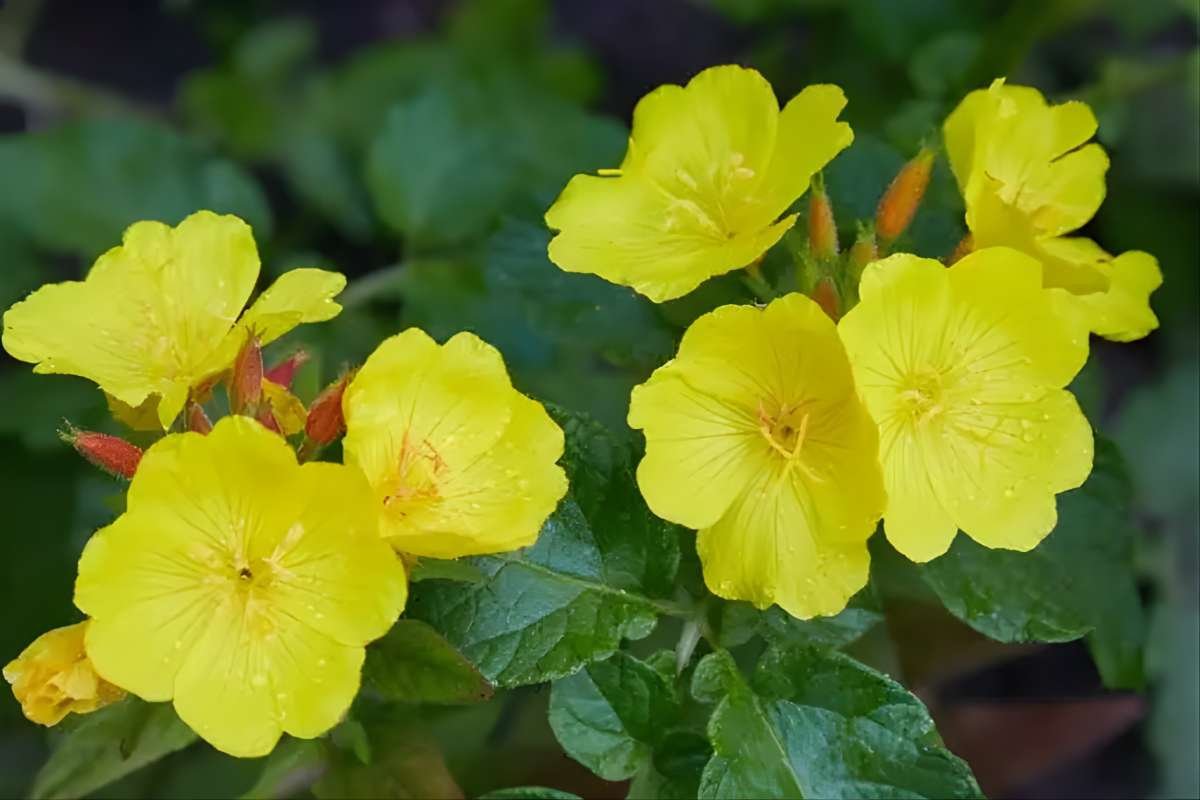
3. Evening Primrose (Oenothera biennis)
- Bloom Time: Twilight (blooms open within minutes).
- Fragrance: Mild, sweet, and honey-like.
- Symbolism: Youth, fickleness, and silent love.
- Uses: Evening Primrose oil is widely used for skin health and hormonal balance.
Watching these open is a treat; they pop open so fast you can almost see the movement, often accompanied by a soft rustling sound. These yellow flowers provide a critical “midnight snack” for local wildlife, offering high-quality nectar when most other food sources are “closed” for the night. By functioning as flowers that bloom in the dark, they avoid competing with daytime flowers for the attention of bees, instead focusing entirely on evening moths. Interestingly, the flowers usually wilt by noon the next day, having completed their reproductive mission under the stars.
4. Queen of the Night (Epiphyllum oxypetalum)
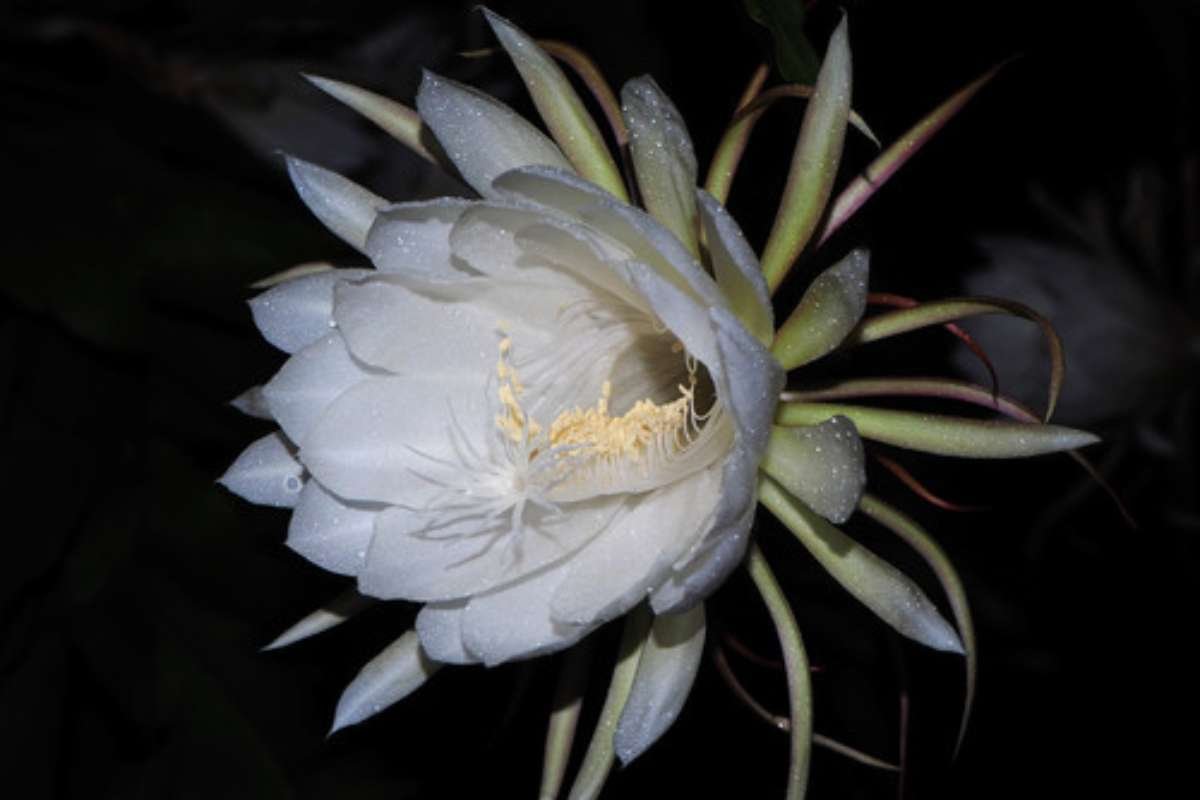
- Bloom Time: Midnight (often blooms only one night per year).
- Fragrance: Heavy, exotic, and fruity.
- Symbolism: Rare beauty and fleeting moments.
- Uses: Highly prized collector’s plant; flowers are sometimes used in soups in Asian cuisine.
This is a rare cactus that lives for the drama. It only opens its massive, waxy flowers late at night, usually starting around 8:00 PM and reaching full glory by midnight—and usually withers before the sun comes up the next morning. Because it is one of the rarest flowers that bloom in the dark, enthusiasts often stay up all night just to catch a glimpse of its one-night-only performance. The bloom is incredibly intricate, featuring dozens of needle-like outer petals that protect a core of pure white, emitting a scent that is both fruity and sophisticated.
5. Tuberose (Agave amica)
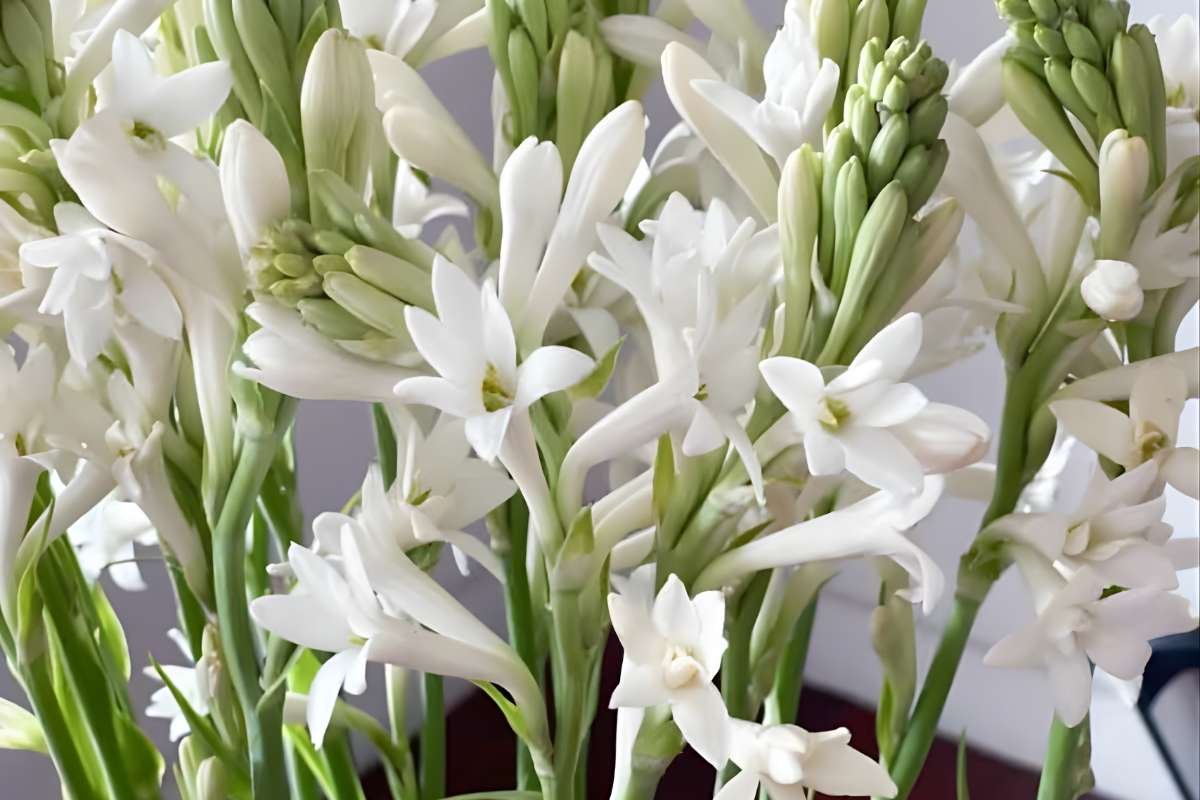
- Bloom Time: Increases in intensity after dusk.
- Fragrance: Creamy, floral, and deeply seductive.
- Symbolism: Dangerous pleasure and forbidden love.
- Uses: A staple in high-end perfumery and traditional wedding garlands.
Tuberose is a tall, elegant plant with spikes of waxy white blossoms that look like they are carved from porcelain. Its scent is thick and creamy, often used in world-famous perfumes because it is one of the few natural scents that cannot be fully replicated in a lab. Evolution has taught it to be most fragrant at night because that is when its specific pollinators are most active. As flowers that bloom in the dark, they provide a steady, reliable scent trail that helps insects find them in total blackness, ensuring the plant can reproduce even in the densest garden thickets.
6. Angel’s Trumpet (Brugmansia)
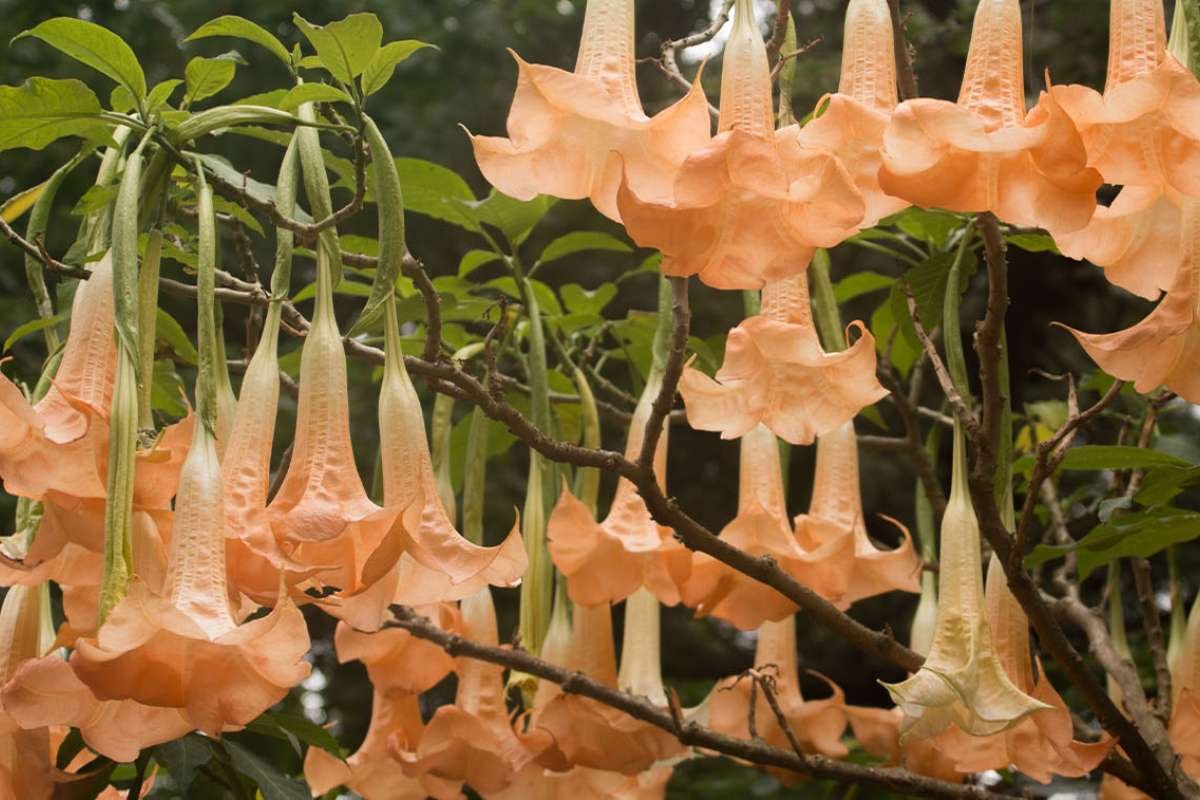
- Bloom Time: Nighttime (flowers droop during the day).
- Fragrance: Rich, musk-like, and tropical.
- Symbolism: Protection and spiritual communication.
- Uses: Focal point in landscape design; historically used in shamanic rituals (though highly toxic).
These look like large, hanging bells that dangle from trees like living chandeliers. During the day, the flowers hang limp and have very little smell to conserve their precious essential oils. However, once the temperature drops and the humidity rises at night, the “trumpets” wake up and emit a deep, tropical aroma that can be detected from down the block. They are a favorite for large landscapes because they turn a regular yard into a glowing, moonlit paradise, though gardeners should handle them with care as all parts of the plant are quite toxic.
7. Four O’Clocks (Mirabilis jalapa)
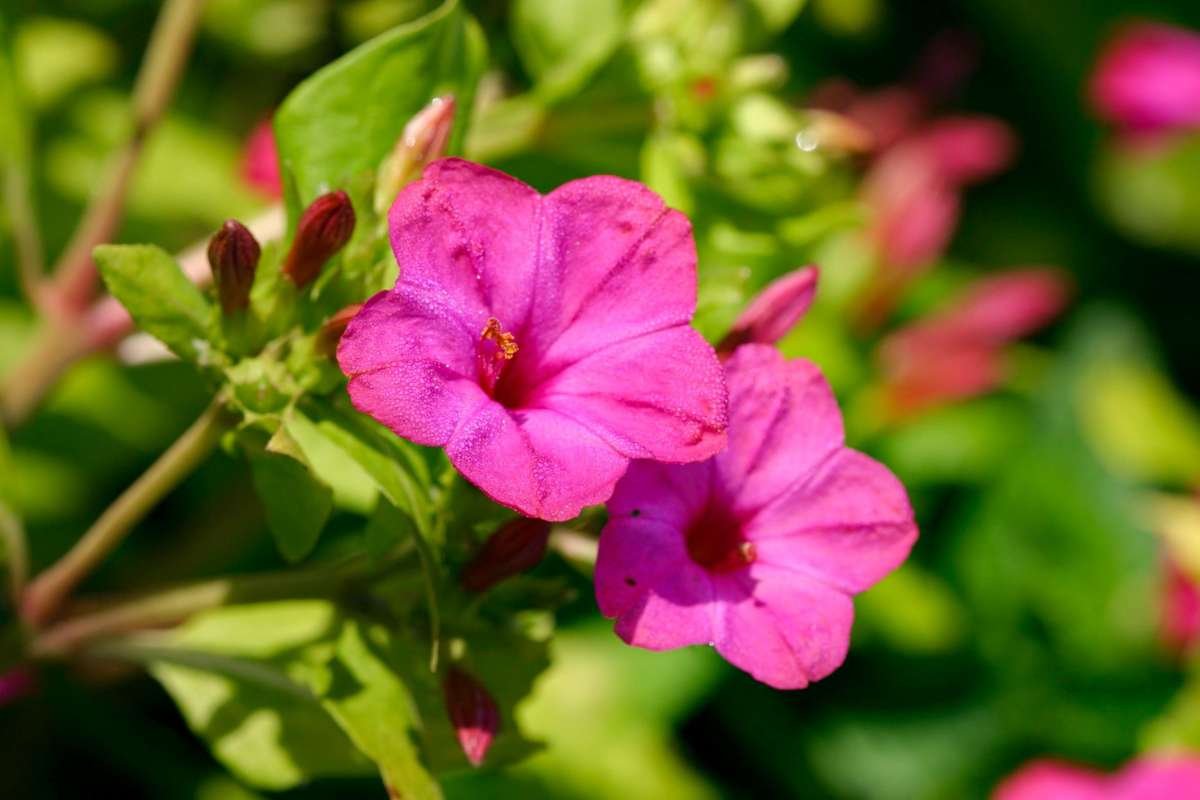
- Bloom Time: Late afternoon through the night.
- Fragrance: Subtle and sweet.
- Symbolism: Timeliness and shy affection.
- Uses: Natural food coloring and medicinal root applications.
The name says it all—these flowers start their day right as the workday ends for us, usually opening between 4:00 PM and 6:00 PM. They come in many colors like pink, yellow, and white, and sometimes you can even find different colored stripes on a single petal. They stay open all through the night, providing a vibrant splash of color for evening porch-sitters, and finally close up the next morning when the sun gets too bright and the air becomes too dry.
Read Next:
- Can You Guess the Top 30 Most Rare Flowers in the World? Most People Get It Wrong
- The 10 Most Expensive Flowers in the World, And Why They Cost More Than Gold
8. Night Phlox (Zaluzianskya capensis)
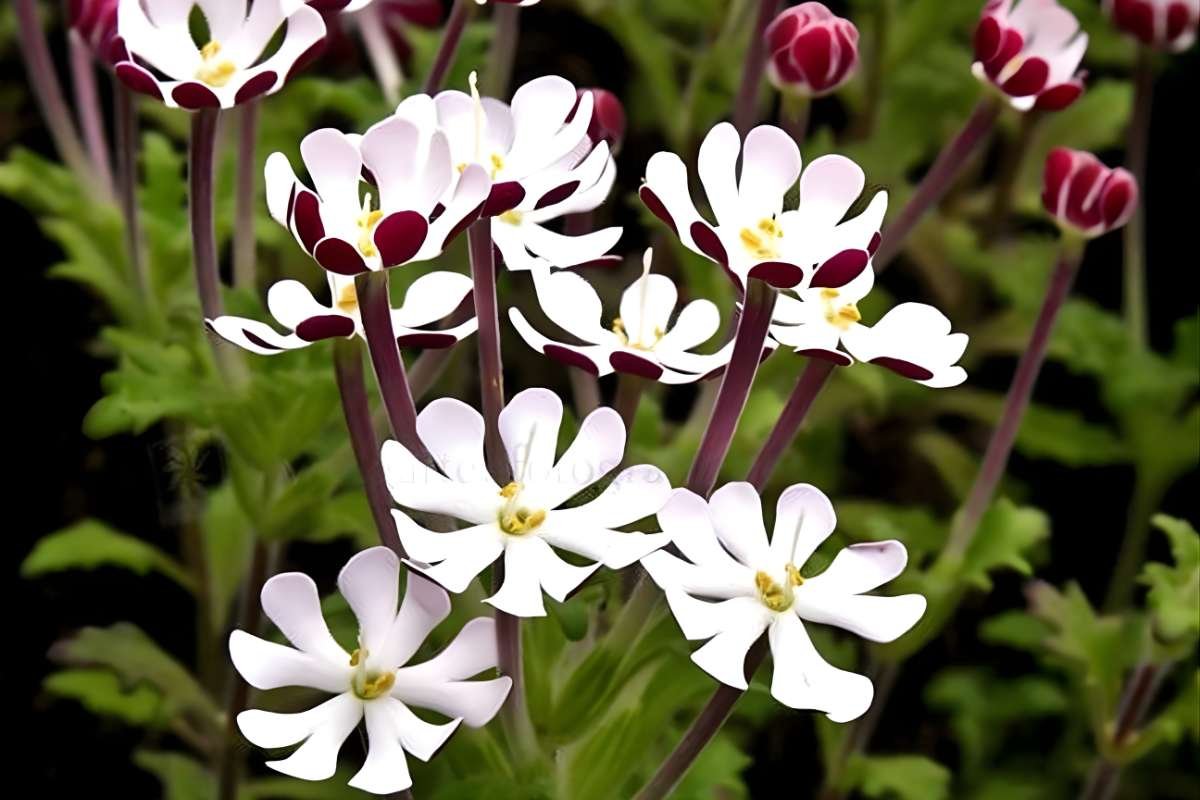
- Bloom Time: Sunset to dawn.
- Fragrance: Notes of vanilla, honey, and almond.
- Symbolism: Sweetness in the dark and hidden charms.
- Uses: Compact filler for containers or “sensory” patio pots.
Also known as “Midnight Candy,” these small flowers look like little red or maroon dots during the day, completely tucked away. When they open at night, they reveal a brilliant white center and smell exactly like a mix of vanilla, honey, and almond. They stay low to the ground, making them perfect for pots on a porch or tucked between stepping stones, where you can enjoy their sweet scent while sitting outside under the stars.
9. Casa Blanca Lily (Lilium ‘Casa Blanca’)
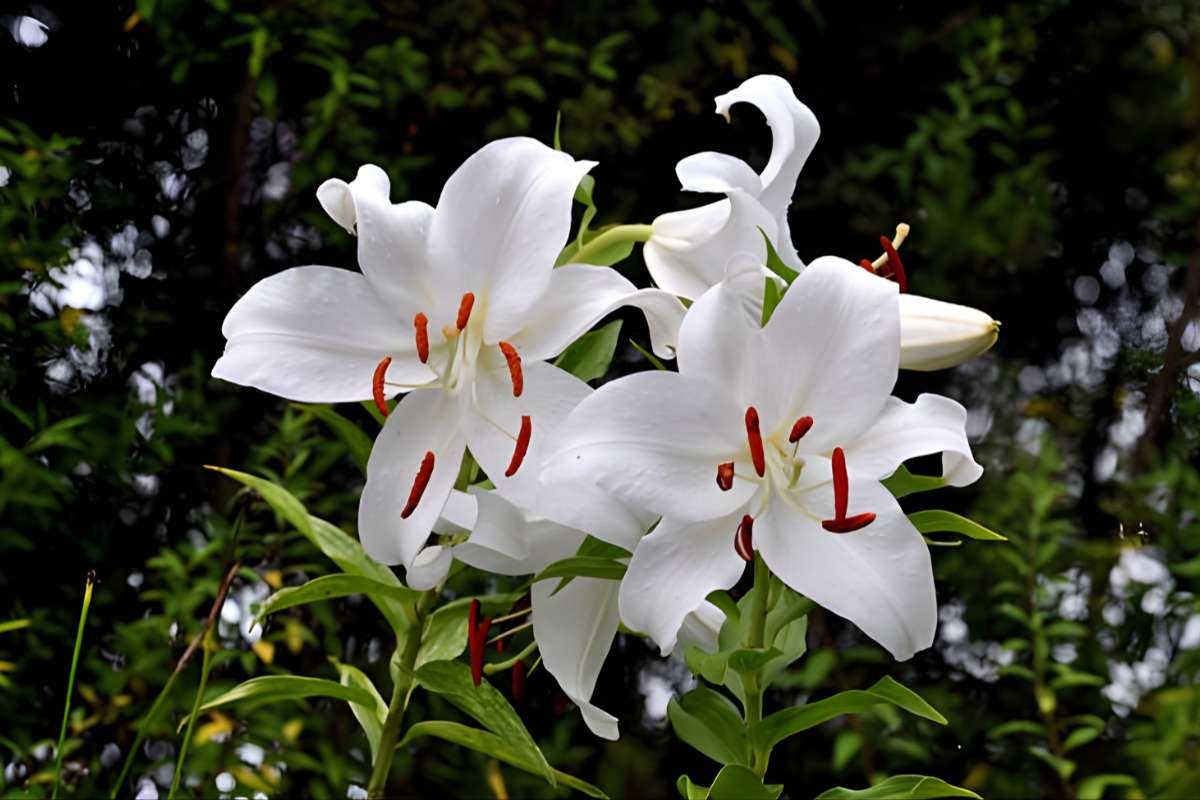
- Bloom Time: Stays open 24h, but fragrance peaks at night.
- Fragrance: Spicy, sweet, and lingering.
- Symbolism: Purity, celebration, and majesty.
- Uses: The premier choice for wedding bouquets and moonlight garden design.
These are massive, pure white lilies that seem to glow in the moonlight due to their highly reflective petals. While they stay open during the day, their perfume becomes much heavier and spicier once the sun goes down to attract giant hawkmoths. They are often used in high-end floral arrangements because they look so regal and stand out beautifully against the dark greens and shadows of a night garden, symbolizing peace and majesty.
10. Night-Scented Stock (Matthiola longipetala)
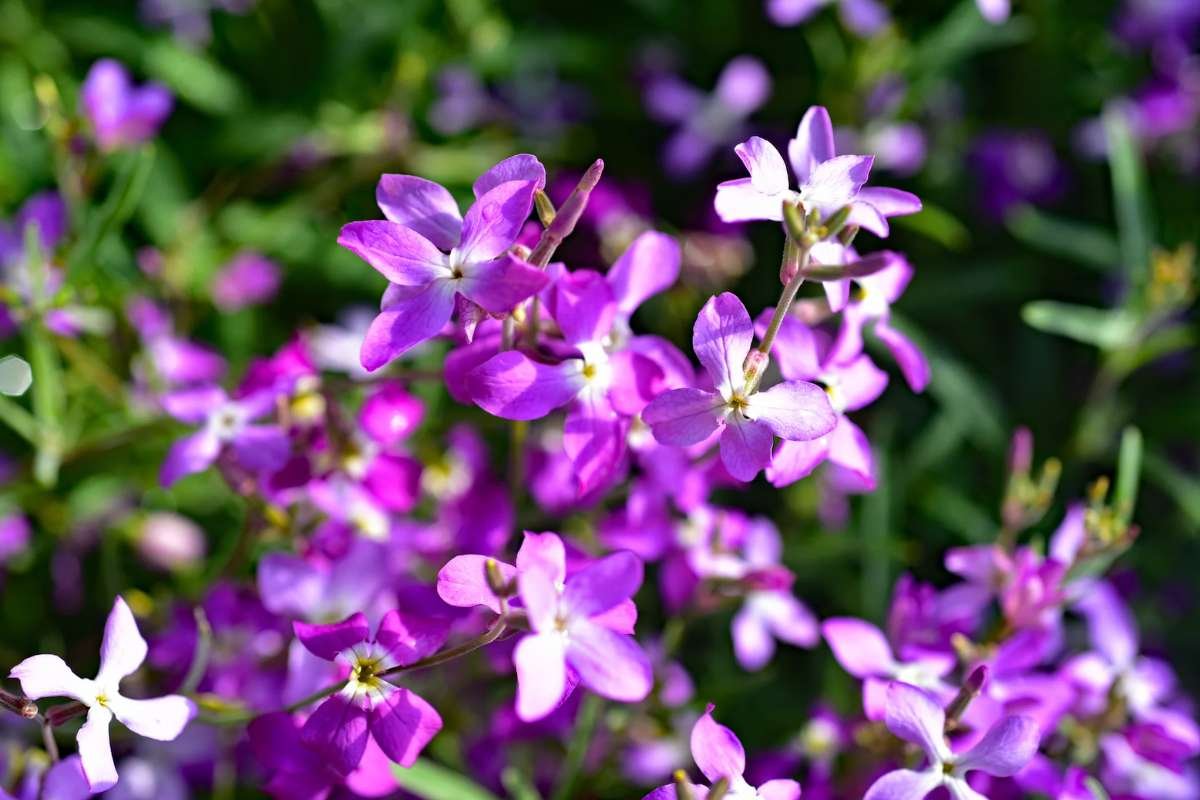
- Bloom Time: Evening onwards.
- Fragrance: Spicy, clove-like, and nostalgic.
- Symbolism: Lasting beauty and promptness.
- Uses: Planted under windows or near seating areas for evening enjoyment.
This plant might look a bit unimpressive and “wilted” while the sun is out, but don’t let that fool you; it’s just resting. As soon as evening arrives, the flowers perk up, their lilac petals straighten out, and they release a scent that smells like cloves and warm spices. It’s a hardy plant that is very easy to grow from seed, making it a staple for beginners who want to experience the magic of nocturnal gardening without much fuss.
11. Nicotiana (Nicotiana alata)
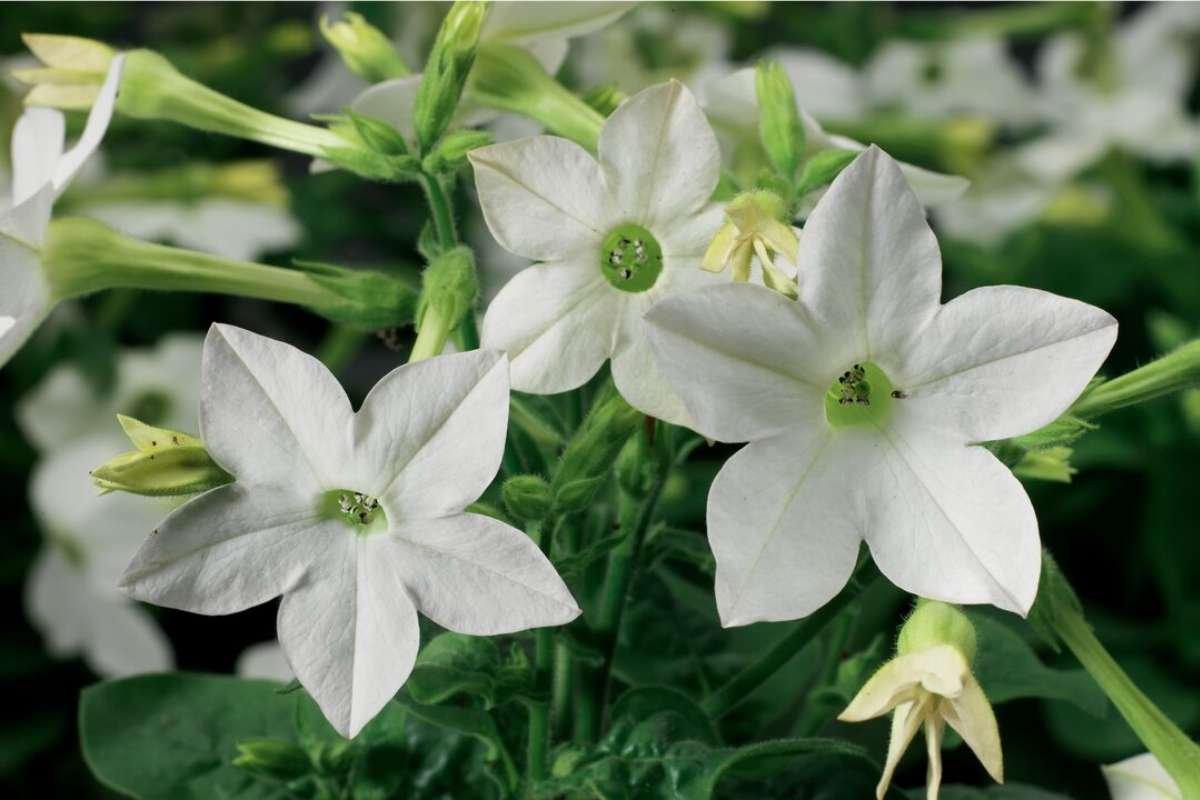
- Bloom Time: Evening and overcast days.
- Fragrance: Soft and jasmine-like.
- Symbolism: Warmth and peace.
- Uses: Excellent for attracting hawkmoths to the garden.
Nicotiana flowers are shaped like long, elegant stars and come in very cool shades like lime green and deep purple. The white varieties are the best for night gardens because their petals act like tiny satellites, catching the faintest light from the moon or garden lamps. They have a soft, sophisticated scent that isn’t too overwhelming but provides a constant, pleasant backdrop for an evening stroll.
12. Evening Rain Lily (Zephyranthes drummondii)
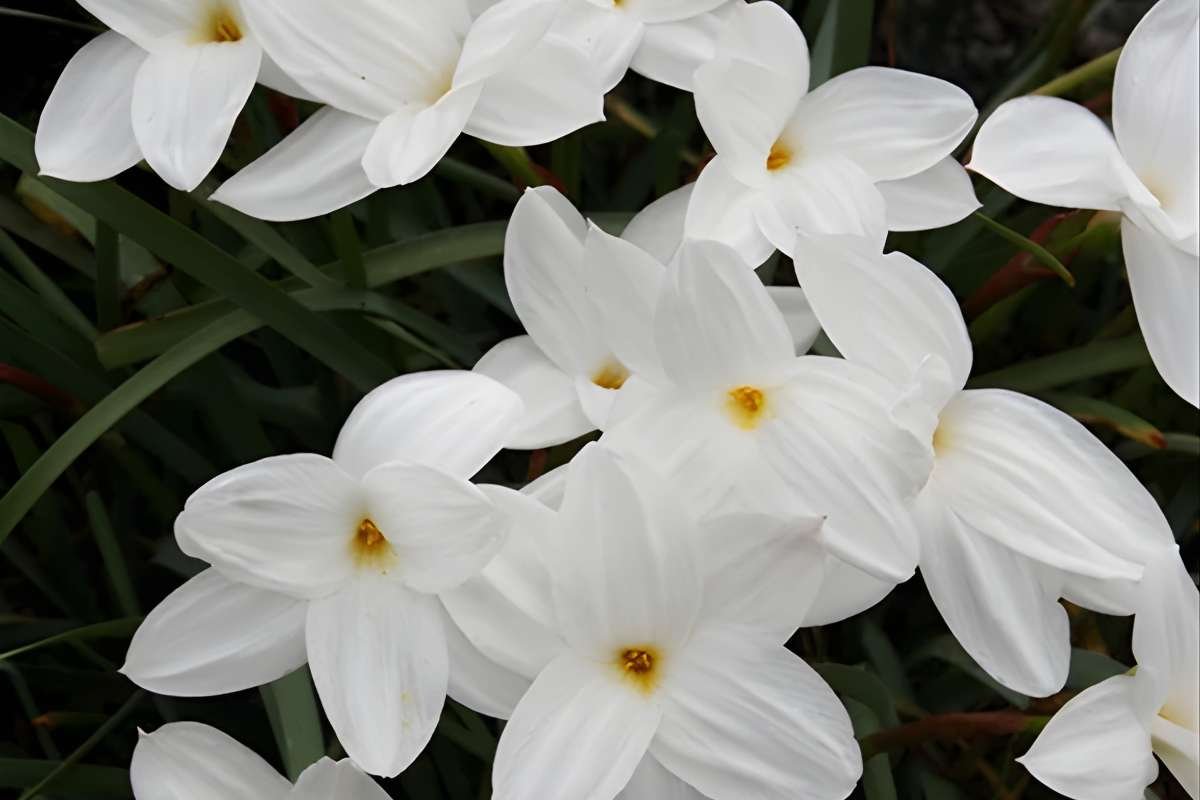
- Bloom Time: Night (frequently after rainfall).
- Fragrance: Light and ginger-like.
- Symbolism: Anticipation and expectation.
- Uses: Naturalizing in lawns or as a charming addition to rock gardens.
These are like little surprises in the garden, often appearing out of nowhere. They are famous for waiting for the atmospheric pressure change of a summer rainstorm to trigger their blooming. Once they pop up, they face the sky and stay open through the night, reflecting the moon in their cup-shaped petals. They are small and delicate, making them great for the edges of garden paths where they can “light the way.”
13. Chocolate Daisy (Berlandiera lyrata)
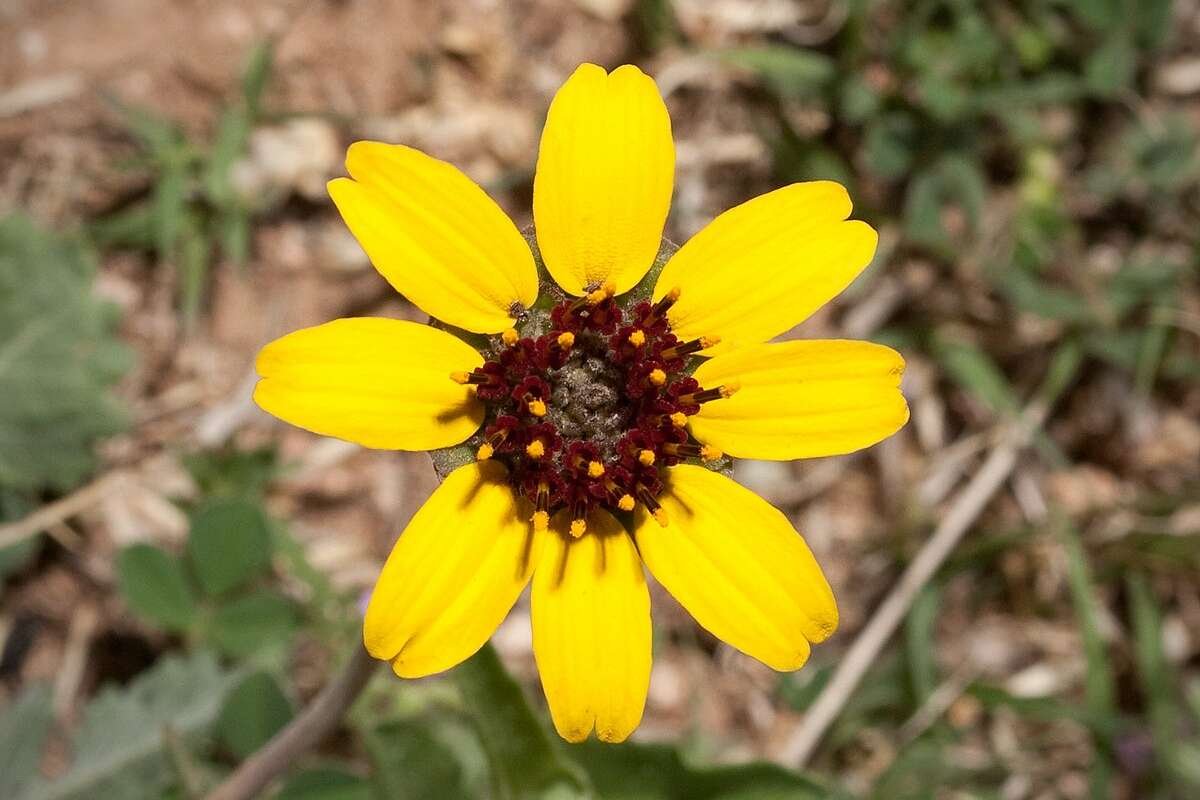
- Bloom Time: Late evening through early morning.
- Fragrance: Strong, realistic milk chocolate scent.
- Symbolism: Comfort and childhood joy.
- Uses: Drought-tolerant landscaping and edible garnish (petals).
This is a dream for chocolate lovers and kids alike. While the flower looks like a simple yellow daisy, it smells exactly like cocoa powder or milk chocolate. The scent is strongest in the early morning and late night when the air is cool. It’s a tough, drought-resistant plant that adds a fun, whimsical element to any backyard, proving that nature has a sense of humor and a sweet tooth.
14. Night Gladiolus (Gladiolus tristis)
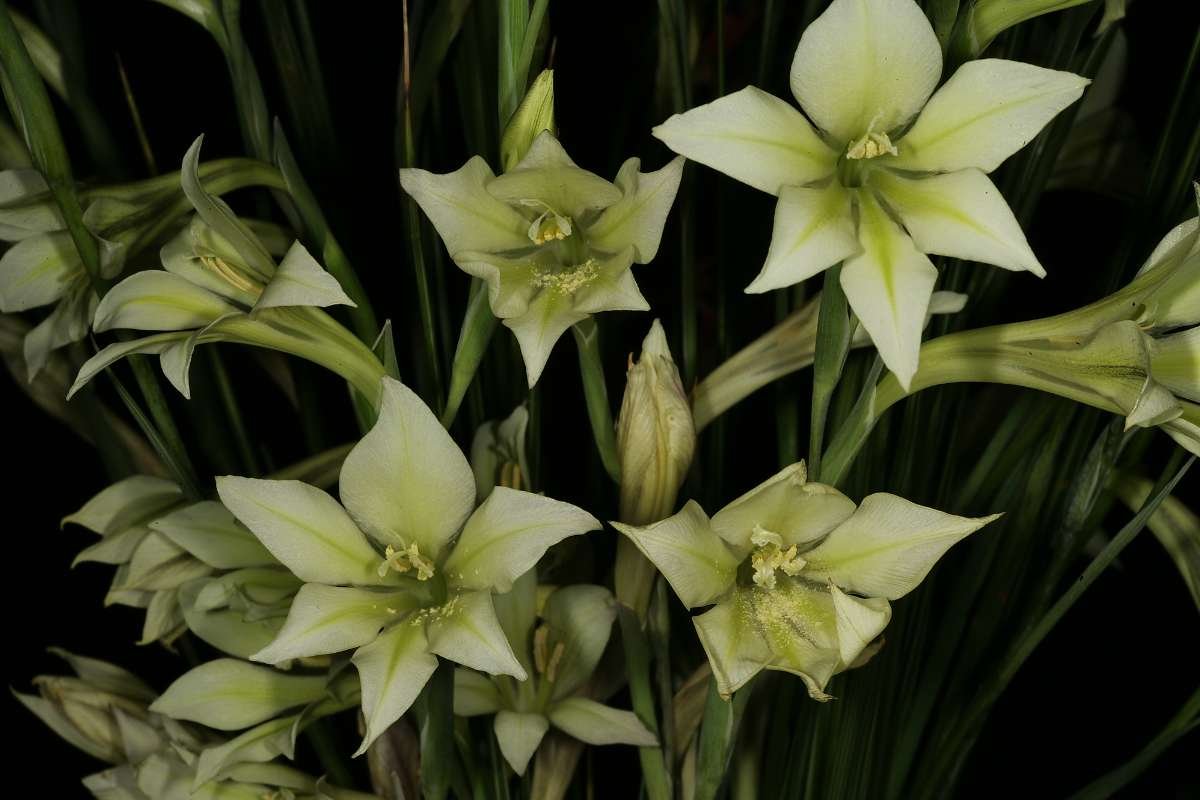
- Bloom Time: Late afternoon through night.
- Fragrance: Spicy, almond, or clove scent.
- Symbolism: Strength of character and remembrance.
- Uses: Cut flowers and vertical interest in Mediterranean-style gardens.
Unlike the bright, tall gladiolus you see in grocery store bouquets, this variety is a creamy, pale yellow with thin, elegant leaves. It is specifically designed to be seen in low light, standing out against dark soil or mulch. In the evening, it gives off a wonderful spicy scent that reminds many gardeners of almond or nutmeg, adding a layer of “warmth” to the cool night air.
15. Mock Orange (Philadelphus)
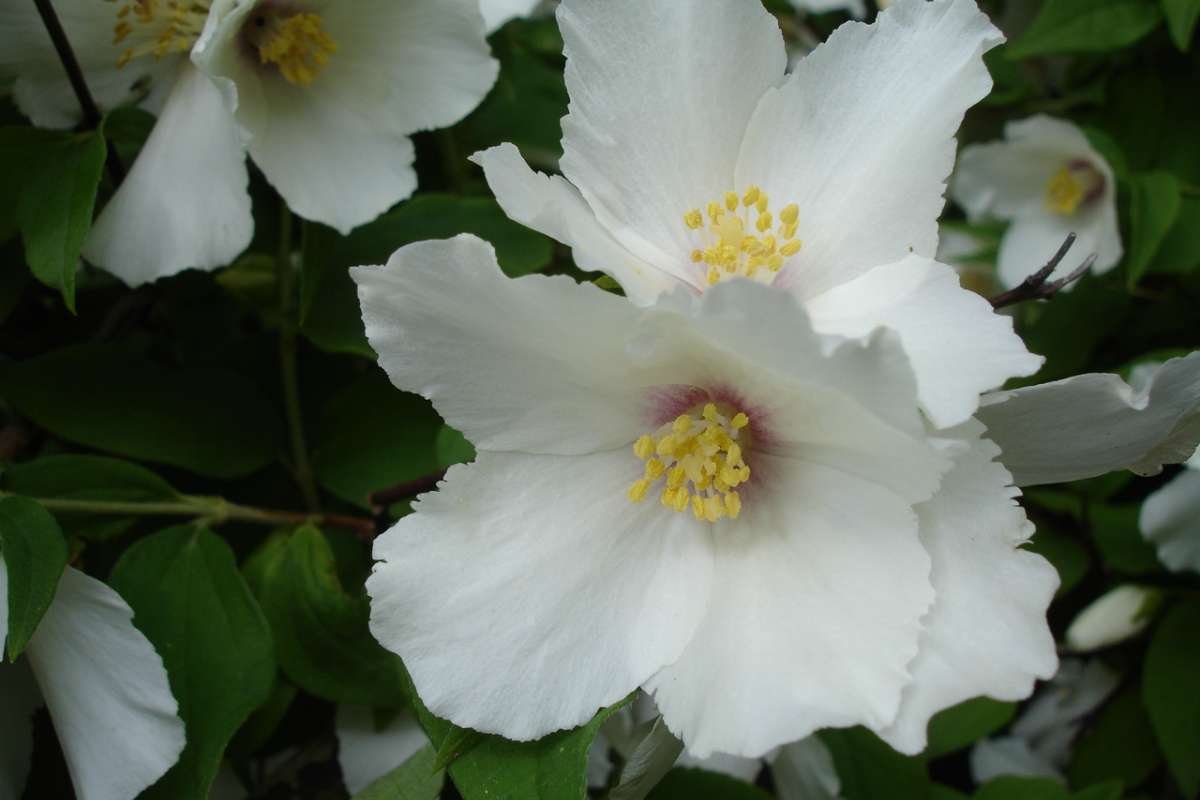
- Bloom Time: Peaks in early summer; fragrance intensifies at night.
- Fragrance: Intense citrus and orange blossom.
- Symbolism: Deceit (due to its name) or brotherly love.
- Uses: Large landscape shrub used for natural fencing and cut branches.
This is a large, hardy bush that gets covered in thousands of white flowers in late spring. The reason it’s called “Mock Orange” is that the flowers smell exactly like a grove of orange trees in bloom. As one of the most reliable flowers that bloom in the dark, its scent is incredibly airy and carries very well on a cool night breeze, making the whole garden smell fresh, citrusy, and clean, even when the sun is nowhere to be seen.
Safety and Special Notes
While flowers that bloom in the dark add undeniable magic, safety is paramount. Several species, most notably Angel’s Trumpet (Brugmansia) and Night-Blooming Jasmine. They contain alkaloids that are highly toxic if ingested by pets or children. Always wear gloves when pruning, and research toxicity levels before planting. For a family-friendly moon garden, prioritize non-toxic companions. Like Moonflowers or Chocolate Daisies, to ensure your evening sanctuary remains a safe space for everyone to enjoy.
Symbolism and Cultural Meaning across Continents
Night-blooming flora carry deep spiritual weight globally. In Asia, the sacred Brahma Kamal is revered as a divine bloom that brings luck to those who witness its midnight opening. Across Latin America, the Four O’Clock is woven into folklore as a symbol of shy romance and the passing of time. In the Middle East and Africa, these flowers transformed desert courtyards into fragrant, moonlit sanctuaries. Today, Western gardeners, inspired by experts like Martha Stewart, cultivate these species to create “Moon Gardens,” where white petals symbolize peace, reflection, and a sophisticated connection to the natural world’s hidden rhythms.
Read Next:
- Deadlier Than Snake Venom? The Most Poisonous Flowers in the World
- 12 Rarest Orchids in the World That Look Too Unreal to Be Natural
Conclusion
Growing a moon garden is an invitation to observe nature’s most private performances, not just a horticultural pastime. Flowers that bloom in the dark turn any outdoor area into a sensory haven, from the rare, transient spectacle of the Queen of the Night to the enticing scent of the Night-Blooming Jasmine. You can design a landscape that genuinely shines under the stars by comprehending the distinctive science and cultural legacy of these nocturnal species. These moonlight marvels guarantee that your garden’s beauty never fades with the sunset, whether you’re looking for a fragrant evening retreat or spiritual contemplation.
FAQ:
1. Are flowers that bloom in the dark found worldwide?
Yes. Flowers that bloom in the dark grow across Asia, Africa, Europe, the Americas, and Australia. While many thrive in tropical and subtropical climates, several species like Evening Primrose and Four O’Clocks grow well in temperate regions too.
2. Are night-blooming flowers more fragrant than daytime flowers?
Generally, yes. Flowers that bloom in the dark often release stronger fragrances at night to attract pollinators in the absence of sunlight. Scents can range from sweet and vanilla-like to musky or citrusy, depending on the species.
3. Do night-blooming flowers benefit the environment?
Yes. They support nocturnal biodiversity, help sustain declining moth populations, and contribute to balanced ecosystems. Planting flowers that bloom in the dark can make gardens more eco-friendly and pollinator-supportive.