Aloe vera is most commonly recognized as the practical green plant perched on a sunny windowsill. We adore it for both its cooling gel that relieves a bad sunburn and its thick leaves. However, did you know that this well-known succulent has a secret gift? It can change from a plain green plant into a breathtaking desert masterpiece under the correct circumstances.
For many indoor gardeners, flowering aloe vera plants are an uncommon sight. Why do some plants develop tall, vibrant stalks while others remain simple and green? When you first see those vivid orange or yellow bells, it feels like a reward for all of your hard work. Let’s examine the causes of these blooms and how you can encourage your own plant to display its floral side.
What Are Flowering Aloe Vera Plants? Botanical Classification:
Scientifically, this famous succulent belongs to:
Genus: Aloe
Species: Aloe vera.
While there are over 500 types of Aloe, Aloe vera is the most popular worldwide. Knowing their true name helps you find the specific care needed for flowering aloe vera plants.
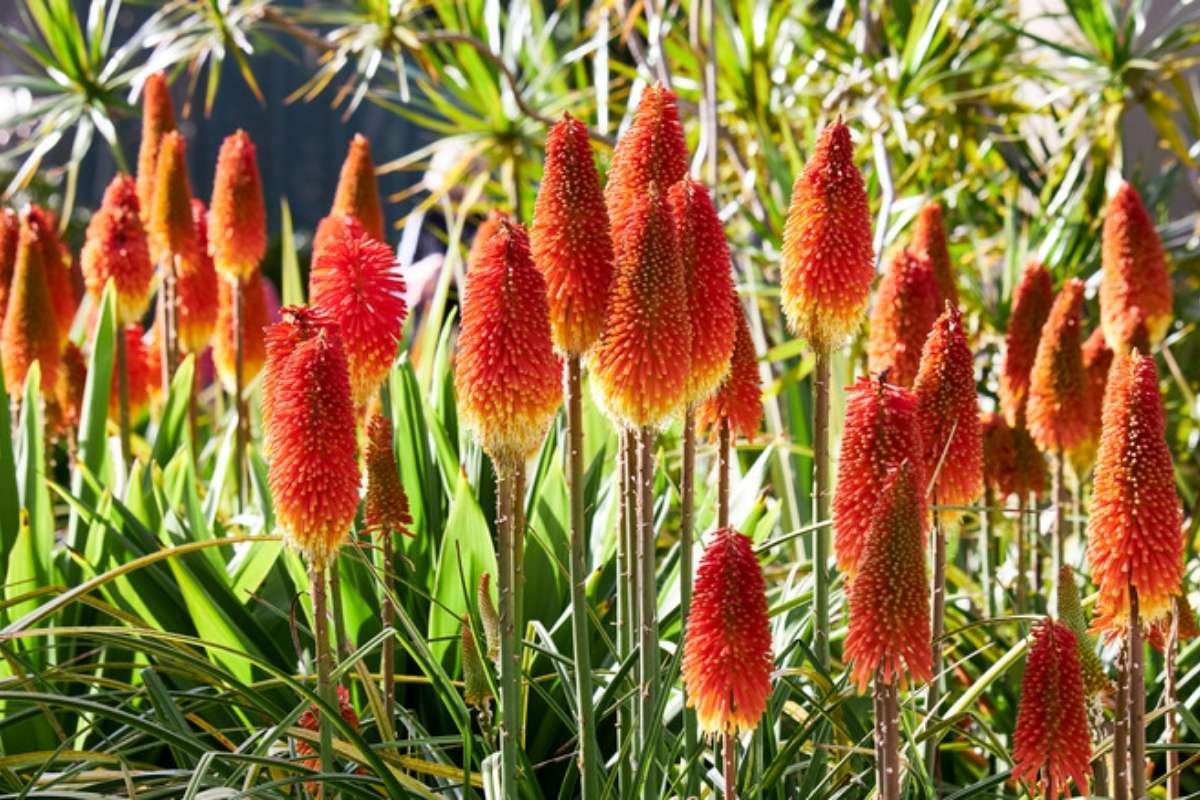
Many owners never get to witness the breathtaking sight of flowering aloe vera plants. An inflorescence is a tall, strong spike that emerges from the center of an aloe. When it is content and mature. Clusters of tubular, bell-shaped flowers hang down from the top of this stalk. These blooms typically glow in vivid shades of yellow, sunset orange, or coral red, depending on the particular variety and climate.
Establishing realistic expectations is essential because flowering is not a given. Every spring, they bloom in hot, desert-like gardens or in the wild. It is considerably more difficult for indoor plants, though. Your aloe may remain a “foliage-only” friend if it doesn’t receive enough intense sunlight and isn’t old enough (usually at least four years). When you see those vibrant bells, your plant is truly at home!
The Science Behind Aloe Vera Flowering:
Aloe vera is a master of survival, and its flowering process is a carefully timed biological event. For the first few years of its life, the plant focuses entirely on its leaves. It builds up a thick, moisture-rich reservoir of gel to survive harsh conditions. Flowering only occurs once the plant reaches botanical maturity. This usually takes four or more years of steady growth. Until it has enough stored energy, the plant simply won’t invest in a bloom.
In the wild, flowering aloe vera plants follow a specific evolutionary clock. Triggered by the long, bright days of early spring. The plant sends up a tall stalk to signal pollinators like hummingbirds and bees. These tubular flowers are shaped perfectly for long beaks and tongues. This “reproductive stage” is the plant’s way of spreading seeds and ensuring its legacy continues. In the desert, this happens like clockwork. But in a cozy living room, the plant often feels no “evolutionary pressure” to reproduce. This is why indoor blooms are such a rare treat.
Global Blooming Patterns & Climate Influence:
How and when you see flowering aloe vera plants depends heavily on where you are in the world. Since Aloe Vera is a succulent. It thrives in warm, dry environments. In these regions, the plant follows a natural seasonal cycle that triggers its tall, colorful stalks. In cooler or wetter climates, the plant often stays in a “survival mode.” It is focusing only on its leaves rather than producing flowers.
Most successful blooms occur in USDA Hardiness Zones 9 through 11. In these areas, the ground rarely freezes, and the sun is intense enough to provide the energy needed for reproduction.
Climate Comparison for Aloe Blooms
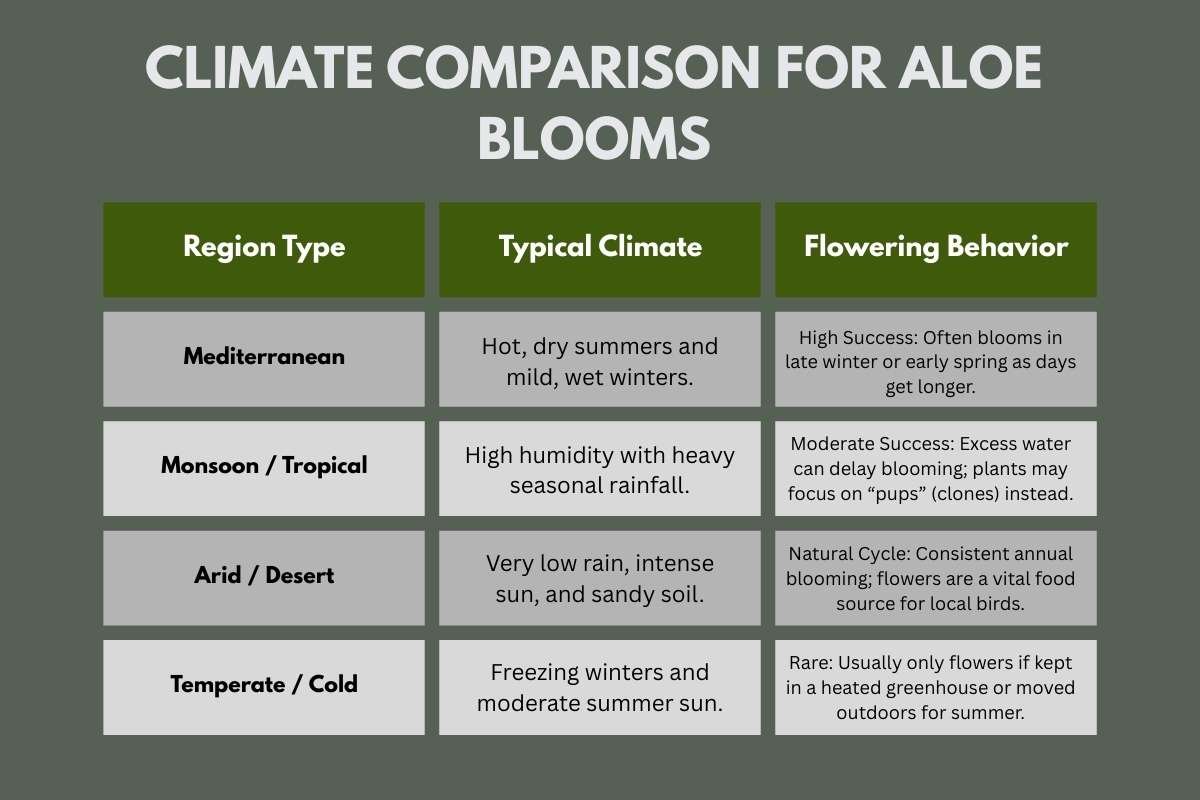
The following table shows how different global environments impact the flowering process:
| Region Type | Typical Climate | Flowering Behavior |
| Mediterranean | Hot, dry summers and mild, wet winters. | High Success: Often blooms in late winter or early spring as days get longer. |
| Monsoon / Tropical | High humidity with heavy seasonal rainfall. | Moderate Success: Excess water can delay blooming; plants may focus on “pups” (clones) instead. |
| Arid / Desert | Very low rain, intense sun, and sandy soil. | Natural Cycle: Consistent annual blooming; flowers are a vital food source for local birds. |
| Temperate / Cold | Freezing winters and moderate summer sun. | Rare: Usually only flowers if kept in a heated greenhouse or moved outdoors for summer. |
Key Factors for Flowering Success:
You have to replicate their natural desert habitat if you want to see flowering aloe vera plants in your own house. Giving the plant enough extra energy to bloom is more important than simply keeping it alive. Take these professional-level actions to transform your aloe from “surviving” to “thriving.”
Light Exposure:
Light is the “fuel” for flowers. Your Aloe needs at least 6 to 8 hours of bright, direct sunlight every day. If you live in a place with cloudy winters, a high-quality LED grow light can bridge the gap. Without intense light, the plant will never have the power to push up a heavy flowering stalk.
Temperature & Seasonal Shifts:
In nature, a drop in nighttime temperatures signals that spring is coming. To trigger a bloom, try to provide warm days (70-85°F) and cooler nights (50-60°F). This temperature “swing” mimics the desert and tells the plant it is time to reproduce.
Watering Rhythm:
Overwatering is the fastest way to kill a bloom. Use the “soak and dry” method: water the soil until it runs out the bottom, then wait until the soil is completely bone-dry before watering again. During the winter, cut your watering in half to let the plant “rest.”
Soil & Pot Choice:
Aloes hate “wet feet.” Use a gritty cactus or succulent mix that allows water to move through quickly. Keeping your Aloe in a slightly smaller pot can actually help; when the roots feel a bit snug, the plant often shifts its energy toward flowering rather than just growing more roots.
Fertilizing Responsibly:
Feed your plant a balanced, water-soluble fertilizer once in the spring and once in the summer. Avoid high-phosphorus “bloom boosters” that are too harsh for succulents. A gentle, steady supply of nutrients is all it needs to build a strong inflorescence.
Indoor vs. Outdoor Blooming:
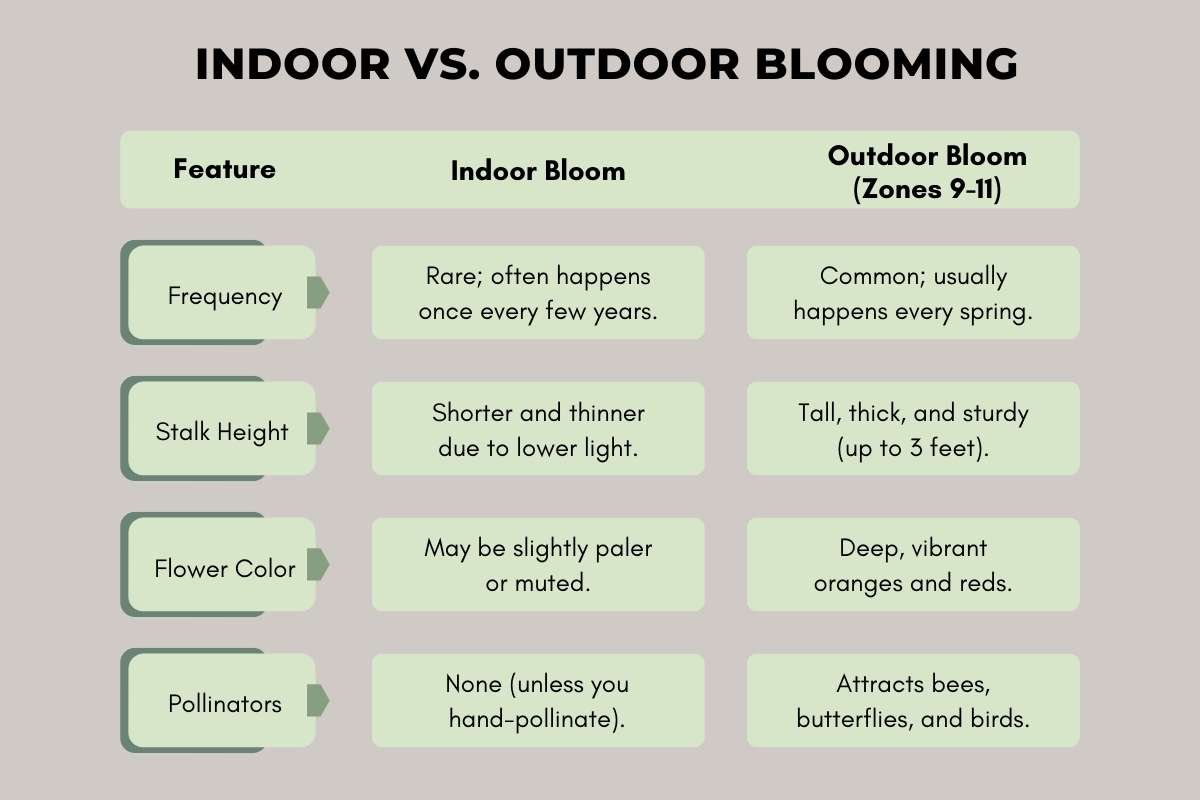
Even though it is the same species, an Aloe vera plant acts very differently depending on whether it lives in your living room or out in the garden. Understanding these differences helps you set the right goals for your plant.
| Feature | Indoor Bloom | Outdoor Bloom (Zones 9-11) |
| Frequency | Rare; often happens once every few years. | Common; usually happens every spring. |
| Stalk Height | Shorter and thinner due to lower light. | Tall, thick, and sturdy (up to 3 feet). |
| Flower Color | May be slightly paler or muted. | Deep, vibrant oranges and reds. |
| Pollinators | None (unless you hand-pollinate). | Attracts bees, butterflies, and birds. |
Why Some Aloe Vera Never Blooms?
Even with the best care, flowering aloe vera plants remain a rare achievement for indoor gardeners. While your plant may look vibrant and green, certain invisible factors often keep it from producing those elusive bell-shaped blooms.
The most common reasons for a “foliage-only” Aloe include:
- Lack of Light: Standard indoor light is often too weak to fuel a heavy flower stalk.
- Constant Climate: Indoor heating and cooling prevent the natural “temperature swing” that triggers spring blooming.
- Youth: Most Aloes must be at least 3 to 4 years old before they are biologically ready to reproduce.
It is also important to debunk a common myth: more fertilizer does not mean more flowers. In fact, over-fertilizing can stress the roots and stop blooms entirely. Remember, even a perfectly healthy indoor Aloe may never flower. If yours stays green and simple, it doesn’t mean you’re a bad plant parent. It just means your Aloe is perfectly content focusing on its healing leaves.
What to Do When Your Aloe Blooms?
When your Aloe finally sends up its tall, bell-covered stalk, it is a cause for celebration! During this exciting time, flowering aloe vera plants need a bit of extra support to keep the bloom looking its best.
Steps for Bloom Care and Safety:
- Consistent Light: Keep the plant in its sunniest spot. Moving it now might cause the flowers to drop early.
- Watering: Stick to your “soak and dry” routine. Do not overwater just because there are flowers.
- Post-Bloom Trimming: Once the flowers fade and turn brown, use clean shears to snip the stalk at the very base. This helps the plant redirect energy back into its leaves.
- Stay Safe: While the flowers are beautiful, remember that Aloe leaves contain latex, which can be an irritant. Keep curious pets and children away from the plant, as nibbling on the leaves or stalk can cause an upset stomach.
Troubleshooting: Common Issues & Solutions
Even for the most experienced gardeners, flowering aloe vera plants can run into trouble. Most issues are the plant’s way of communicating that its environment doesn’t quite match its desert origins.
Quick Fixes for Common Problems
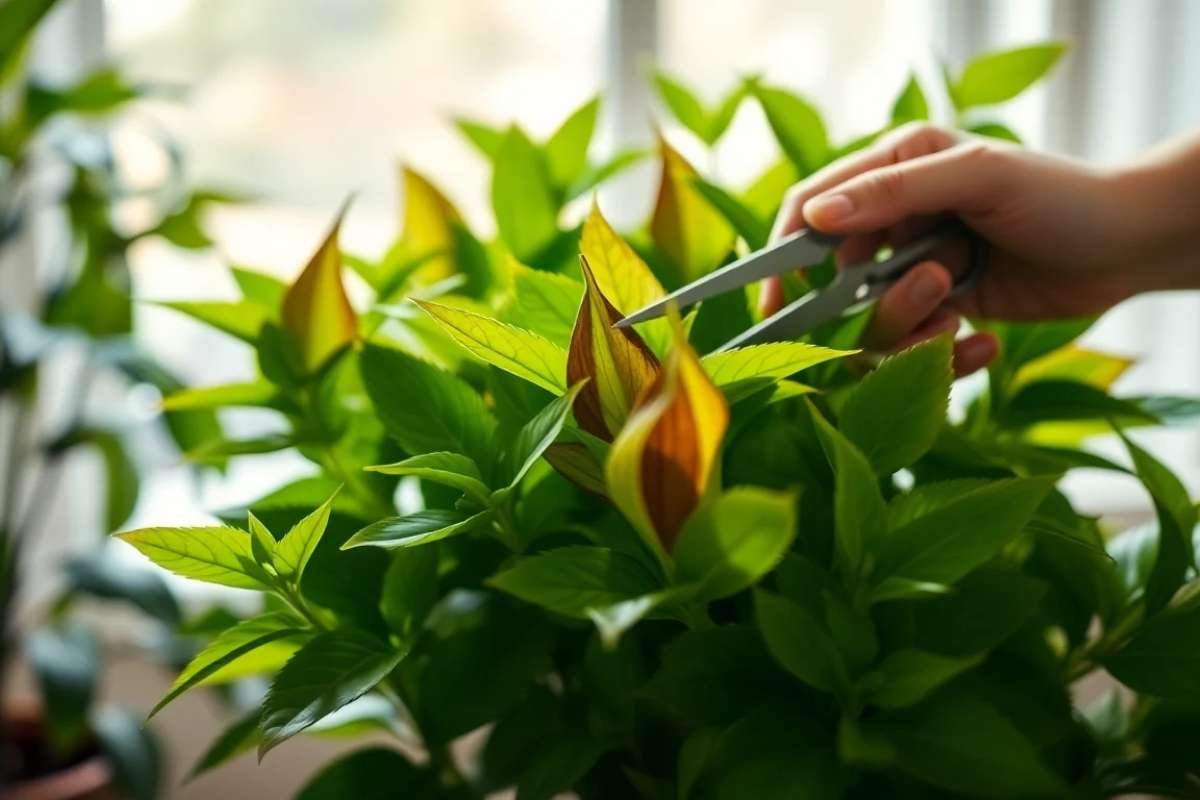
- Brown, Crispy Tips: This usually means the air is too dry or the plant is getting “sunburned” from a sudden move to intense light. Increase the humidity slightly or move it back a few inches.
- Drooping Flower Stalks: If the stalk leans or wilts, it often needs more sunlight. A “weak” stalk lacks the structural strength to hold up its heavy bell-shaped blooms.
- No Buds After Stalk Appears: This is often caused by a sudden temperature drop or inconsistent watering. Keep conditions steady once the stalk starts to grow.
Seasonal Watch
During the monsoon season, high humidity can lead to root rot; ensure your soil is extra gritty. In winter, many owners mistake “dormancy” (slower growth) for a dying plant and overwater. Let your Aloe rest in the cold months. It is simply saving up energy for its big spring show!
Expert Insight:
According to experts at the University of California Agriculture and Natural Resources (UC ANR). The blooming process is a sign of a mature, thriving plant.
“Aloe vera plants generally do not bloom until they are at least four years old,” states the horticultural staff at the UC Master Gardener Program. “Flowering is most common in late winter or spring, but it requires a high level of light that is often difficult to achieve in standard indoor environments.”
This expert advice confirms that if your plant isn’t blooming, it likely just needs more time to grow or a brighter spot near a south-facing window. Relying on data from university extensions ensures that your care routine is based on botanical science rather than just “green thumb” luck.
Conclusion:
The process of getting your aloe to bloom is unique. You now know how to locate those uncommon, vibrant flowers, even though most people only notice the green foliage. It requires patience, lots of sunshine, and a little bit of magic from the desert.
Remember that a healthy plant is still successful even if your flowering aloe vera plants don’t bloom right away. Savor the strong, restorative foliage and continue to give the best care you can. There may be a tall, colorful surprise in the middle of your succulent when you wake up one day!
FAQ:
At what age do Flowering Aloe Vera Plants typically bloom?
Most Flowering Aloe Vera Plants begin blooming once they reach maturity, usually between 3 and 5 years old. Younger plants focus on leaf growth rather than reproduction, so patience is essential.
What do the flowers of Aloe Vera look like?
The plant produces a tall central stalk (inflorescence) with tubular flowers that are usually yellow, orange, or red. The stalk can grow 1–3 feet tall, depending on climate and plant maturity.
Do Flowering Aloe Vera Plants produce seeds?
Yes. If pollinated (usually outdoors by insects or birds), the flowers can develop seed pods. However, indoor plants rarely produce viable seeds due to a lack of natural pollinators.