Key Takeaway:
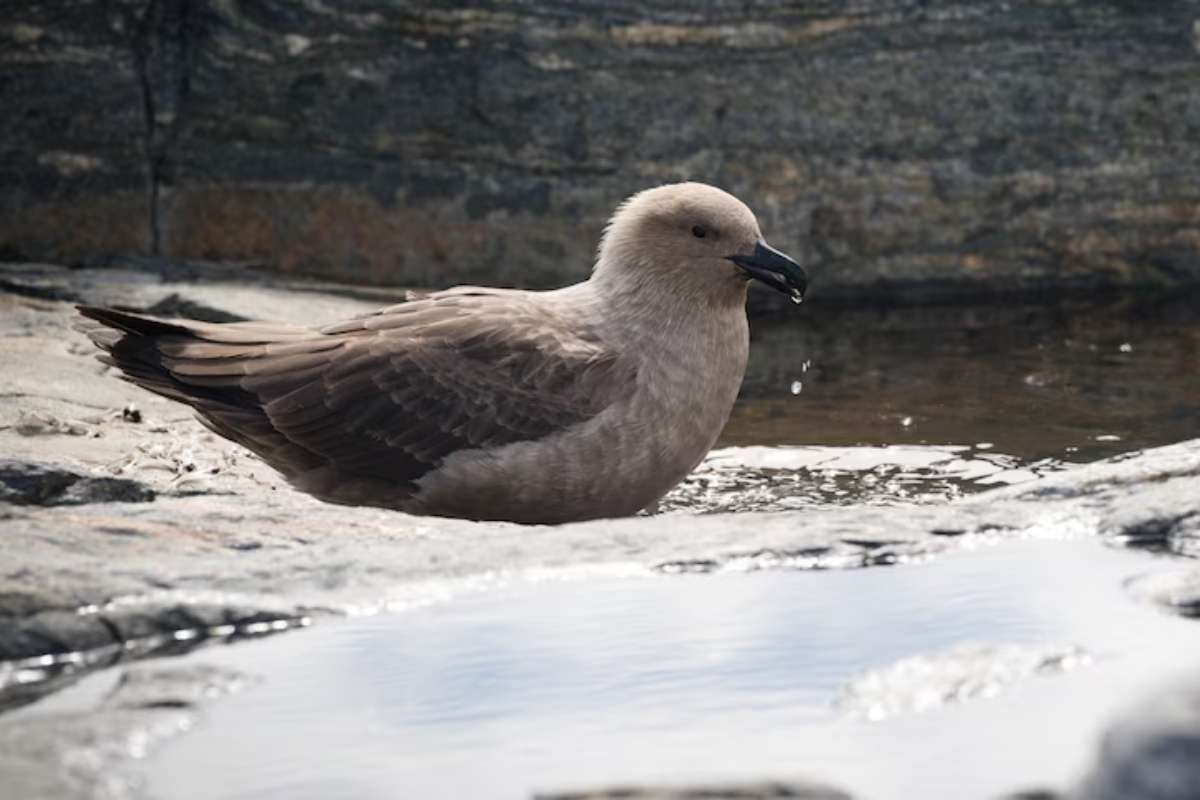
- A wild brown skua in Western Australia tested suspected positive for avian influenza; scientists are determining whether it is the highly pathogenic H5 strain.
- Authorities say there is no evidence of infection in poultry or mass wildlife deaths, and the risk to the general public remains low.
- If confirmed as H5, it would be the first mainland Australian detection of the strain, triggering enhanced national surveillance and response measures.
A wild migratory brown skua found in southern Western Australia has returned a suspected positive test for avian influenza, raising concerns about Bird Flu in Australia, authorities said Friday, prompting a national response as scientists work to determine whether it is the highly pathogenic H5 strain that has spread across much of the world.
Australian officials said the bird was discovered sick in an isolated area of Cape Le Grand National Park near Esperance, about 700 kilometers (435 miles) southeast of Perth. The bird later died after being isolated by wildlife carers and authorities.
Federal Agriculture Minister Julie Collins said preliminary testing conducted in Western Australia indicated a suspected positive result for avian influenza. Samples have been sent to the Commonwealth Scientific and Industrial Research Organisation’s Australian Centre for Disease Preparedness for confirmation.
“We cannot confirm yet whether it is the strain of concern that is circulating, at this stage, known as the H5 bird flu,” Collins said. Results are expected on Saturday.
If confirmed as H5, the case would mark the first detection of the strain on mainland Australia and complete its spread to every continent, making it a significant development in the ongoing monitoring of Bird Flu in Australia. The virus has caused widespread deaths among seabirds, marine mammals, and other wildlife globally since major outbreaks began in late 2021.
Authorities increase surveillance and testing
Western Australia Agriculture and Food Minister Jackie Jarvis said the brown skua was found on a remote beach on Sunday and died later that night. Authorities isolated the bird throughout its care and quickly initiated testing procedures.
“Importantly, this shows that Australia and Western Australia’s preparedness measures have worked,” Jarvis said.
Officials are also testing a sick giant petrel found in the same area. Results from that bird have not yet been released.
Collins said there is currently no evidence of mass wildlife deaths in Western Australia and no signs of infection in commercial poultry operations.
“I reiterate that it’s not in the poultry system nor is it in the agriculture system,” Collins said. “This is a wild migratory bird.”
The federal government has convened state and territory officials, industry representatives, and scientific experts to coordinate preparedness efforts as authorities strengthen monitoring and response plans for Bird Flu in Australia. Western Australia will lead the local response, while the Department of Agriculture, Fisheries and Forestry will oversee national coordination.
Public urged to avoid contact with sick wildlife
Authorities advised Australians not to touch sick or dead birds or animals. Instead, members of the public should photograph affected wildlife from a safe distance, record the location, and report findings through official channels.
Health officials emphasized that the risk to the general public remains low.
Bird flu primarily affects birds, although it can infect other animals and, in rare cases, humans. Authorities said people who do not work directly with birds face a low risk of infection in Australia.
Symptoms in bird populations can include sudden death, lethargy, respiratory distress, swelling, diarrhea, and sharp declines in egg production.
Experts warn of potential wildlife impacts
Conservation and agriculture groups said confirmation of H5 would represent a major test of Australia’s preparedness.
Carol Booth, policy director of the Invasive Species Council, called the suspected detection “deeply concerning” because of the virus’s impact on wildlife overseas.
“If H5N1 is confirmed, the government’s own risk assessment predicts potentially catastrophic impacts on native birds,” Booth said.
National Farmers Federation Chief Executive Michael Guerin said confirmation would create uncertainty for farmers and regional communities.
“We’re in the hands of the scientists waiting for confirmation as a first step,” Guerin said.
The H5 strain has already spread through Europe, Asia, Africa, North America, South America, and Antarctica, increasing concerns that Bird Flu in Australia could have serious consequences for native wildlife and biosecurity efforts. It was detected on Australia’s remote Heard and McDonald Islands in 2025, but has not previously been confirmed on the mainland.