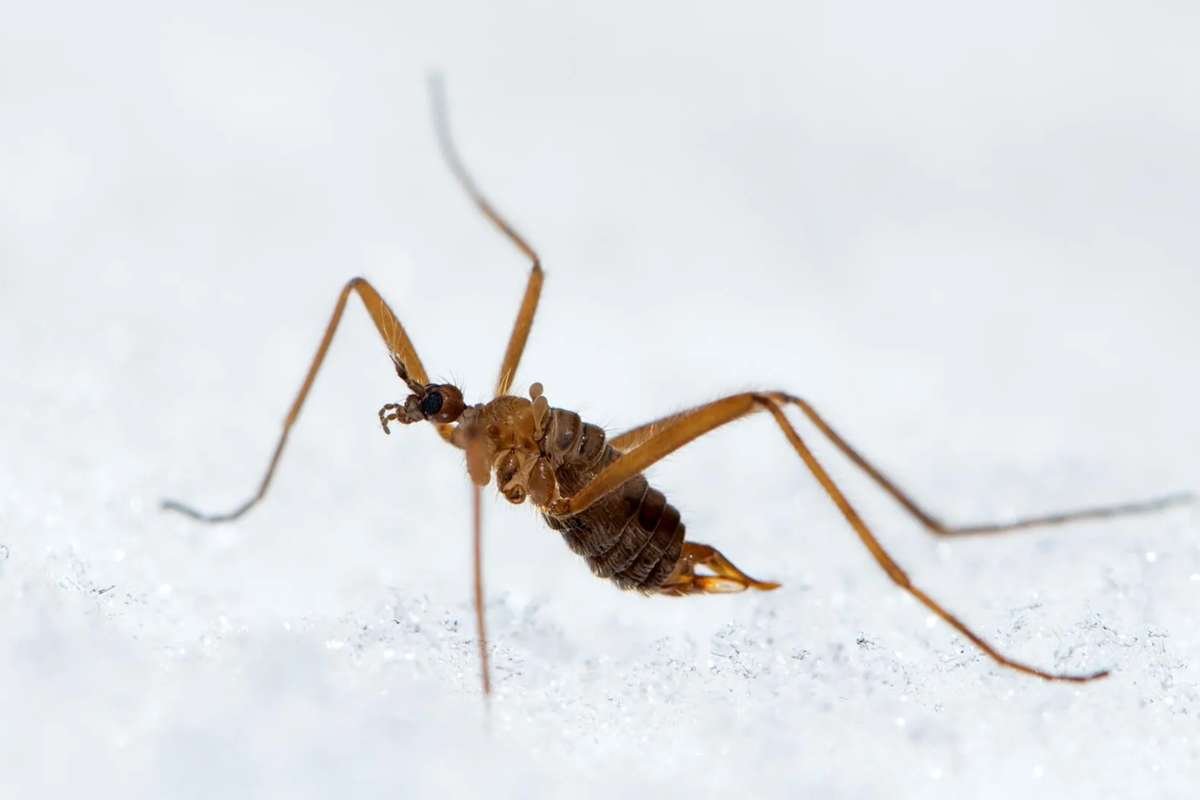
Scientists at Northwestern University report that snow flies survive subzero temperatures by generating body heat and producing antifreeze proteins, allowing the insects to remain active in freezing conditions, according to a study published March 24.
Researchers Reveal Unusual Cold-Survival Strategy
Scientists have discovered that snow flies possess a rare biological ability to create their own heat while preventing ice formation inside their bodies, challenging long-standing assumptions about how insects survive cold environments.
The study, published in the journal Current Biology, examined the snow fly species Chionea alexandriana, a small wingless insect commonly seen crawling across snow during winter months.
Unlike most insects, which become dormant in cold weather, snow flies remain active at temperatures as low as minus six degrees Celsius (21.2 degrees Fahrenheit). Researchers say the insects prefer freezing conditions and retreat when temperatures rise.
“Insects are cold-blooded, so they are at the mercy of external temperatures,” said Marco Gallio, a molecular biologist at Northwestern University who led the research. Snow flies aren’t just tolerating the cold. They have multiple ways to counteract it.”
Gallio co-led the study with Marcus Stensmyr, a biology professor at Lund University in Sweden, alongside collaborators from Northwestern’s engineering and biology departments.
Genetic Analysis Uncovers Antifreeze Proteins
To understand how snow flies survive extreme cold, scientists sequenced the insect’s genome for the first time and compared it with related species that cannot withstand freezing temperatures.
Researchers identified previously unknown genes responsible for producing antifreeze proteins. These proteins attach to ice crystals and stop them from expanding, protecting cells from damage.
“We couldn’t find many of the genes within any database,” Gallio said. “It was very rare to see active genes without known matches.”
Further analysis revealed that some of the proteins share structural similarities with antifreeze proteins found in Arctic fish, suggesting evolution produced similar solutions to freezing environments across unrelated species.
In laboratory experiments, scientists inserted one snow fly antifreeze protein into fruit flies. The modified insects survived freezing conditions at significantly higher rates than unmodified flies, confirming the protein’s protective function.
Heat Production Keeps Insects Active in Winter
Beyond blocking ice formation, researchers found evidence that snow flies actively generate body heat. It is a trait rarely associated with insects.
Genetic data revealed activity linked to mitochondrial thermogenesis, a heat-producing process seen in mammals such as polar bears during hibernation.
Measurements of internal temperature showed snow flies remained slightly warmer than surrounding conditions even as external temperatures dropped below freezing.
“Other insects, like bees and moths, shiver to increase their heat,” Stensmyr said. “But we found no evidence of shivering. Snow flies likely produce heat at the cellular level.”
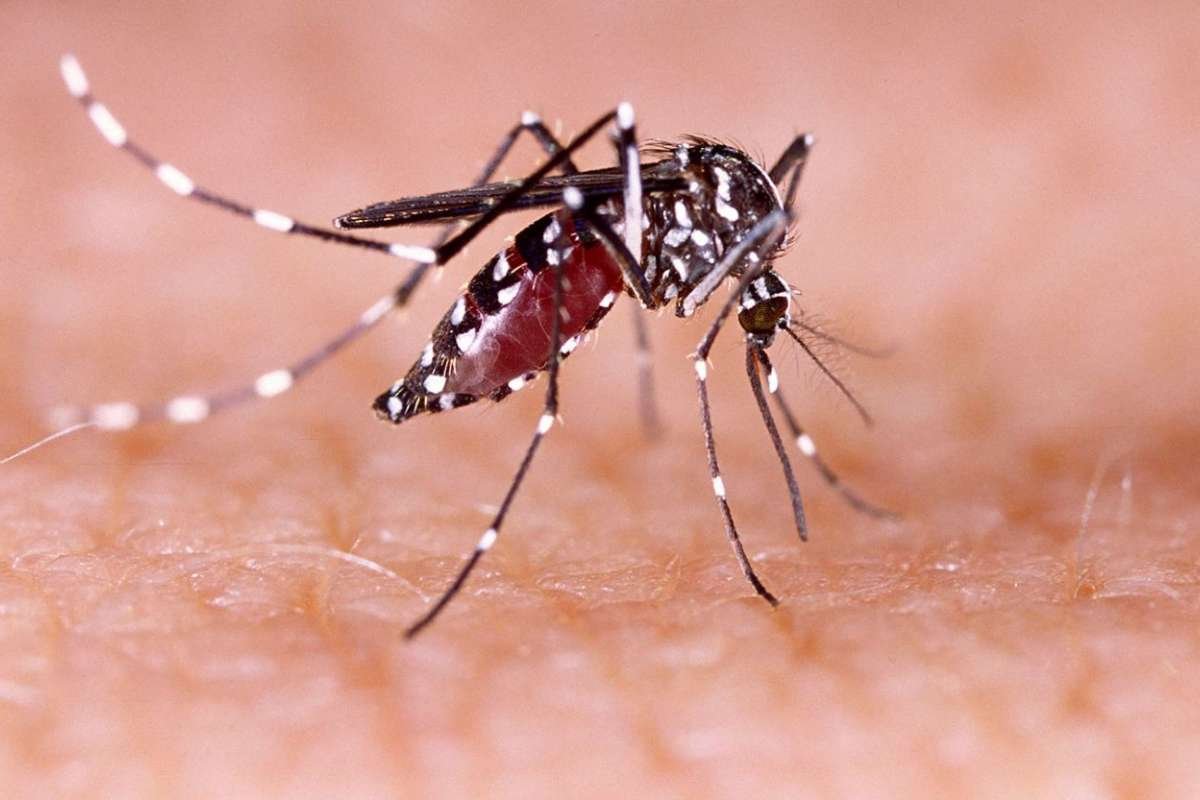
Scientists also discovered that snow flies are less sensitive to cold-induced pain. A sensory receptor involved in detecting harmful stimuli is about 30 times less responsive than in mosquitoes and fruit flies, allowing the insects to function despite extreme cold stress.
Researchers say even small temperature increases may help the insects avoid sudden freezing and continue moving across snowy terrain to find mates and lay eggs.
The findings could have applications beyond biology. Scientists believe antifreeze proteins and heat-generation mechanisms may inspire new methods to protect human tissues, preserve biological samples, and improve cold-resistant materials.
Future research will focus on identifying additional antifreeze proteins and understanding how snow flies generate heat at the cellular level.
The study will appear in the April 6 print edition of Current Biology and received support from several scientific organizations, including the National Institutes of Health and the National Science Foundation.