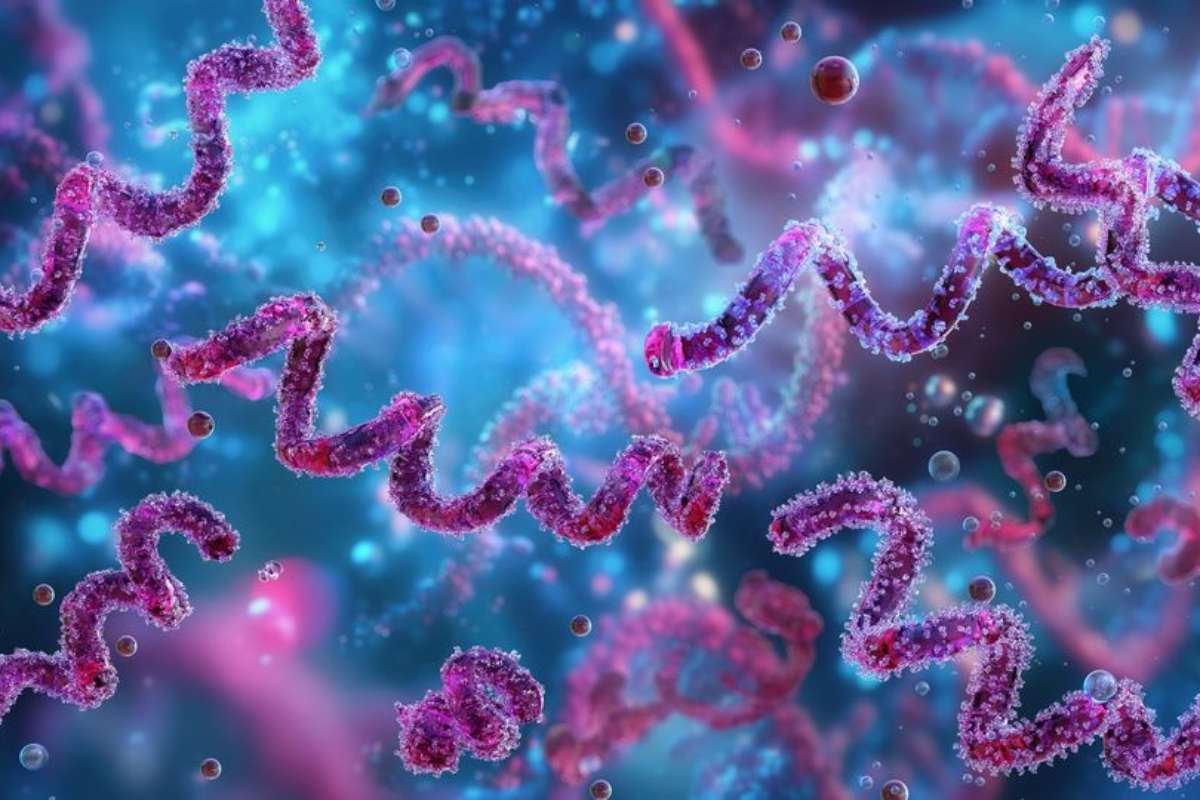
An Ancient DNA Study reveals that the bacterium responsible for syphilis existed in the Americas at least 5,500 years ago, after scientists sequenced genetic material from human remains in Colombia, reshaping long-standing theories about the disease’s origins.
Researchers say the finding, published Thursday in the journal Science, provides the oldest genetically sequenced evidence of Treponema pallidum, the microorganism that causes syphilis and related treponemal diseases. The discovery pushes back the known evolutionary timeline of the bacterium by about 3,000 years.
Ancient Genome Rewrites Disease Timeline
The genome was recovered from the bones of a man who lived roughly 5,500 years ago in what is now Colombia, according to the study’s authors. Until now, the oldest sequenced genomes of T. pallidum date back about 2,500 years.
“The discovery was totally by chance,” said Lars Fehren-Schmitz, a study co-author and anthropologist at the University of California, Santa Cruz. He said the DNA was identified while researchers were examining ancient human remains for unrelated genetic material.
After sequencing the genome, the team compared it with modern and historical strains of T. pallidum. They found that the ancient strain branched off much earlier than any previously known subspecies, suggesting a deeper and more complex evolutionary history.
Syphilis has long been linked to major moments and figures in human history, with speculation that individuals such as Russian revolutionary Vladimir Lenin and author Bram Stoker may have suffered from the disease. The first recorded outbreak of venereal syphilis occurred in fifteenth-century Europe, leading to theories that it was brought from the Americas by European explorers.
However, skeletal evidence of treponemal infections has also been found in Europe dating to before Christopher Columbus’ voyages, leaving scientists divided over where and when the disease emerged.
Evidence Points to Greater Ancient Diversity
An Ancient DNA Study reveals that treponemal diseases were far more diverse thousands of years ago than they are today, according to Nasreen Broomandkhoshbacht, a geneticist at the University of Vermont and co-author of the research.
“That opens up the question of whether there were even more ways this group of diseases could affect people, and possibly different hosts,” she said.
An Ancient DNA Study shows that the genetic makeup of the ancient strain indicates T. pallidum was already well adapted to infect humans at that time. This challenges assumptions that the bacterium developed its human-specific traits only more recently.
Fernando González-Candelas, a genetics professor at the University of Valencia in Spain who was not involved in the study, said the results point to a long period of coevolution between humans and the bacterium.
“It suggests coevolution of Treponema with humans that is older than previously suspected,” González-Candelas said.
Implications for Modern Syphilis Origins
Venereal syphilis, the most widely known treponemal disease today, is primarily transmitted through sexual contact. Early symptoms include sores at the infection site, fever, and fatigue. Without treatment, the disease can lead to brain damage, heart problems, blindness, and other serious complications.
An Ancient DNA Study indicates that it remains unclear how the ancient Colombian individual contracted the infection, including whether sexual transmission played a role. Researchers also cautioned that modern syphilis likely evolved much later than the ancient strain identified in the study.
Still, the discovery shows that T. pallidum was present in the Americas long before European contact, complicating theories that colonialism played a dominant role in spreading treponemal diseases globally.
“We were dealing with this way before Europeans arrived,” said Elizabeth Nelson, an assistant professor of anthropology at Southern Methodist University who was not involved in the research.
An Ancient DNA Study suggests that mapping the deep history of infectious diseases can reveal how ancient societies lived and interacted. While the precise origin of modern syphilis remains unresolved, researchers emphasize that the new evidence highlights a history far older and more complex than once believed.
Visit The Lifesciences Magazine For The Most Recent Information.