Researchers at the Johns Hopkins Kimmel Cancer Center report an artificial intelligence-powered blood test that analyzes DNA fragments to detect early liver disease years before symptoms appear, offering a potential tool for earlier diagnosis and prevention. there by showing how an AI blood test for early liver disease can revolutionize care
AI Test Uses DNA Fragment Patterns to Spot Early Liver Damage
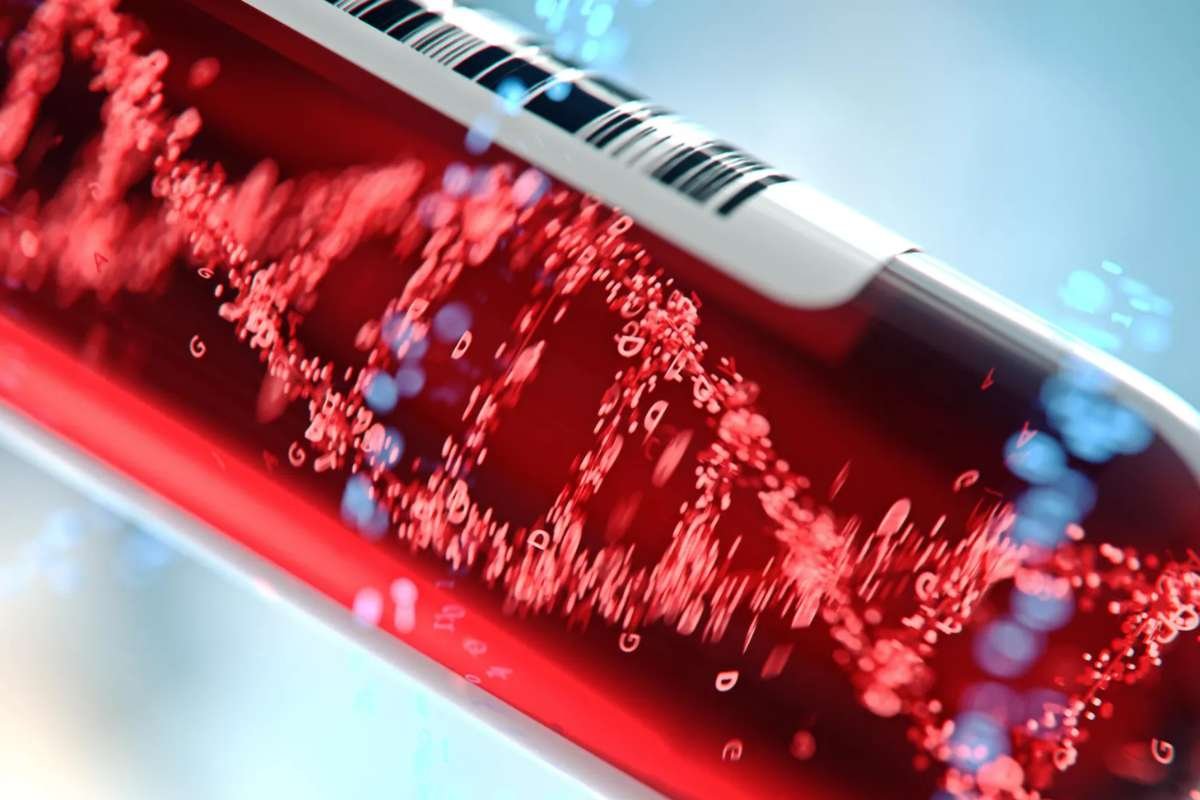
Scientists have developed an artificial intelligence-driven blood test that can identify early signs of liver disease by analyzing patterns in fragments of DNA circulating in the bloodstream. Showing how an AI Blood Test for Early Liver Disease.
The study, published March 4 in Science Translational Medicine and partly funded by the National Institutes of Health, demonstrates how genome-wide analysis of cell-free DNA fragments can reveal signals linked to liver fibrosis and cirrhosis long before symptoms appear.
Researchers examined blood samples from 1,576 people with liver disease and other medical conditions. Using whole-genome sequencing, they analyzed how DNA fragments break apart and where they appear across the genome.
Machine-learning algorithms then processed the large dataset to identify fragmentation patterns associated with disease. Each sample contained roughly 40 million DNA fragments, giving researchers an unusually detailed picture of genomic patterns.
“This builds directly on our earlier fragmentome work in cancer,” said Victor Velculescu, co-director of the cancer genetics and epigenetics program at the Johns Hopkins Center and a senior author of the study. “For many illnesses, early detection could make a profound difference.”
Velculescu said liver fibrosis can often be reversed in its early stages but may progress to cirrhosis and increase the risk of liver cancer if left untreated.
Researchers Say Fragmentome Technology Expands Beyond Cancer
Liquid biopsies that measure circulating DNA have already shown promise in detecting cancer. However, scientists have rarely used the approach to diagnose other chronic diseases.
The new test focuses on what researchers call the “fragmentome” — the overall pattern of how DNA fragments are cut, packaged, and distributed across the genome.
Unlike conventional tests that search for specific gene mutations, the fragmentome method analyzes structural patterns across the entire genome. Scientists say this broader view can reveal biological changes linked to multiple diseases.
“The fact that we are not looking for individual mutations is what makes this study so powerful,” said Akshaya Annapragada, the study’s first author and an M.D./Ph.D. student in Velculescu’s laboratory.
“We are analyzing the entire fragmentome, which contains a tremendous amount of information about a person’s physiologic state,” Annapragada said.
The research was co-led by Robert Scharpf and Jill Phallen, oncology researchers involved in developing the machine-learning classification system used in the AI blood test for early liver disease study.
Early Detection Could Help Millions at Risk
Researchers say the test could benefit millions of people who unknowingly live with early liver disease.
According to Velculescu, roughly 100 million people in the United States have conditions that increase their risk of cirrhosis and liver cancer.
Current blood tests for liver fibrosis often miss early disease. Imaging tools such as specialized ultrasound or magnetic resonance scans can help detect damage, but are not always widely available.
“Many individuals at risk don’t know they have liver disease,” Velculescu said. “If we can intervene earlier, before fibrosis progresses to cirrhosis or cancer, the impact could be substantial.”
The study also explored whether fragmentome signals might reveal other health conditions. Researchers observed patterns linked to cardiovascular, inflammatory, and neurodegenerative disorders, though the sample sizes were too small to build separate diagnostic models.
In a related analysis of 570 people with suspected serious illness, scientists created a fragmentation-based comorbidity index. The measure predicted overall survival and, in some cases, performed more specifically than traditional inflammatory markers.
Researchers caution that the liver disease test remains a prototype and is not yet available for clinical use. Future studies will focus on validating the method and expanding the technology to detect additional chronic diseases.
If confirmed in larger trials, the approach could lead to a new generation of AI blood test for early liver disease capable of detecting disease years before symptoms begin.