Did you know a single 100-gram serving of rutabaga delivers about 25 milligrams of vitamin C, roughly 28% of your daily needs, for just 38 calories? Yet this humble root vegetable rarely makes it into our shopping carts. If you’re wondering whether it deserves a spot on your plate, you’re in the right place. This guide explains the health benefits of rutabagas, from immune support and digestion to heart health, using USDA nutrition data and published research.
We’ll look at what rutabagas offer nutritionally, what the research says about their plant compounds, and the easiest ways to cook them. Along the way, you’ll see which precautions are worth knowing.
Table of Contents
What Are Rutabagas and Why Do They Deserve Attention?
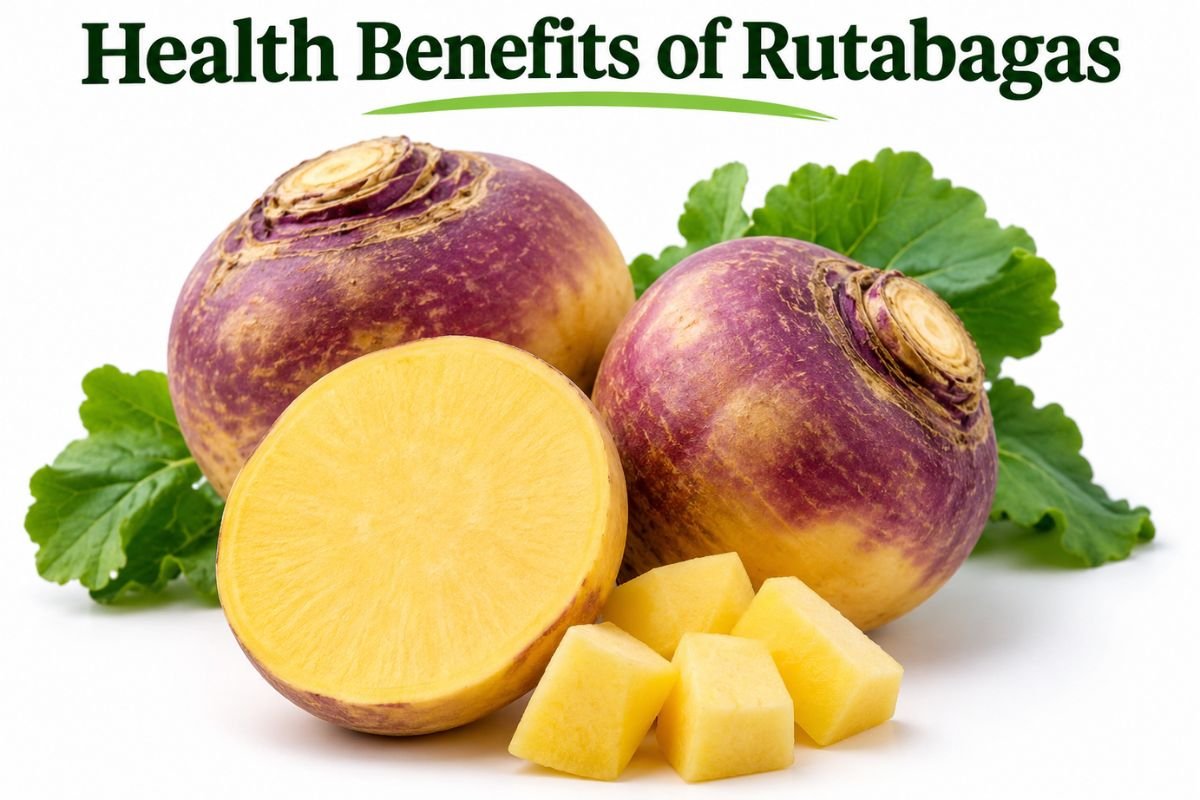
Rutabagas are root vegetables belonging to the Brassica family, which also includes cabbage, broccoli, and turnips. People commonly call them swedes or Swedish turnips.
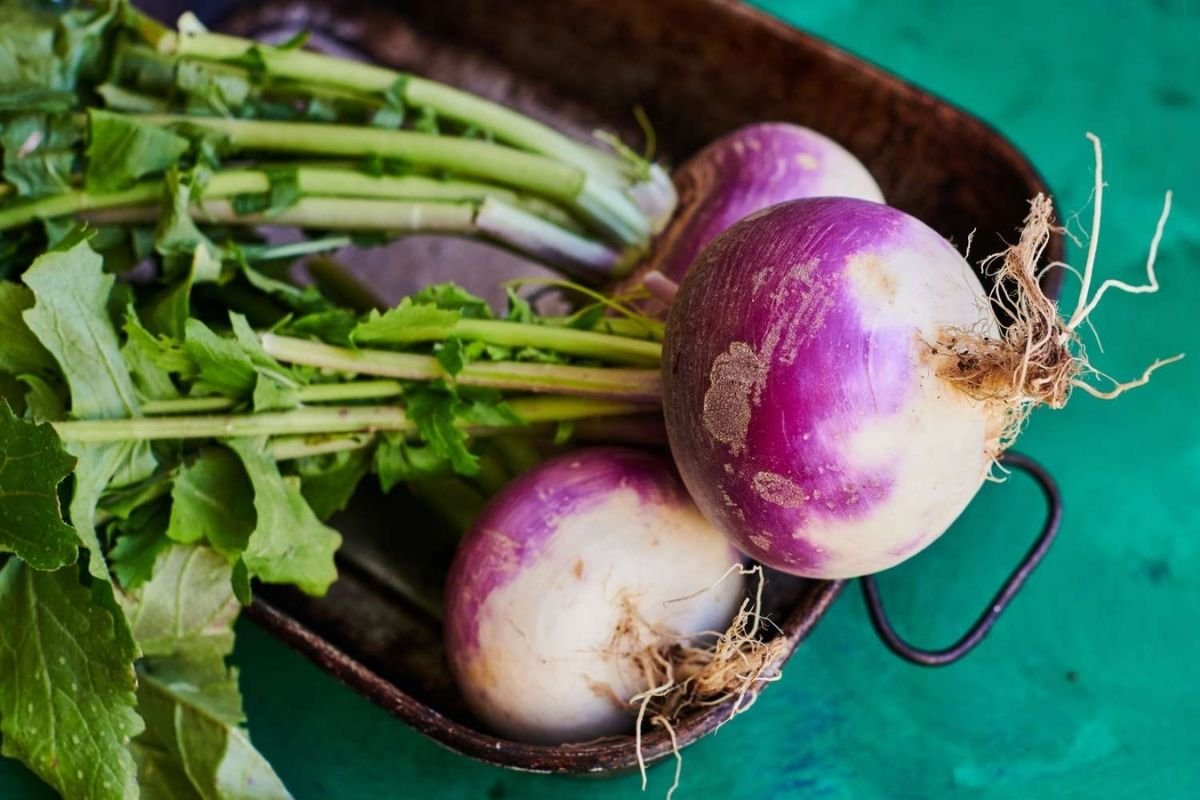
They have yellow flesh, a purple-brown outer skin, and a mildly sweet, earthy flavor. Their taste becomes sweeter and softer when cooked.
Rutabagas likely originated from a natural cross between turnips and cabbage. Today, people use them in Scandinavian, European, and North American cooking.
Their nutritional appeal comes from several essential nutrients and naturally occurring plant chemicals.
The National Cancer Institute also identifies rutabagas as cruciferous vegetables. This classification matters because cruciferous vegetables contain compounds that researchers study for their potential health effects.
Rutabaga Nutrition Facts That Reveal Its Real Value

Before exploring individual health benefits, let’s examine what rutabagas actually contain. Their nutritional profile makes them a useful addition to balanced meals.
According to USDA FoodData Central, one cup of raw rutabaga, weighing approximately 140 grams, provides the following nutrients.
| Nutrient | Amount per 140 g |
| Calories | 50 kcal |
| Carbohydrates | 12 g |
| Dietary fiber | 3 g |
| Protein | 2 g |
| Total fat | 0 g |
| Vitamin C | 35 mg |
| Potassium | 430 mg |
| Calcium | 60 mg |
| Iron | 0.6 mg |
| Sodium | 15 mg |
These numbers reveal three important nutritional advantages.
- Low calorie content: A cup provides approximately 50 calories, making rutabagas a useful vegetable for balanced meals.
- Useful fiber content: Three grams of fiber contribute to daily digestive health.
- Vitamin and mineral variety: Vitamin C and potassium support several important body functions.
Rutabagas also contain magnesium, phosphorus, and B vitamins. These nutrients contribute to normal muscle function, energy metabolism, and other essential processes.
The following comparison shows how rutabagas differ from other popular root vegetables.
| Nutrient per 100 g | Rutabaga | Turnip | Potato |
| Calories | 37 | 28 | 77 |
| Carbohydrates | 8.6 g | 6.4 g | 17.5 g |
| Fiber | 2.3 g | 1.8 g | 2.1 g |
| Protein | 1.1 g | 0.9 g | 2 g |
| Vitamin C | 25 mg | 21 mg | 19.7 mg |
| Potassium | 305 mg | 191 mg | 425 mg |
Rutabagas provide fewer calories than potatoes while offering more vitamin C per 100 grams. They also contain slightly more fiber than both potatoes and turnips in these reference entries.
This makes them a practical option for people who want more variety in their vegetable intake.
7 Powerful Health Benefits of Rutabagas Backed by Nutrition Science
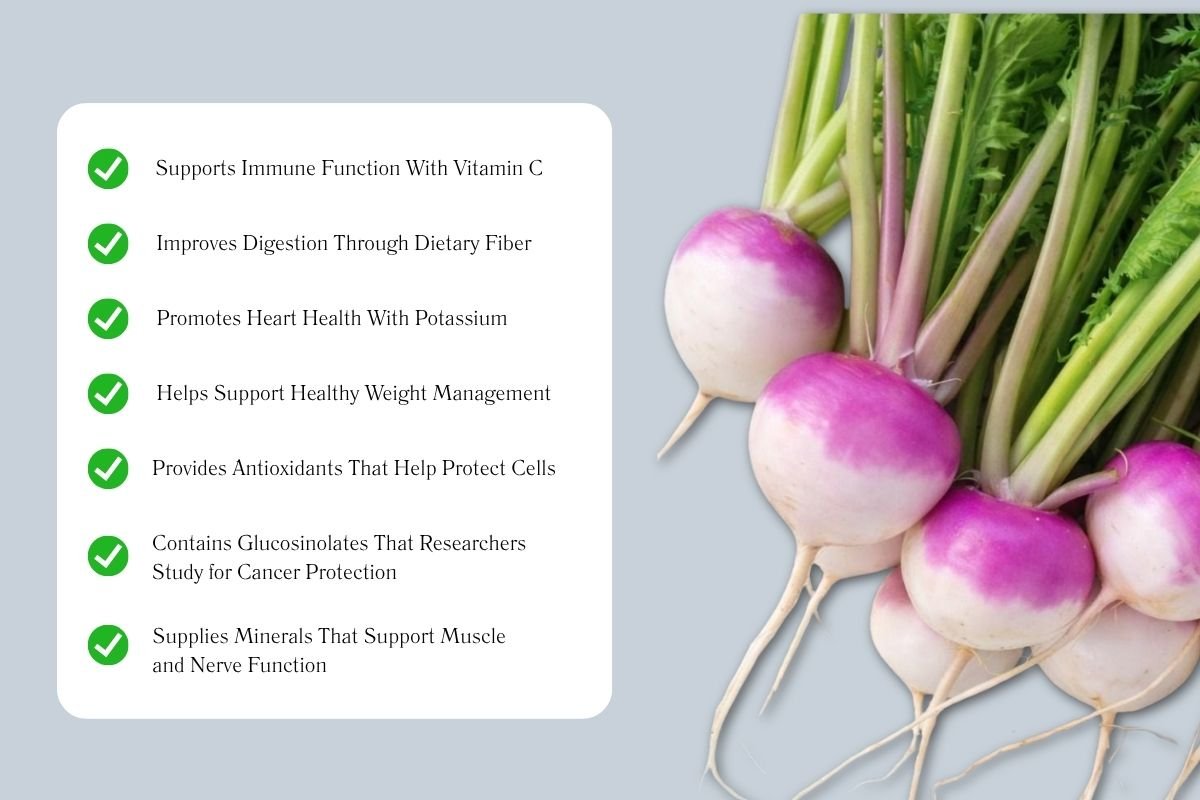
Rutabagas offer several nutritional advantages that support everyday health. Their benefits come from a combination of vitamins, minerals, dietary fiber, and plant compounds.
Here are seven reasons to consider adding them to your regular meals.
1. Supports Immune Function With Vitamin C
Think of vitamin C as your immune system’s all-purpose worker. One 140 g serving of rutabaga provides about 35 mg. It protects cells from oxidative damage, supports collagen production for healthy skin and blood vessels, and helps you absorb iron from plant foods. The NIH notes its role in immune function and wound healing.
Easy ways to get more:
- Stir lightly cooked rutabaga into vegetable soup.
- Toss grated raw rutabaga with carrots for a slaw.
- Roast it with broccoli and bell peppers.
2. Improves Digestion Through Dietary Fiber
One cup of rutabaga provides about 3 grams of fiber. Fiber adds bulk to stool, keeps food moving, and feeds beneficial gut bacteria. The NIDDK recommends adequate fiber with plenty of fluids to help prevent constipation.
Quick tip: If your diet is low in fiber, increase it gradually and drink plenty of water.
3. Promotes Heart Health With Potassium
Sodium raises blood pressure, and potassium helps push back. A 140 g serving provides roughly 430 mg. Potassium helps your body flush out extra sodium and relaxes blood vessel walls, and the American Heart Association notes that potassium-rich foods can counter sodium’s effects.
Rutabagas alone won’t prevent or treat hypertension, but they fit well in a heart-friendly pattern alongside leafy greens, whole grains, beans, and fruit.
People with kidney disease or other potassium-related conditions should talk to their healthcare professional about appropriate intake.
4. Helps Support Healthy Weight Management
Rutabagas let you fill your plate without filling up on calories. A cup of raw rutabaga has only about 50 calories, and its fiber and water help you feel satisfied longer.
| Instead of | Try |
| Large portions of mashed potatoes | Mashed rutabaga |
| Deep-fried potato sides | Oven-roasted rutabaga |
| Low-fiber side dishes | Rutabaga with beans and vegetables |
Weight management also depends on overall eating habits, activity, and sleep
5. Provides Antioxidants That Help Protect Cells
Free radicals constantly challenge your body’s defenses, a process called oxidative stress that can contribute to cell damage over time. Vitamin C acts as an antioxidant, and cruciferous vegetables contain other potentially beneficial phytochemicals. The NIH Office of Dietary Supplements explains vitamin C’s antioxidant role.
Rutabagas can’t guarantee protection against chronic disease, so pair them with colorful vegetables like carrots, tomatoes, spinach, and bell peppers for broader coverage.
6. Contains Glucosinolates That Researchers Study for Cancer Protection
Like other cruciferous vegetables, rutabagas contain glucosinolates, sulfur compounds that break down into indoles and isothiocyanates when you cut, chew, or digest them. Laboratory and animal studies suggest these compounds may influence processes linked to cancer development, and the NCI lists rutabagas among glucosinolate-containing vegetables.
The catch: human research is mixed, and no study has established that eating rutabagas prevents cancer. They’re a smart addition to a vegetable-rich diet, never a replacement for proven prevention or medical care.
7. Supplies Minerals That Support Muscle and Nerve Function
Every muscle twitch and nerve signal depends on minerals, and rutabagas contribute several:
- Potassium supports muscle contractions and nerve signaling.
- Magnesium supports muscle and nerve function, energy production, and blood glucose regulation.
- Calcium and phosphorus, in smaller amounts, support bone structure and other essential processes.
No single vegetable covers all your mineral needs, so pair rutabagas with other vegetables, dairy, legumes, nuts, seeds, and whole grains.
This trims roughly a third of the length while keeping every figure and source. Verify the numbers against USDA FoodData Central before publishing.
How to Add Rutabagas to Your Daily Diet
Knowing the health benefits of rutabagas is one thing. Finding enjoyable ways to eat them regularly is another.
Fortunately, rutabagas work in several cooking styles. You can roast, boil, steam, mash, sauté, or grate them into different meals.
Here are five easy ways to include them in your meals.
| Preparation method | How to use it | Why it works |
| Roasted | Cut into cubes and roast with olive oil and herbs. | Creates a naturally sweet flavor. |
| Mashed | Boil until tender and mash with pepper and garlic. | Makes a satisfying alternative to mashed potatoes. |
| Soups | Add diced pieces to vegetable or lentil soup. | Adds texture, fiber, and flavor. |
| Raw salads | Grate and mix with carrots and lemon juice. | Adds a crunchy texture. |
| Stir-fries | Sauté thin slices with other vegetables. | Makes quick, balanced meals. |
A Simple Way to Prepare Rutabagas
- Wash: Rinse under running water to remove dirt.
- Peel: Remove the tough outer skin with a sturdy peeler or knife.
- Cut: Slice into cubes or thin strips.
- Cook: Roast, steam, boil, or sauté.
- Season: Try garlic, black pepper, lemon juice, rosemary, or olive oil.
The University of Illinois Extension also recommends roasting, baking, boiling, and adding rutabagas to soups and stews.
Possible Side Effects and Precautions Before Eating Rutabagas
Rutabagas are safe for most people as part of a balanced diet, but a few points deserve attention.
- Digestive discomfort: The fiber and natural carbohydrates in rutabagas can cause gas, bloating, or changes in bowel movements, especially in large portions or low-fiber diets. Start small, increase gradually, and cook them until tender.
- Potassium restrictions: People with chronic kidney disease may struggle to clear excess potassium, and some medications also affect potassium levels. If you follow a kidney-friendly diet, ask your healthcare professional whether rutabagas fit your needs.
- Possible food allergies: Reactions are uncommon but possible, with symptoms like itching, swelling, digestive upset, or skin reactions. Seek immediate medical attention for difficulty breathing or throat swelling.
- Cooking methods matter: Prolonged boiling can leach vitamin C into the water, and deep-frying or heavy butter and cream adds calories. To protect their nutrition:
- Cook briefly in minimal water.
- Keep added fats modest.
- Go easy on salt if you monitor sodium.
Conclusion:
The health benefits of rutabagas make a strong case for giving this overlooked root a regular place in your kitchen. Beyond the nutrients, it’s an easy swap that adds variety to everyday meals, whether mashed, roasted, or stirred into soup.
Rutabagas work best as part of a balanced diet. If you have kidney concerns or take medications that affect potassium, check with your healthcare professional first.
Ready to try one? Pick up a rutabaga on your next grocery trip and roast it with olive oil and herbs. Your taste buds may thank you.
FAQ:
1. Are rutabagas healthier than potatoes?
Rutabagas are generally lower in calories and carbohydrates than potatoes while providing vitamin C and fiber.
2. Can eating rutabagas help with weight management?
Yes, their dietary fiber can help make meals more filling and support weight-management goals.
3. What are the main health benefits of rutabagas?
Rutabagas provide vitamin C, fiber, potassium, and antioxidants that support immune function, digestion, heart health, and overall wellness.
4. Is it better to eat rutabagas raw or cooked?
Both are nutritious, but cooking softens their texture and makes them easier to incorporate into everyday meals.
5. What is the healthiest way to cook rutabagas?
Steaming, roasting, or boiling rutabagas with minimal added salt and fat are simple ways to prepare them.