Key Takeaway:
- Switzerland treats Ebola patient: A Swiss woman infected with the Bundibugyo virus is receiving treatment in Geneva after evacuation from Nigeria.
- Authorities trace exposed contacts: Nigeria and Switzerland are monitoring contacts, including the patient’s husband, to prevent further transmission.
- Public risk remains low: Health officials say the risk to the general population is low, but containment and surveillance measures continue.
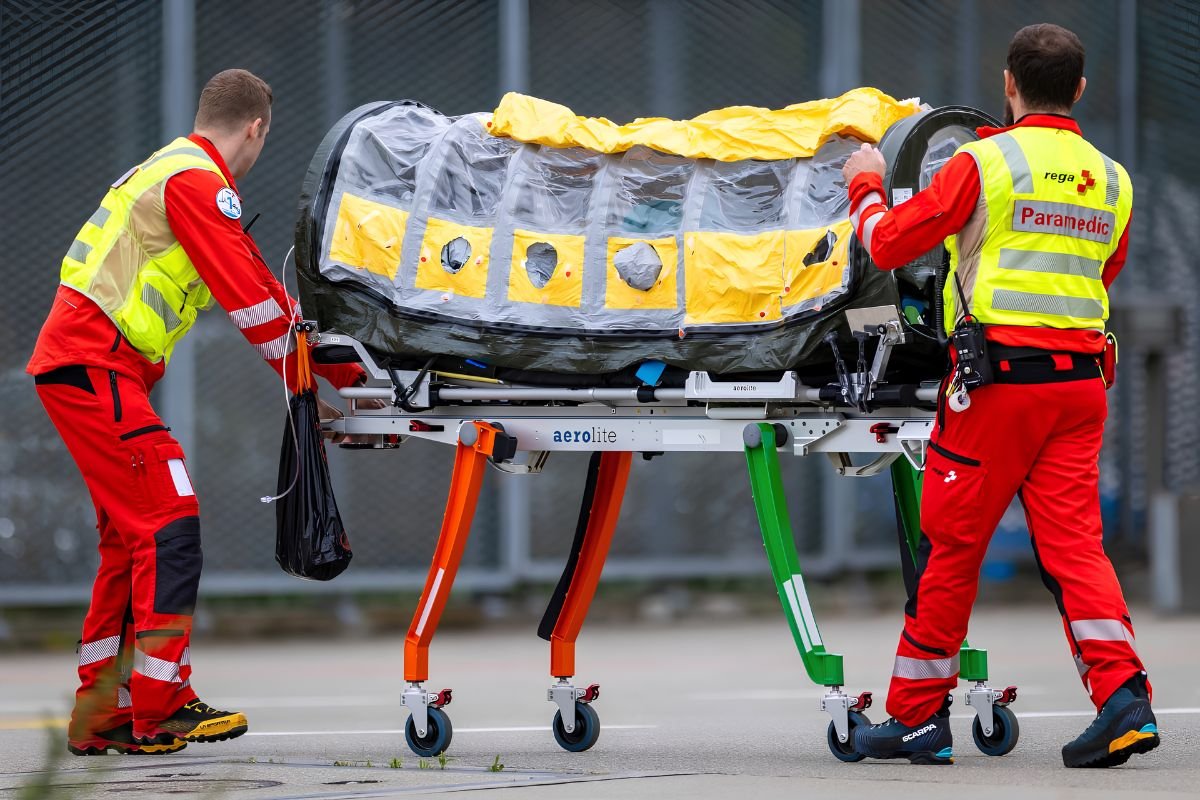
An Ebola patient in Switzerland, a Swiss woman evacuated from Nigeria on Monday, is receiving treatment as health authorities continue tracing contacts and containing the outbreak of the deadly Bundibugyo virus.
Switzerland Treats Patient and Isolates Her Husband
The Ebola patient in Switzerland is receiving treatment at Geneva University Hospitals after Nigerian medical teams stabilized her condition. Her husband, a Swiss diplomat who is considered a close contact, has been isolated at University Hospital Zurich despite showing no symptoms, Swiss authorities said.
The evacuation followed Nigeria’s confirmation on Oct. 20 of its first Ebola case in the current outbreak. The woman had traveled from Uganda to Nigeria and developed symptoms on Oct. 7, four days after arriving in the country, according to the World Health Organization.
Nigerian Health Minister Muhammad Ali Pate said the woman’s condition had improved significantly before her transfer. He described her as stable, conscious and able to communicate.
“This does not mean she is not still infectious, hence the strict protocols in place,” Pate wrote in a post on X, emphasizing that her improved condition did not eliminate the need for infection-control precautions.
Swiss health authorities said both hospitals were equipped to manage Ebola patients safely and that the case posed no risk to the general public.
Nigeria Monitors Contacts After Evacuation
The evacuation leaves Nigeria with no known active Ebola cases, according to the WHO’s regional director for Africa, Mohamed Janabi. However, Nigerian authorities continue monitoring 52 contacts, while Switzerland is responsible for monitoring the patient’s husband, bringing the total number of identified contacts to 53.
“The patient is clinically stable. The Nigerian medical team successfully managed her through the acute phase of the illness and stabilized her condition,” Janabi said in a statement reported by TheCable on Monday.
Health authorities are continuing investigations to establish how the woman contracted the virus. Her recent travel history includes Uganda, and officials are examining possible exposure routes and movements to identify additional people who may have been exposed.
The WHO said the outbreak response requires coordinated surveillance, contact tracing, timely diagnosis and infection-prevention measures across borders. It has advised against imposing travel or trade restrictions on affected countries.
Bundibugyo Outbreak Raises Regional Concerns
The Bundibugyo virus is a rare species of Ebola virus that causes severe illness and can be fatal. The current outbreak began in the Democratic Republic of the Congo in May and has spread to other African countries, including Uganda, Kenya and Nigeria.
As of Oct. 20, the WHO had recorded 9,704 confirmed cases and 4,687 deaths in the Democratic Republic of the Congo. Kenya had reported nine cases, including one death, by the same reporting period, with additional infections linked to an imported case.
Ebola spreads through direct contact with the blood or bodily fluids of an infected person who has symptoms, or with contaminated materials. Symptoms can include fever, fatigue, muscle pain, vomiting and diarrhea, and severe cases may involve internal or external bleeding.
The European Centre for Disease Prevention and Control has assessed the risk to the general population in the European Union and European Economic Area as very low, citing the low likelihood of importation and secondary transmission.
Health authorities continue to stress the importance of early detection, safe medical care and monitoring exposed individuals. Although the patient’s transfer reduces the immediate burden on Nigerian hospitals, officials say contact tracing and containment measures remain essential to prevent further spread.