One in eight people worldwide lives with a mental health condition, according to the World Health Organization. Yet many are told it’s “just in your head.” The neuroscience of mental health shows it’s far more precise than that: emotions, memory, and stress run through connected brain circuits. Differences in those networks can contribute to depression, anxiety, and trauma-related disorders. Still, no single brain region or chemical explains any disorder alone.
In this guide, you’ll learn how these circuits work, how genetics, experience, and environment interact with them. And what current research can and cannot yet say about diagnosis and personalized treatment.
Table of Contents
What Is the Neuroscience of Mental Health?
Imagine hearing a sudden loud crash at night. Your brain rapidly registers the sound, activates threat-related circuits, releases stress signals, increases heart rate, and searches memory for what could have caused it. Your interpretation: “a burglar” versus “a fallen shelf”. This shapes whether you feel fear, relief, or embarrassment. This is the neuroscience of mental health in action: brain activity, bodily arousal, memory, and personal meaning working together.
This field studies the neural, molecular, cognitive, and biological processes involved in mental well-being and psychiatric conditions. It examines how neurons communicate through synapses, how neural networks process information, and how these systems influence thoughts, emotions, and behavior.
How brain function shapes experience
Neurons send electrical and chemical signals across synapses. Organized into circuits, these networks support attention, mood regulation, stress responses, decision-making, and social behavior. NIMH describes research spanning molecular, cellular, systems, behavioral, and social levels of analysis.
Related fields
| Field | Main focus |
| Neuroscience | How the nervous system works, from molecules to behavior |
| Neurobiology | Biological mechanisms of nerve cells and brain function |
| Biological psychiatry | Biological contributions to psychiatric disorders, including genetics and brain circuits |
A multilevel view
Mental health cannot be reduced to one brain chemical or brain region. It involves molecular signaling, neural circuits, cognition, symptoms, and lived experience. Biological mechanisms can contribute to conditions such as anxiety or depression. But psychological patterns, relationships, trauma, and social circumstances also matter.
A brain-based account therefore complements, not replaces, psychological and social explanations. Mental health emerges from the interaction of biological, psychological, and social factors.
How Brain Circuits and Neurotransmitters Influence Mental Health
Brain regions do not work alone. The neuroscience of mental health focuses on how connected circuits coordinate signals that shape emotion, memory, reward, attention, and stress responses.
Key brain regions
The prefrontal cortex supports executive functions such as planning, impulse control, working memory, and emotion regulation. The amygdala helps detect threats and process emotional significance, while the hippocampus forms and retrieves memories and provides context for experiences.
For example, during emotional learning, the amygdala and prefrontal regions help update the value of a situation; during stress, threat-related circuits may become more active while regulatory control weakens.
Neurotransmitters
Neurons communicate at synapses using chemical messengers. Glutamate is the brain’s main excitatory neurotransmitter, while GABA generally inhibits activity; this balance helps regulate neural firing.
Serotonin and dopamine are involved in many processes, including mood, sleep, motivation, learning, reward, and attention. But neither is simply a “happiness” or “pleasure” chemical.
| Level | What it helps explain |
| Neurotransmitters | How chemical signaling affects neural communication |
| Brain regions | Functions associated with particular structures |
| Neural circuits | How connected regions coordinate information processing |
| Behavior and cognition | How brain processes relate to thoughts, feelings, and actions |
Circuits, not single causes
Anxiety or low mood may involve altered communication among the amygdala, hippocampus, and prefrontal cortex. But the pattern varies between people and does not explain every case. Research increasingly examines interconnected circuits rather than one faulty brain region or neurotransmitter.
What Changes in the Brain Are Linked to Mental Health Conditions?
Mental health conditions are associated with differences in how brain circuits regulate mood, reward, threat, memory, and cognition. The neuroscience of mental health studies these patterns, but it does not show that one brain change causes every case of a diagnosis.
Condition-specific mechanisms
| Condition | Neuroscience mechanisms being studied | What the evidence does not establish |
| Clinical depression | Altered reward processing, motivation, emotional regulation, and stress-related circuitry. | That depression has one universal brain signature or cause. |
| Anxiety disorders | Heightened threat sensitivity, fear learning, uncertainty processing, and amygdala–prefrontal communication. | That anxiety is caused solely by an “overactive amygdala.” |
| PTSD | Threat responses, fear conditioning, intrusive memories, and interactions among the amygdala, hippocampus, and prefrontal cortex. | That every person with trauma exposure will develop PTSD. |
| Bipolar disorder | Differences in mood regulation and limbic network function. | That mood episodes can be predicted from a single scan or biomarker. |
| Schizophrenia | Differences in neural signaling, dopamine-related genetic regulation, cognition, and brain-network connectivity. | That schizophrenia is explained by dopamine alone. |
Why findings vary
Research distinguishes structural findings (such as gray- or white-matter differences), functional findings (how regions activate or connect during tasks), and proposed mechanisms (such as altered reward or threat processing).
How Neuroscientists Study Mental Health and Brain Activity
Scientists use several tools to study how brain structure, activity, chemistry, and behavior relate to mental health. The neuroscience of mental health relies on these methods alongside controlled experiments, longitudinal studies, clinical trials, and replication.
Imaging and measurement methods
- Structural MRI maps brain anatomy, such as the size and shape of regions.
- fMRI tracks changes in blood oxygenation, the BOLD signal, as an indirect marker of neural activity; it does not directly read thoughts.
- EEG records electrical activity from electrodes on the scalp, offering excellent time resolution but limited ability to pinpoint the source of activity.
- PET uses radioactive tracers to study processes such as brain metabolism or receptor activity in living people.
Human and animal evidence
Human studies can measure brain activity, cognition, symptoms, and treatment response. Animal models allow researchers to test mechanisms that would be impractical or unethical to study directly in people. However, animal findings do not automatically translate into effective human treatments because species, experimental conditions, and complex human experiences differ.
Interpreting the evidence
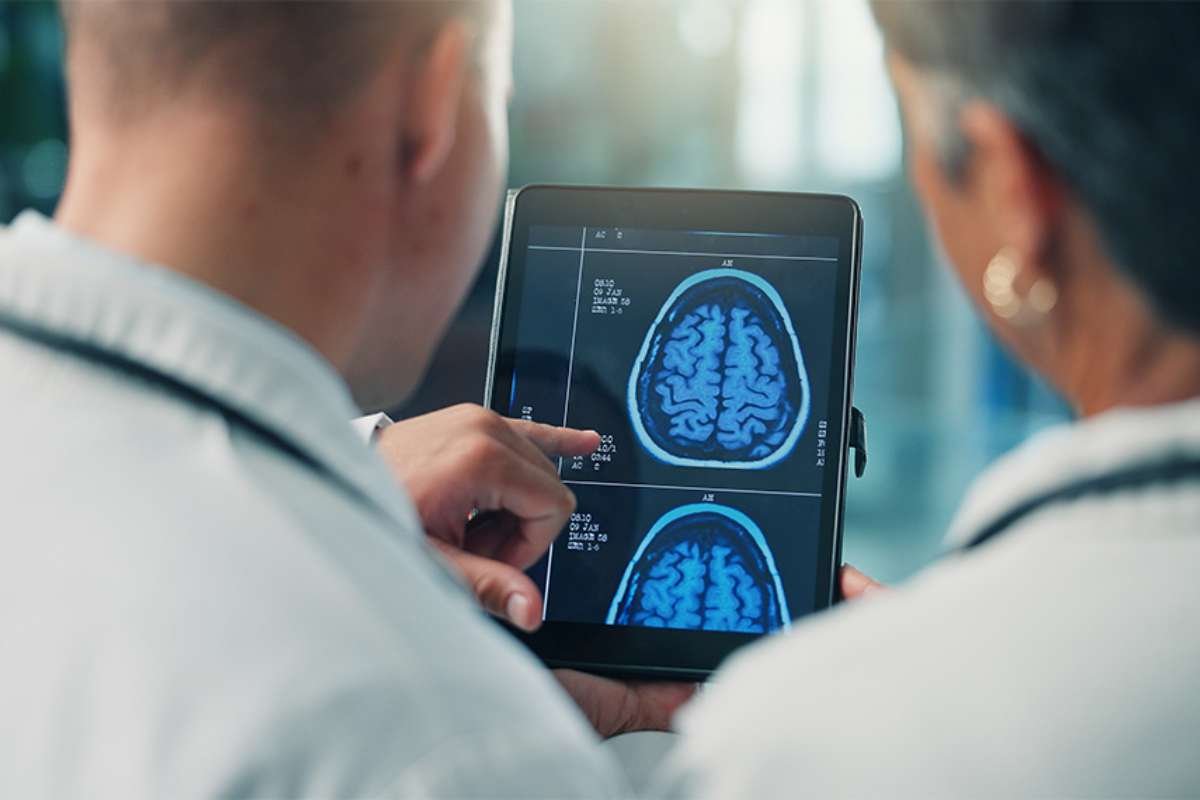
A brain-scan difference observed in a research group is not automatically a diagnostic marker for an individual. Researchers must validate whether a finding is reliable, reproducible, and clinically useful before it can become a mental health biomarker.
How Neuroscience Influences Mental Health Treatments
Neuroscience helps explain how treatments may affect brain signaling, learning, and emotional regulation. But it does not guarantee that a treatment will work for every person. The neuroscience of mental health therefore informs care, while clinical trials and individual assessment determine real-world benefit.
Medications and psychotherapy
Antidepressants, including SSRIs and SNRIs, affect neurotransmitter systems such as serotonin and norepinephrine. Their effects are complex and cannot be reduced to “correcting one chemical imbalance.”
Psychotherapy can change learning, behavior, and emotional responses. For example, NIMH-funded research found that cognitive behavioral therapy altered brain activity in children with anxiety, including regions involved in attention and emotion regulation.
Brain stimulation
Brain-stimulation therapies include ECT and rTMS. ECT may be used for severe or treatment-resistant depression, while rTMS can target specific brain areas and is used in certain adults with depression who have not responded to medication.
Can the brain heal? The role of neuroplasticity
Neuroplasticity is the brain’s ability to change its connections in response to experience and learning. So it is not fixed after childhood. Stress, depression, and trauma are linked to changes in circuits involving the prefrontal cortex, hippocampus, and amygdala. Researchers are studying whether therapy, medication, rTMS, and ECT work partly by supporting adaptive change in these networks, as in the NIMH-funded finding that CBT altered brain activity in children with anxiety.
“Healing” does not mean the brain resets to a prior state, and the evidence is still developing. Plasticity can strengthen unhelpful patterns as well as helpful ones
What Emerging Neuroscience Could Mean for Future Mental Health Care
Future care may become more individualized as researchers combine genetics, clinical information, behavior, digital data, and neuroimaging to identify patient subgroups and predict treatment response. The neuroscience of mental health is moving toward models that connect brain mechanisms with real-world outcomes.
Research directions
| Research direction | Key question |
| Precision psychiatry | Can patient characteristics reliably guide treatment selection? |
| Mental health biomarkers | Can a measurable signal improve diagnosis or predict outcomes? |
| Circuit-based approaches | Can targeting particular neural processes improve symptoms safely? |
| Computational psychiatry | Can models predict clinical outcomes beyond existing assessments? |
From models to care
Computational psychiatry uses mathematical models and machine learning to predict risk, symptom trajectories, and treatment response. NIMH supports research combining behavioral, biological, and clinical data to build these tools. Circuit-based work may also sharpen treatment: in one NIMH-funded rTMS study, symptom improvement was linked to a pretreatment brain-response measure.
What remains unproven
These advances are promising but not yet routine care. Biomarkers and prediction models must be validated in independent populations and real-world settings before they can guide diagnosis or treatment.
Investigational approaches include MDMA-assisted therapy and psilocybin-assisted therapy. They remain distinct from established, clinically validated treatments unless they have received regulatory approval for a specific use.
Conclusion:
The neuroscience of mental health shows that emotions, memories, and stress responses are shaped by connected brain circuits, not a single region or chemical. Genetics, experience, and environment all play a part, and promising tools like biomarkers and circuit-based treatments are still being tested.
Understanding the brain can replace stigma with clarity. If this guide helped, share it with someone who might benefit, and talk with a qualified professional if you’re struggling.
FAQ:
1. How does the neuroscience of mental health explain mental health conditions?
Neuroscience explores how brain circuits, neurotransmitters, genetics, and life experiences influence thoughts, emotions, and behavior.
2. Which brain regions are involved in mental health?
The prefrontal cortex, amygdala, and hippocampus contribute to emotional regulation, threat processing, memory, and stress responses.
3. Can brain scans detect mental health disorders?
Brain scans help researchers study brain function, but most mental health disorders cannot be diagnosed reliably through routine brain imaging alone.
Links and Sources:
- https://www.nimh.nih.gov/about/advisory-boards-and-groups/namhc/reports/setting-priorities-for-basic-brain-and-behavioral-science-research-at-nimh
- https://www.ncbi.nlm.nih.gov/books/NBK92254
- https://www.nimh.nih.gov/research/research-funded-by-nimh/rdoc/units/circuits
- https://pmc.ncbi.nlm.nih.gov/articles/PMC11525658
- https://www.nature.com/articles/s41386-021-01155-7
- https://www.nimh.nih.gov/news/science-updates/2008/imaging-identifies-brain-regions-and-chemicals-underlying-mood-disorders-may-lead-to-better-treatments
- https://fim.nimh.nih.gov/assets/presentations/T148.pdf
- https://nj.gov/health/integratedhealth/publications-reports/miscl/MH_Fact_Sheets/NIMH_Depression.pdf