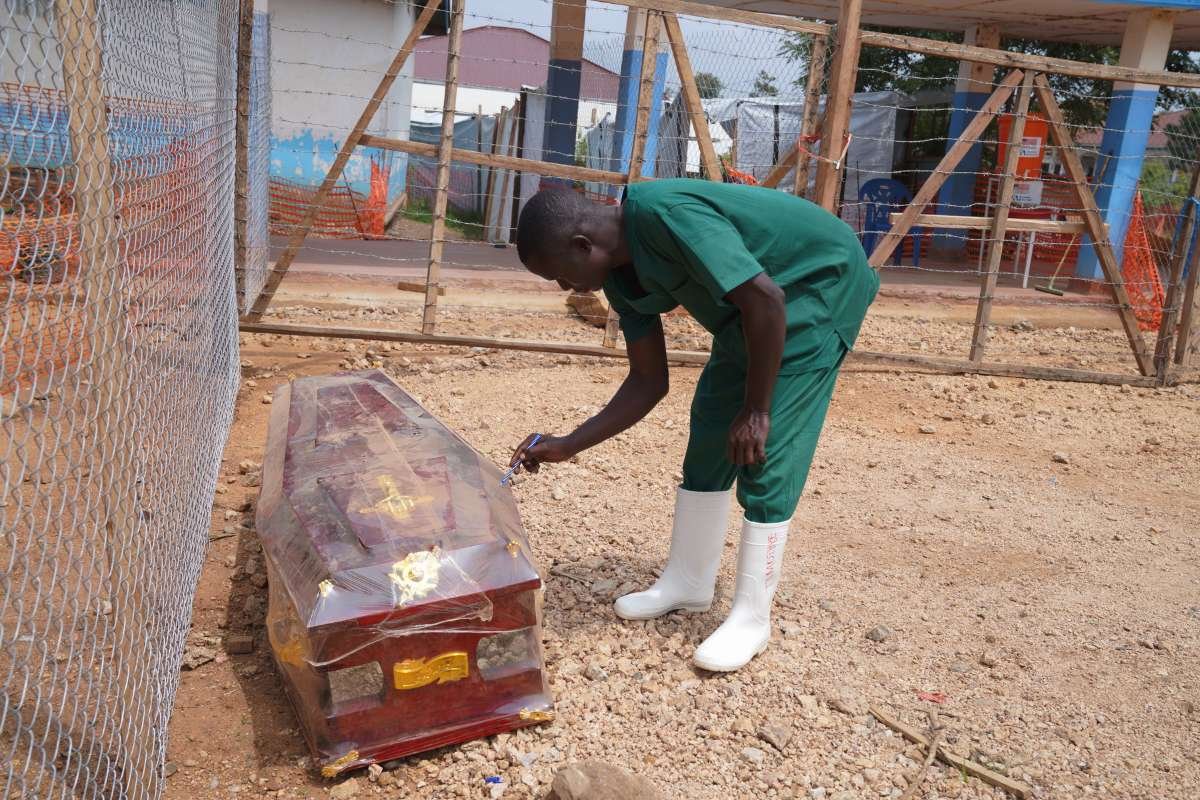
Key Takeaway:
- Ebola deaths surpass 2,000: The Congo Ebola outbreak has resulted in 2,011 deaths among 4,381 confirmed cases.
- Outbreak spreads rapidly: Deaths doubled from 1,000 to 2,000 in about three weeks.
- Response faces major obstacles: Conflict, poor roads, and unpaid health workers are slowing containment efforts.
Congo’s Congo Ebola outbreak has killed 2,011 people among 4,381 confirmed cases, with conflict, poor roads and health worker strikes slowing efforts to contain the virus.
Death Toll Doubles In About Three Weeks
Government data published overnight Tuesday show the Congo Ebola outbreak has become the fastest-spreading Ebola outbreak on record. It reached 1,000 deaths in about nine weeks but added another 1,000 deaths in roughly three weeks.
The outbreak was declared May 15 and is now the second-largest Ebola outbreak in history. The 2014-2016 West Africa outbreak remains the largest, with more than 28,000 cases and more than 11,000 deaths.
The World Health Organization has classified the Congo outbreak as a public health emergency of international concern. Cases have also been reported in neighboring Uganda.
Conflict And Strikes Slow The Response
Aid workers say the Congo Ebola outbreak continues to move faster than the response across the five affected provinces. Rebel conflict, damaged or inadequate roads, and work stoppages have made it difficult for health teams to reach remote communities quickly.
Many health workers have gone on strike because they have not been paid for work performed since the outbreak began. Health officials also face difficulty identifying transmission chains because most new cases are being detected among people outside monitored contacts.
Dr. Mohamed Yakub Janabi, the WHO regional director for Africa, described the challenge at a news conference Monday: “We are chasing the virus, the virus is ahead of us.”
The WHO said the Congo Ebola outbreak likely began in February, months before authorities detected it in one of Congo’s most remote and vulnerable areas. The agency said some early cases were mistakenly attributed to malaria and typhoid, while initial testing focused on a more common Ebola type.
Rare Virus Has No Approved Treatment
The Congo Ebola outbreak is caused by the Bundibugyo virus, a rare Ebola species for which no vaccines or treatments have been approved. Clinical trials for potential vaccines and treatments have begun in Ituri, the outbreak’s epicenter.
The WHO has warned that the outbreak is expanding despite an increasingly broad response. Health authorities are working across five provinces while trying to identify cases and contacts in areas affected by insecurity and limited infrastructure.
The current outbreak is Congo’s 17th Ebola outbreak, and it’s largest. The first Ebola virus was identified in 1976 near the Ebola River in what is now Congo.
The latest figures underscore the speed of the current crisis. The number of deaths has doubled in a fraction of the time it took the outbreak to reach its first 1,000 fatalities, increasing pressure on health authorities and international aid groups to expand the response.
Visit more of our news! The Lifesciences Magazine