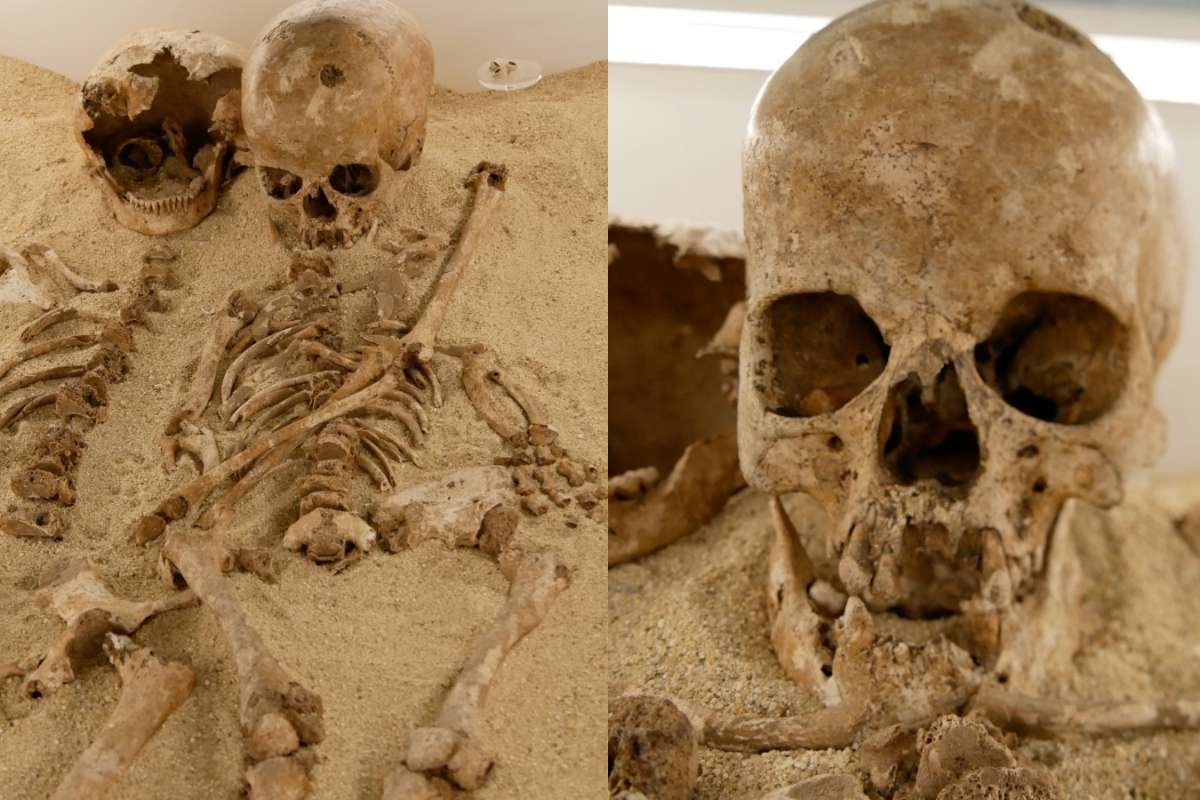
A teenage girl buried about 12,000 years ago in southern Italy had a rare genetic form of dwarfism, known as Stone Age genetic dwarfism, making her the earliest known DNA-confirmed case of a genetic disease in modern humans, researchers reported.
A Stone Age teenager who lived and died in what is now southern Italy had a rare genetic disorder that severely shortened her arms and legs, according to a DNA study published Wednesday in The New England Journal of Medicine. Researchers say the finding marks the earliest DNA-based diagnosis of a genetic disease in an anatomically modern human.
The girl, nicknamed “Romito 2,” was buried in a cave alongside another individual about 12,000 to 13,000 years ago. Advanced genetic testing of her remains revealed that she had acromesomelic dysplasia, Maroteaux type, an extremely rare form of dwarfism caused by mutations in a gene critical to bone growth.
DNA Unlocks Earliest Known Genetic Diagnosis
The remains of Romito 2 were discovered in 1963 in the Romito Cave, a limestone shelter in Calabria, along with the skeletons of eight other prehistoric hunter-gatherers. For decades, researchers debated the age, sex, and health of the individual.
Using DNA extracted from the inner ear bone, scientists determined that Romito 2 was a teenage girl, overturning earlier assumptions that the skeleton belonged to a male. Genetic analysis showed she carried two abnormal copies of the NPR2 gene, which regulates bone development.
“As this is the earliest DNA-confirmed genetic diagnosis ever made in humans, it is a real breakthrough for medical science,” said study co-author Dr. Adrian Daly, a physician and endocrinology researcher at the University Hospital of Liège in Belgium. He said Stone Age genetic dwarfism, the diagnosis predates the next-oldest known genetic case by roughly 10,000 years.
Romito 2 would have stood about 3 feet, 7 inches tall, or roughly 110 centimeters, the study found. The condition would have significantly limited her mobility, particularly in her forearms, hands, and lower legs.
Family Ties and a Small Prehistoric Community
The teenager was buried in an embrace with another individual, known as “Romito 1.” DNA evidence revealed that Romito 1 was also female and a first-degree relative of Romito 2, meaning the two were likely mother and daughter or sisters.
Romito 1 measured about 4 feet, 9 inches tall, shorter than the average adult of that period. Genetic testing showed she carried one abnormal copy of the NPR2 gene, which may have modestly affected her growth but did not result in Stone Age genetic dwarfism.
Both individuals belonged to the Villabruna genetic cluster, a population of hunter-gatherers that spread from southern Europe into central and western Europe about 14,000 years ago. Researchers found no signs of close inbreeding, though they said the local population was probably small.
“The genetic data suggest a closely connected but not inbred community,” Daly said, noting that such small populations were common among late Ice Age hunter-gatherers.
Evidence of Care in the Stone Age
Despite her physical limitations, Stone Age genetic dwarfism appears to have been cared for by her community. Researchers found no signs of trauma or malnutrition in her remains, and her diet was similar to that of others buried in the cave.
“As challenging as her condition would have been, the evidence suggests she was supported within her family group,” the researchers wrote in the study.
The findings provide rare insight into how prehistoric societies treated individuals with disabilities, suggesting that compassion and social care existed even in small, mobile hunter-gatherer groups.
Scientists say the study also highlights the growing power of ancient DNA analysis to illuminate not just migration and ancestry, but also health and disease in deep human history.