When we think of hospitals today, we imagine modern technology and specialized care. But organized healthcare began more than a thousand years ago. Across Europe, Asia, and the Middle East, early societies built dedicated spaces to treat the sick, many of which still exist today.
The oldest hospitals in the world are living institutions that have survived plagues, wars, and medical revolutions. Historical records show that hospitals were operating as early as the 7th century, offering structured care long before modern medicine. During events like the Black Death, which killed nearly one-third of Europe’s population, these hospitals became critical centers of treatment. In Asia and the Islamic world, early hospitals introduced trained physicians, organized wards, and medical education centuries ahead of their time.
What sets the oldest hospitals apart is their resilience. Despite centuries of change, many continue to function within modern healthcare systems, some as major teaching hospitals, others blending active care with preserved history.
In this blog, we explore the oldest hospitals in the world that are still operating today, highlighting where they are located, who founded them, and the unique contributions that have allowed them to endure for generations.
Top 10 Oldest Hospitals in the World (Ranked from Oldest to Newest)
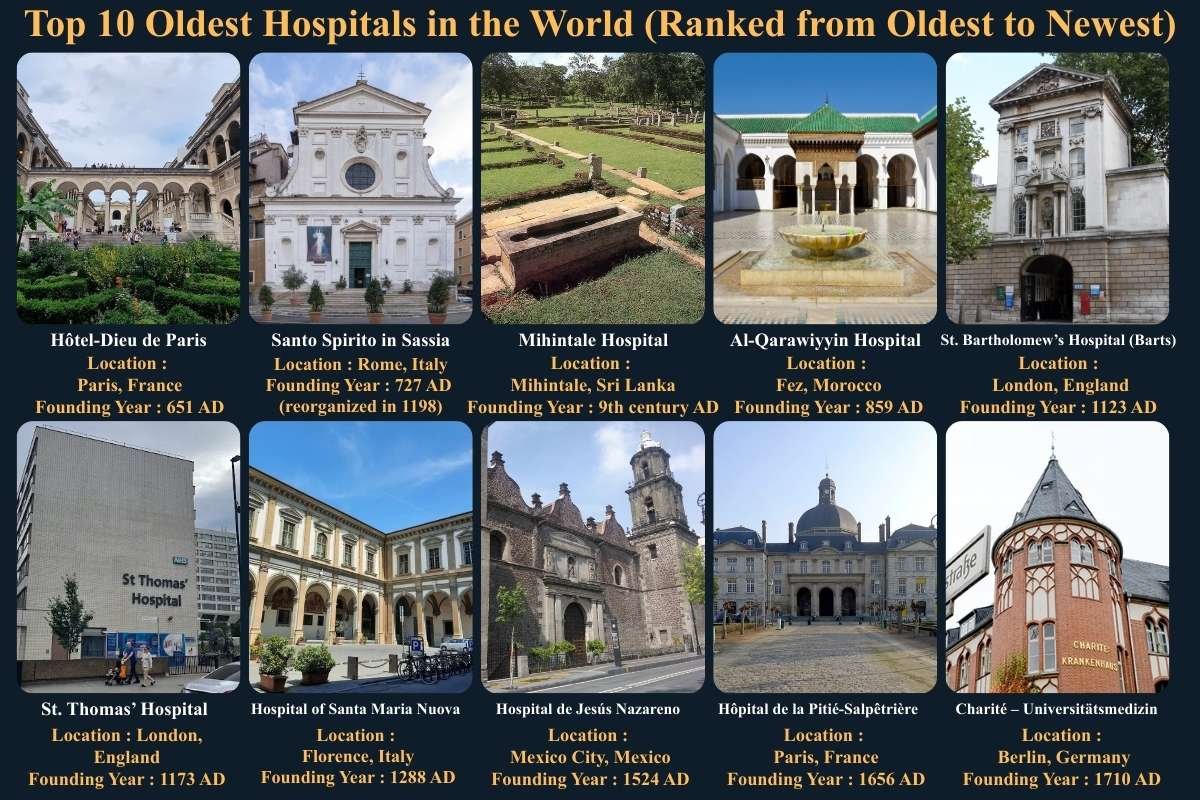
This list highlights some of the earliest known hospitals in human history, ranked purely by their founding timeline. It showcases how organized healthcare emerged across civilizations, evolving from religious and charitable institutions into structured medical centers that laid the foundation for modern medicine.
1. Hôtel-Dieu de Paris
| Location | Paris, France |
| Founding Year | 651 AD |
| Founder / Patron | Saint Landry, Bishop of Paris |
| Unique Contributions | Widely regarded as the oldest continuously operating hospital in the world, Hôtel-Dieu set early standards for charity-based healthcare. It played a critical role during medieval epidemics, including the Black Death. |
Often referenced among the oldest hospitals in the world, Hôtel-Dieu de Paris has continuously adapted to changing medical standards for more than thirteen centuries. Its location beside Notre-Dame placed it at the heart of Parisian public life and emergency care. The hospital transitioned from communal wards to specialized departments as medicine modernized. Today, it handles thousands of emergency and inpatient cases each year under France’s public health system. Its long-term survival reflects the city’s commitment to universal healthcare.
2. Santo Spirito in Sassia
| Location | Rome, Italy |
| Founding Year | 727 AD (reorganized in 1198) |
| Founder / Patron | Pope Innocent III |
| Unique Contributions | Introduced structured hospital wards and early patient classification systems, shaping modern hospital organization. |
Santo Spirito in Sassia reflects Rome’s long tradition of public welfare. The hospital complex influenced hospital architecture across Europe through its open courtyards and ventilation-focused design. It also functioned as a refuge for abandoned children and vulnerable populations. While modern medical services operate elsewhere, parts of the institution preserve its healthcare legacy. Today, it stands as both a functional medical space and a historical landmark among the oldest hospitals in the world.
3. Mihintale Hospital

| Location | Mihintale, Sri Lanka |
| Founding Year | 9th century AD |
| Founder / Patron | King Sena II |
| Unique Contributions | Often cited as the world’s oldest known planned hospital complex, with evidence of surgical tools and medicinal preparation areas. |
Mihintale Hospital is preserved as an archaeological site rather than an active medical center. Excavations reveal sophisticated planning that supported patient movement and sanitation. The layout demonstrates early understanding of environmental health principles. Today, the site is studied by historians and medical scholars worldwide. It stands as physical evidence of advanced ancient healthcare systems.
4. Al-Qarawiyyin Hospital
| Location | Fez, Morocco |
| Founding Year | 859 AD |
| Founder / Patron | Fatima al-Fihri |
| Unique Contributions | Integrated healthcare with academic learning, reflecting the early link between medicine and education. |
Often included among early medical institutions, Al-Qarawiyyin reflects the long-standing integration of medicine and education. Its legacy influenced healthcare governance across North Africa and parts of Europe. Positioned among the oldest hospitals in the world, the surrounding complex continues to attract scholars and medical historians. Healthcare services today operate within a broader institutional framework. The site remains a symbol of early organized healthcare systems.
5. St. Bartholomew’s Hospital (Barts)
| Location | London, England |
| Founding Year | 1123 AD |
| Founder / Patron | Rahere, royal courtier to King Henry I |
| Unique Contributions | One of Europe’s most influential teaching hospitals, Barts has contributed significantly to medical education and clinical research for over 900 years. |
St. Bartholomew’s Hospital has played a central role in shaping London’s urban healthcare infrastructure. Over the centuries, it evolved from religious charity care into a highly specialized clinical institution. The hospital is now known for excellence in cancer treatment and cardiovascular services. Its integration with modern research facilities ensures ongoing clinical innovation. Barts remains a key healthcare provider for central London.
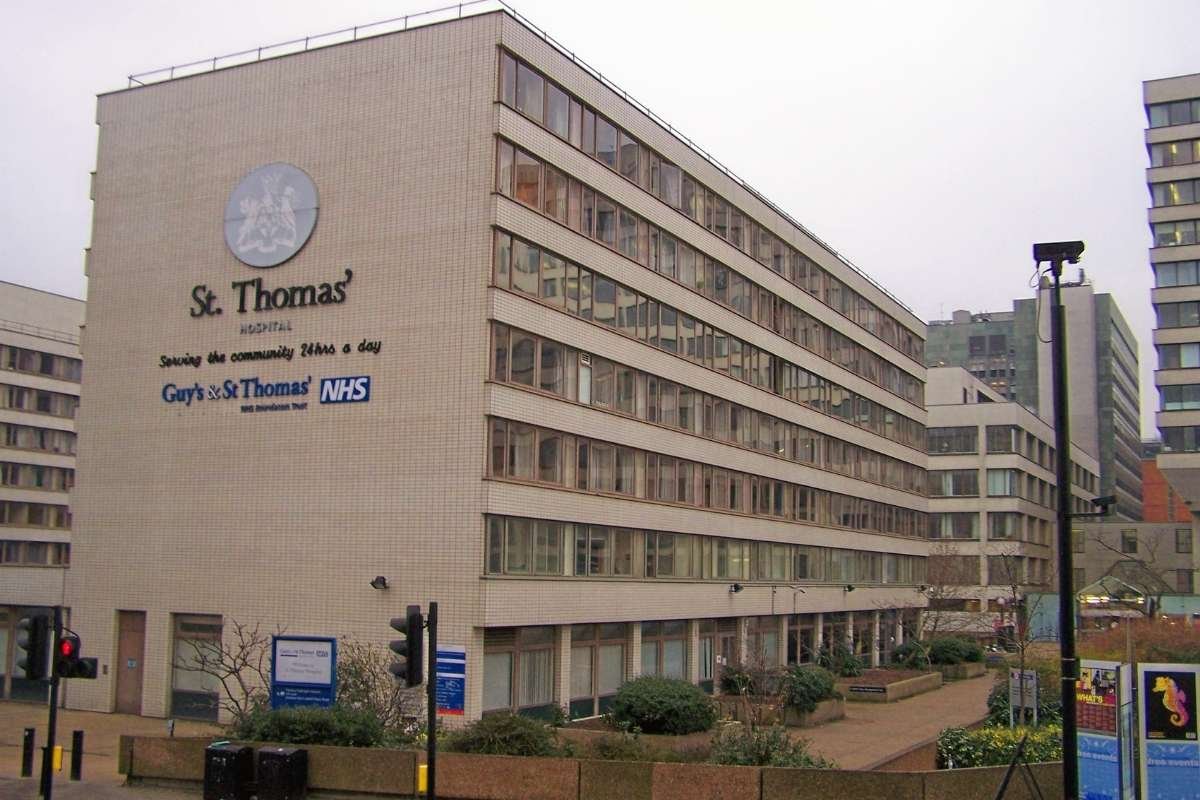
6. St. Thomas’ Hospital
| Location | London, England |
| Founding Year | 1173 AD |
| Founder / Patron | Augustinian monks |
| Unique Contributions | Played a key role in the development of modern nursing and public healthcare systems in England. |
Recognized as one of the oldest hospitals in the world, St. Thomas’ Hospital has consistently aligned itself with public health reforms. Its modern campus now specializes in cardiac care, trauma services, and maternity health. The hospital works closely with medical schools to train future healthcare professionals. Digital healthcare systems and research programs define their current operations. St. Thomas’ remains a cornerstone of London’s NHS network.
7. Hospital of Santa Maria Nuova
| Location | Florence, Italy |
| Founding Year | 1288 AD |
| Founder / Patron | Folco Portinari |
| Unique Contributions | Known for advancing patient dignity and ethical care, it influenced hospital administration across Renaissance Europe. |
Santa Maria Nuova has remained closely tied to Florence’s civic healthcare system for centuries. The hospital gradually expanded its services to meet the needs of a growing urban population. Its preserved archives offer rare insight into early patient records and hospital governance. Modern renovations have allowed it to integrate advanced diagnostics without losing its historical identity. It continues to serve residents as an active public hospital.
8. Hospital de Jesús Nazareno
| Location | Mexico City, Mexico |
| Founding Year | 1524 AD |
| Founder / Patron | Hernán Cortés |
| Unique Contributions | Considered the oldest hospital in the Americas, originally established to treat indigenous populations. |
This hospital remains an active part of Mexico City’s public healthcare system. It primarily serves urban populations with general and specialized medical care. Over time, the institution has undergone structural modernization to meet safety and healthcare regulations. Despite modernization, its historic core has been carefully preserved. The hospital stands as a bridge between colonial medical history and present-day care.
9. Hôpital de la Pitié-Salpêtrière

| Location | Paris, France |
| Founding Year | 1656 AD |
| Founder / Patron | King Louis XIV |
| Unique Contributions | Became a global center for neurological and psychiatric research, influencing modern neuroscience. |
This hospital has grown into one of Europe’s largest medical complexes. It serves as a referral center for complex neurological and chronic conditions. Advanced research facilities operate alongside high-capacity patient care units. The hospital’s scale allows it to support both acute treatment and long-term rehabilitation. Today, it plays a critical role in France’s national healthcare framework.
10. Charité – Universitätsmedizin Berlin
| Location | Berlin, Germany |
| Founding Year | 1710 AD |
| Founder / Patron | King Frederick I of Prussia |
| Unique Contributions | Associated with numerous Nobel Prize–winning medical discoveries and groundbreaking clinical research. |
Charité continues to influence global medical research. It is now a leading center for translational medicine, combining laboratory research with patient care. The hospital collaborates with international institutions on infectious disease and public health studies. Modern infrastructure supports high patient volumes and advanced treatments. Charité remains a benchmark for academic medicine in Europe and one of the oldest hospitals in the world.
Read Next:
- Best Hospitals in the World That Set New Standards in Care
- 17 Largest Hospitals in the World: Examining Scale, Capacity, and Global Healthcare Impact
How the World’s Oldest Hospitals Shaped Global Healthcare?
The oldest hospitals in the world did not emerge by chance. They developed in response to growing populations, disease outbreaks, and the need for organized care. By the 12th century, historical health records show that Europe alone had over 400 functioning hospitals, many funded by religious or royal patrons. In parallel, parts of Asia and the Middle East were already operating structured medical institutions that combined treatment, sanitation, and education. These regional differences shaped the foundations of modern healthcare systems.
1. Europe: From Charity to Public Healthcare
In medieval Europe, nearly 60–70% of hospitals were attached to monasteries or churches. These institutions focused on charity care, especially for the poor, elderly, and travelers. Over time, standardized patient wards, early medical documentation, and formal caregiving roles emerged. By the 18th century, many hospitals transitioned into state-supported public institutions. Several facilities now recognized as part of the oldest hospitals in the world became cornerstones of national healthcare systems.
2. Middle East and North Africa: Medicine Meets Education
During the Islamic Golden Age (8th–14th centuries), hospitals in cities such as Baghdad, Cairo, and Fez operated as state-funded institutions. Historical records indicate that many offered free treatment, regulated physician licensing, and maintained in-house pharmacies. Medical education was often mandatory, ensuring higher standards of care. This integration of clinical practice and learning influenced European hospital models centuries later. These systems helped formalize early healthcare governance.
3. Asia: Planned Care and Preventive Medicine
Asian medical institutions emphasized structure and long-term care. Archaeological evidence from South Asia reveals hospitals with drainage systems, medicinal preparation areas, and patient wards as early as the 9th century. Preventive medicine and hygiene played a central role in treatment approaches. Many hospitals also incorporated holistic healing traditions. These features highlight advanced medical planning long before modern infrastructure existed.
4. The Americas: Early Public Health Institutions
Hospitals in the Americas began emerging in the early 16th century alongside colonial settlements. Historical documents show that these institutions initially focused on serving indigenous communities and the urban poor. As cities expanded, hospitals adapted to rising public health needs. Some continue to operate today within modern healthcare frameworks. A few are now counted among the oldest hospitals in the world, still providing medical services.
Conclusion
The oldest hospitals in the world reflect humanity’s earliest and most enduring commitment to organized healthcare. Built in response to disease, population growth, and social need, these institutions introduced structured care long before modern medicine existed. Their survival through centuries of pandemics, wars, and medical change highlights remarkable adaptability.
Today, some continue as advanced medical and research centers, while others preserve their legacy as historical healthcare sites. Together, they connect ancient medical practices with modern systems. Their story proves that the foundation of healthcare has always been resilience, innovation, and care for human life.
FAQs
1. What is considered the oldest hospital in the world?
Hôtel-Dieu de Paris is widely recognized as the oldest continuously operating hospital in the world, with origins dating back to 651 AD.
2. Are the oldest hospitals in the world still operating today?
Yes, several of the oldest hospitals in the world remain operational, either as active medical centers, teaching hospitals, or facilities combining healthcare with preserved historical sections.
3. How did ancient hospitals function without modern medical technology?
Early hospitals focused on basic care, hygiene, herbal treatments, and organized patient wards. Many also emphasized preventive care and physician training based on the medical knowledge of their time.
4. Why were many early hospitals linked to religion or royalty?
Religious institutions and royal patrons provided funding, land, and governance, making it possible to offer free or low-cost care to the public during periods with no formal healthcare systems.
5. Why are the oldest hospitals in the world still important today?
They offer insight into the evolution of healthcare systems and medical ethics. Their continued existence highlights how foundational principles of care and accessibility remain relevant in modern medicine.