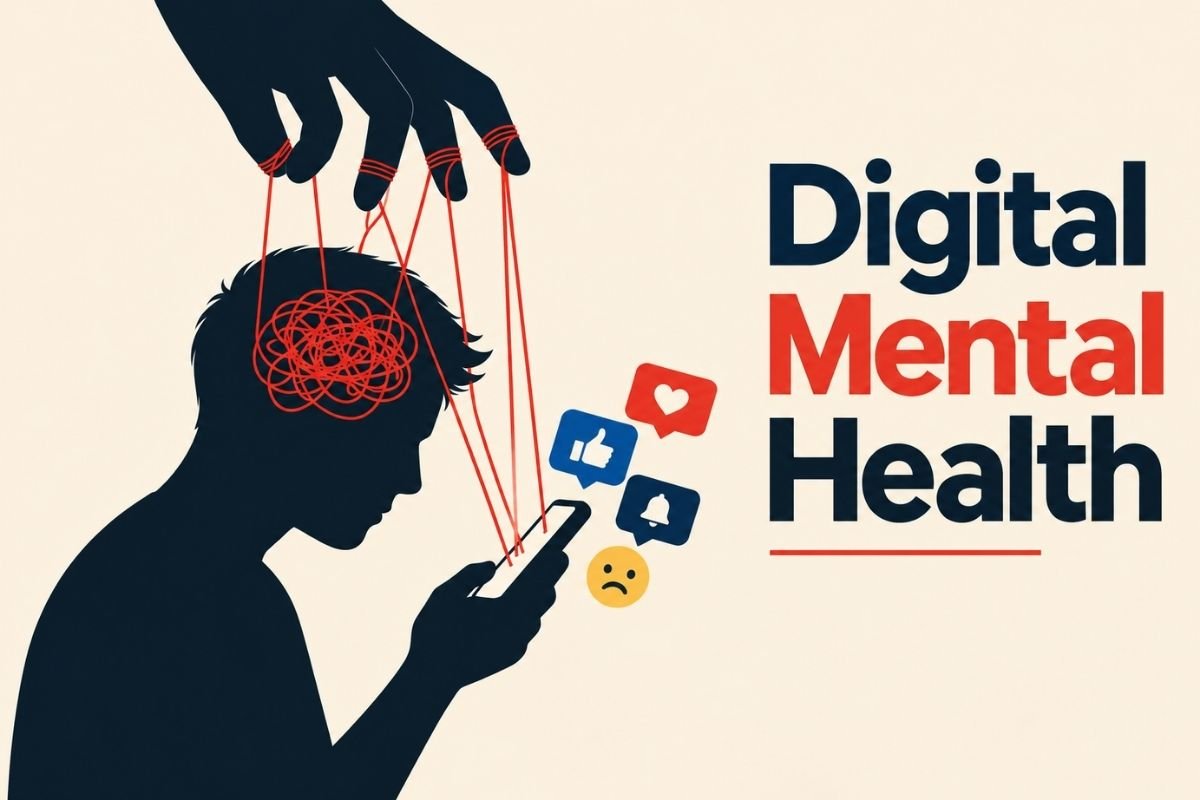
Nearly one in eight people worldwide lives with a mental disorder, yet most never reach a clinician. Video consultations, mobile interventions, AI-powered tools, and wearable sensors are changing that, but wider access does not guarantee better outcomes. So how can healthcare professionals and patients separate genuinely useful tools from those that are promising but not yet adequately validated?
This guide examines digital mental health through a clinical evidence lens, covering core technologies, clinical applications, evidence quality, biomarkers, risks, and implementation, so you can judge which tools deserve trust.
Table of Contents
What Is Digital Mental Health and How Does It Work?
Digital mental health uses phones, apps, websites, wearables, and telehealth to support mental health assessment, prevention, monitoring, intervention, and care delivery. It can extend support between appointments, improve access, and help people track symptoms. But it does not replace professional care when someone needs urgent or intensive treatment.
Digital vs. Traditional Mental Healthcare
Traditional care usually involves scheduled, in-person contact with a therapist, psychiatrist, or primary-care clinician. Digital methods add remote and technology-based options: synchronous care happens in real time, such as a live video consultation, while asynchronous care includes app exercises, messaging, self-guided modules, and symptom tracking.
Digital tools can also connect to the biological and psychological mechanisms described in the neuroscience of mental health and support more individualized care approaches described in precision psychiatry.
The Four Core Functions
- Information and psychoeducation
- Screening and assessment
- Monitoring and intervention
- Social support and care coordination
Digital Wellness Tools vs. Clinical Interventions
Not every mental health app is built or validated to treat a psychiatric disorder. Wellness apps support general wellbeing, telepsychiatry delivers care through licensed clinicians, and digital therapeutics are software-based interventions that prevent, manage, or treat a condition, some by prescription.
| Tool type | Intended use | Clinician involvement | Evidence requirements |
| Wellness app | Stress, sleep, mood, or habit support | Usually none | Varies widely; often not clinically validated |
| Telepsychiatry | Evaluation, therapy, medication management | Licensed psychiatrist or clinician | Professional and clinical care standards apply |
| Digital therapeutic | Prevent, manage, or treat a defined condition | Self-guided, clinician-supported, or prescribed | Regulatory review and clinical evidence for cleared or approved products |
If symptoms are severe, worsening, or involve thoughts of self-harm, contact a licensed clinician or emergency services rather than relying on an app alone.
Which Technologies Are Transforming Digital Mental Health?
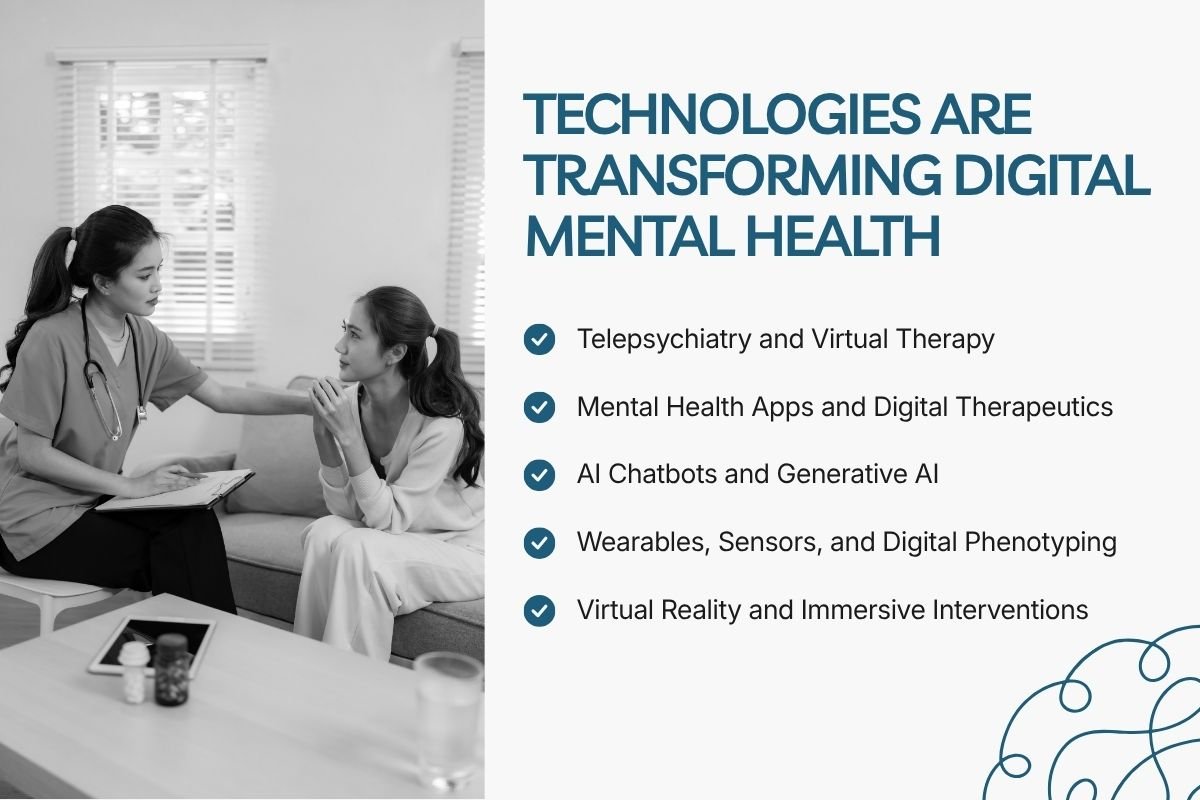
Several technologies are reshaping virtual mental healthcare, but they play different roles: a video visit connects a person with a clinician, an app delivers an intervention, and a wearable collects data.
Telepsychiatry and Virtual Therapy
Remote psychiatric assessment, therapy, and medication management by video, phone, or message. It widens access to licensed clinicians, but suitability, privacy, continuity, and internet access still matter.
Mental Health Apps and Digital Therapeutics
Apps offer education, mood tracking, relaxation, or self-guided CBT-style exercises. Digital therapeutics are more structured software interventions for managing or treating a condition. Some are prescription-only and reviewed for safety and effectiveness.
AI Chatbots and Generative AI
Chatbots offer conversational support, psychoeducation, and guided exercises. Their clinical role is limited because reliability and safety vary, and as of late 2025, the FDA had not authorized any generative-AI-enabled device for mental health conditions.
Wearables, Sensors, and Digital Phenotyping
Wearables track sleep, activity, heart rate, and other signals that may flag changes early. These signals are often nonspecific and need validation and clinical interpretation; see mental health biomarkers.
Virtual Reality and Immersive Interventions
VR creates controlled environments for exposure therapy, skills practice, relaxation, or pain-related behavioral work. Evidence and suitability vary by application, and some VR behavioral-health devices have FDA clearance.
| Technology | Potential role | Key limitation |
| Telepsychiatry | Remote consultations and follow-up | Depends on access, clinical suitability, and continuity of care |
| Mental health apps | Self-guided exercises, symptom tracking, and education | Variable quality and sustained engagement |
| Digital therapeutics | Structured, software-delivered interventions | Evidence and authorization depend on the product and jurisdiction |
| AI chatbots | Conversational support and guided interactions | Reliability, safety, and clinical effectiveness vary |
| Wearables and digital phenotyping | Monitoring behavioral and physiological patterns | Signals may be nonspecific and require validation |
| Virtual reality | Immersive therapeutic exercises in selected settings | Evidence, availability, and suitability vary by application |
How AI Chatbots and Digital Biomarkers Are Changing Psychiatric Care
AI chatbots and digital biomarkers are two connected but distinct advances in digital mental health: one provides conversational support, while the other turns everyday behavioral and physiological data into potential clinical signals. Neither should be treated as a standalone diagnosis or treatment.
How AI Supports Online Mental Health
- Chatbots offer self-help, psychoeducation, and between-visit support.
- Risks: inaccuracy, privacy and safety concerns, limited clinical evidence.
- The FDA says generative AI needs larger controlled studies.
What Digital Phenotyping Measures
- Phones and wearables track sleep, activity, heart rate, social interaction, and routines.
- It captures real-world behavior over time, not just during visits.
Digital vs. Conventional Biomarkers
- Conventional: a measured biological indicator used in care.
- Digital: a candidate device-data signal, useful only after validation.
From Data to Decisions
- Poor sleep and low activity may prompt a check-in.
- They cannot alone diagnose depression, predict mania, or guide treatment.
- Digital phenotyping is not biomarker validation.
How Digital Mental Health Fits Into Real-World Treatment
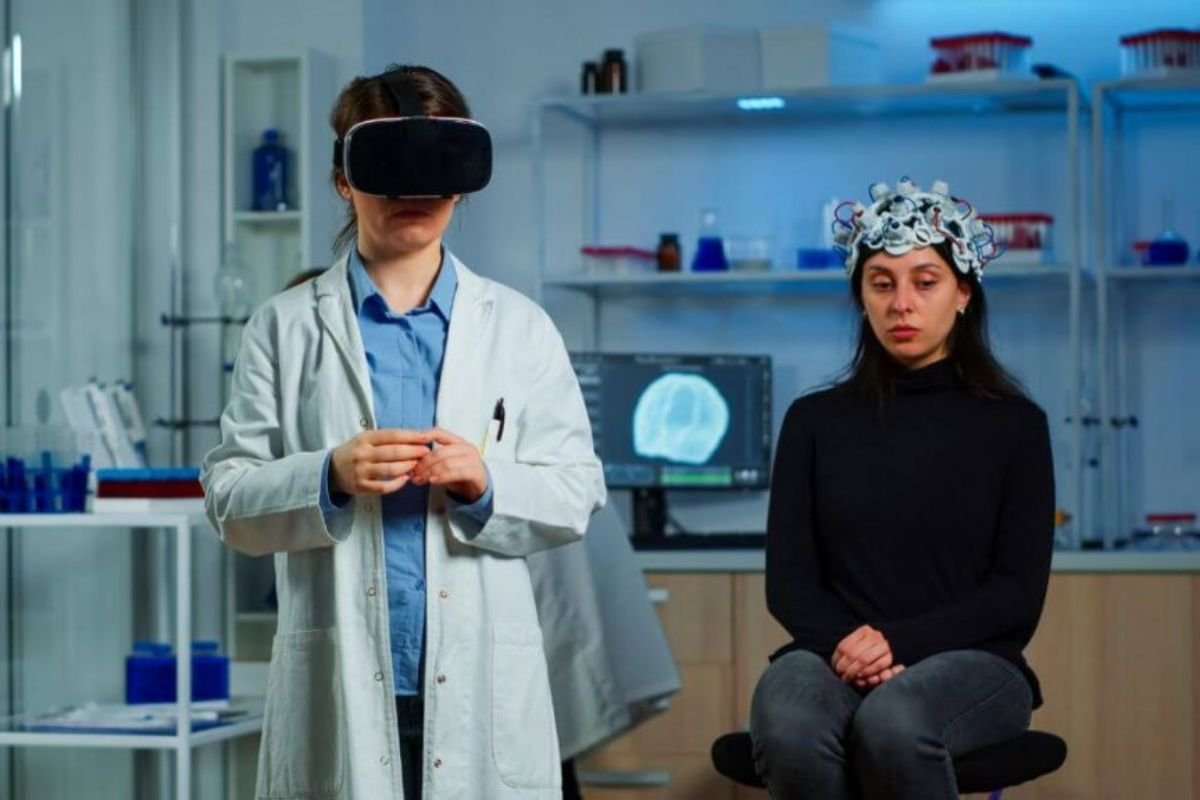
A tool can be available yet add little if patients can’t use it consistently or no one acts on its data. In practice, digital mental health works best with human support and integration into existing care, a point stressed by the Global Mental Health Action Network and World Psychiatry.
Self-Guided Digital Support
Self-guided tools offer education, symptom tracking, and exercises for mild-to-moderate concerns. They work best with consistent use and clear signs of when to seek more help.
Clinician-Guided Digital Interventions
A clinician, digital navigator, or trained supporter selects the tool, monitors progress, and responds to safety concerns, helping data lead to action.
Hybrid Care Combining Digital and In-Person Support
Hybrid care pairs app-based practice or remote check-ins with in-person assessment, therapy, or medication care. Digital delivery changes how care is provided, not which treatment is right.
When Digital Tools Need Professional Care
Seek professional care when symptoms are severe, persistent, disruptive, involve self-harm risk, or don’t improve
| Format | Best suited for | Main boundary |
| Self-guided support | Education, mild symptoms, prevention, skill practice | Limited help for complex or high-risk needs |
| Clinician-guided digital care | Structured treatment with oversight and follow-up | Still requires access to qualified support |
| In-person assessment | Diagnostic uncertainty, severe symptoms, safety concerns, medication decisions | May be less convenient or accessible |
AI-Driven Conversational Therapy
Some AI chatbots offer exercises based on CBT or other therapeutic approaches, but the quality of evidence and level of clinical oversight vary by product.
- Wysa:
- An AI conversational agent that uses evidence-based CBT exercises to help users self-manage emotional distress. In public health, Wysa powers Singapore’s national digital mental health initiative (Mindline.sg) to provide accessible mental health support across the population.
- Woebot:
- An AI-driven application designed to process daily self-reports, deliver micro-interventions, and monitor mood patterns in real time.
What Are the Risks, Limitations, and Ethical Concerns?
Risks and Safeguards in Digital Mental Health
This can improve access. But risk depends on intended use, data practices, and clinical oversight.
- Privacy: Check what data is collected and shared. A privacy policy states intent, not proven security. The FTC warns that sharing health data after implying privacy can violate the law.
- AI errors: Unvalidated advice can be unsafe. The FDA cites incorrect analyses, poor generalizability, and overreliance.
- Access and engagement: Cost, language, disability access, and digital literacy can widen disparities. Tools help little if unused or if no clinician acts on results.
- Seek care for severe or urgent symptoms, including clinical depression, PTSD, or an adolescent mental health crisis.
- Checklist: clear intended use, evidence, plain-language data practices, disclosed AI limits, human support route.
What Is Next for Digital Mental Health?

The next phase of virtual mental healthcare will focus less on new devices and more on whether tools safely improve real-world outcomes. A 2026 Nature Human Behaviour perspective urges purpose-driven, patient-centred innovation.
Personalized and Adaptive Interventions
AI may tailor content and timing, such as offering help after poor sleep, but must be validated for safety, effectiveness, and bias.
Multimodal AI and Digital Phenotyping
Tools may combine self-reported symptoms with phone and wearable signals. NIMH supports research on validated everyday measures.
Hybrid Care
Digital tools paired with clinicians, peer support, and in-person services will likely remain central. WHO stresses co-design, privacy, equity, and cultural adaptation.
Researchers still need better measures of engagement, real-world benefit, long-term safety, and equity.
Conclusion:
Digital mental health is expanding access, but access alone does not guarantee better care. The most useful tools have a clear purpose, credible evidence, transparent data practices, and a human route to support. Apps, AI chatbots, and wearables work best when they supplement professional care rather than replace it, and when someone can act on the information they generate. Severe, worsening, or high-risk symptoms always call for a licensed clinician.
As you weigh any tool, ask three questions: Does it improve a meaningful outcome? Is it safe and equitable? Does it fit the care you already receive? Talk to your clinician about which digital options suit your needs.
FAQ:
1. Can digital mental health tools really improve mental well-being?
Yes, some digital tools can support mental well-being, but their effectiveness depends on the intervention, evidence quality, and individual needs.
2. Can AI chatbots replace mental health professionals?
No, AI chatbots may offer general guidance or structured support, but they cannot reliably replace professional assessment, diagnosis, or treatment.
3. How are wearable devices used in digital mental health?
Wearables can track patterns such as sleep, activity, and heart rate that may help identify changes worth discussing with a healthcare professional.
Links and Sources:
- https://www.nimh.nih.gov/health/topics/technology-and-the-future-of-mental-health-treatment
- https://www.psychiatry.org/patients-families/telepsychiatry
- https://www.fda.gov/media/189835/download
- https://pmc.ncbi.nlm.nih.gov/articles/PMC12657867
- https://www.who.int/teams/mental-health-and-substance-use/treatment-care/Psychological-interventions/psychological-self-help-interventions
- https://psychiatryonline.org/doi/10.1176/appi.ps.20230391
- https://www.ftc.gov/business-guidance/resources/mobile-health-apps-interactive-tool
- https://iris.who.int/server/api/core/bitstreams/40e5a13a-fe50-4efa-b56d-6e8cf00d5bfa/content